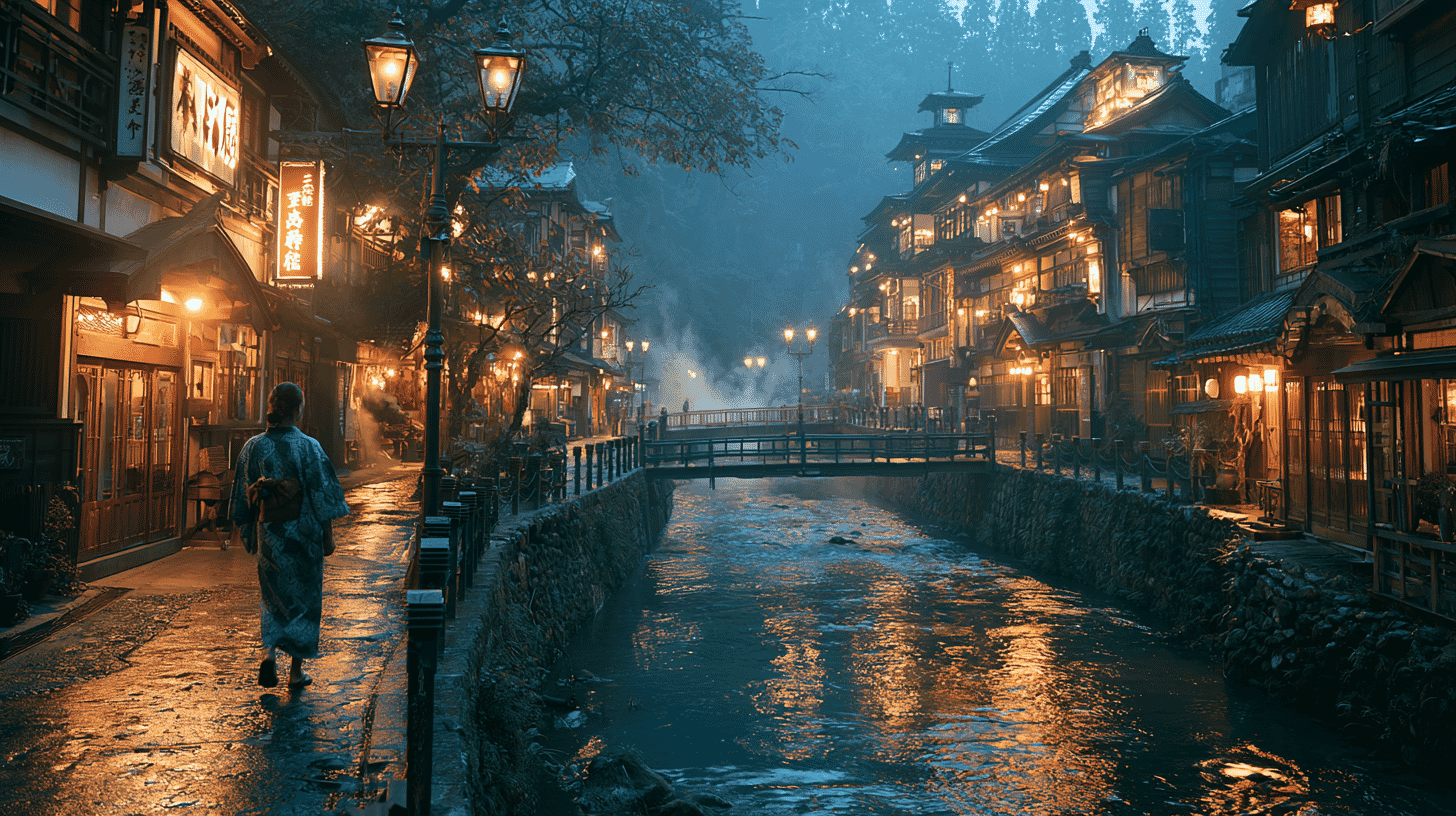
♨️ Imagine checking into a hot spring town and being handed the keys to the whole place. Wander into any of 16 inns, soak in 13 baths, eat and drink your way through 25 shops, all on a single pass, without once reaching for your wallet. That's the bet a small Fukushima spa town placed on June 19.
One passport, the whole town
On June 19, 2026, the hot spring district of Iizaka in Fukushima City rolled out something its organizers call a national first: an "all-inclusive" plan that covers an entire onsen town rather than a single resort. (That "first in Japan" line comes from the operators' own research, not an independently verified record, but the model really is unusual here.)
The mechanics are simple. You pay ¥25,000 (about $155) per person and get a dedicated "passport." It opens the doors to 16 participating inns, 13 baths, and 25 shops: restaurants, sake sellers, cafés, sweet shops. Inside that network you can order local sake and craft beer, sit down for a meal, drop into a day-bath, and join a guided town walk without watching a tab climb. Lodging, though, is billed separately. The pass covers everything but the room, and local reporting puts it at roughly ¥20,000 a head on top of an inn's room-only rate. What's actually on offer shifts depending on which inn or shop you walk into.
The idea takes aim at a problem that quietly eats away at a lot of Japanese spa towns: guests check into a ryokan, eat the in-house dinner, soak in the in-house bath, and barely set foot outside. The streets stay empty and the small shops never see the money. Iizaka's plan turns that around. Instead of each inn fighting over a guest who never leaves the building, the whole district shares one visitor who's nudged out the door to roam.
[ref src="https://prcdn.freetls.fastly.net/release_image/103172/8/103172-8-7b60ff321d51bfab29b44d7b3796f6cf-1000x562.png?format=jpeg&auto=webp&fit=bounds&width=1200" alt="A hot spring bath included in the Iizaka Onsen all-inclusive plan" origin="Source: PR TIMES / Innovation Shift Inc."]
A thousand-year-old town that likes its baths scalding
If you've never heard of Iizaka, you're in good company, it rarely makes the foreign-visitor shortlist that tends to stop at Hakone or Beppu. But it is old. It's counted among the "Three Famous Springs of Oshu," the historic northeast, alongside Naruko and Akiu, and people have soaked here for well over a thousand years; local legend traces the origin back to an ancient warrior-prince. The wandering poet Matsuo Bashō stopped to bathe in Iizaka in 1689, on the journey that became his celebrated travel diary, and later visitors included Helen Keller, who came twice.
The town's signature is heat. The source water runs close to 60°C (140°F), and Iizaka's eight historic public bathhouses are notorious, even among hardened Japanese bathers, for being punishingly hot. There's a local "heat ranking" of the baths, only half in jest. The oldest, Sabakoyu, is the one Bashō is said to have used. First-timers lower themselves in by degrees; regulars just get in. The water itself is a clear, alkaline simple spring that leaves your skin smooth.
Getting there is easy, which is part of the pitch. Fukushima is a stop on the Tohoku Shinkansen, and the Fukushima Kotsu Iizaka line runs from Fukushima Station out to Iizaka Onsen in about 25 minutes.
Disc gyoza, "radium eggs," and all the local sake you can drink
Fukushima's regional specialty is enban gyoza, or "disc gyoza": dumplings packed tight in a ring and pan-fried until they come out as one crisp, golden wheel. The name has a backstory: after the war, inn workers and geisha ordering gyoza late in their shift would get it delivered still in the frying pan, disc and all.
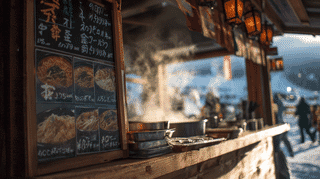
[ref src="https://prcdn.freetls.fastly.net/release_image/103172/8/103172-8-ecb87ecb72d602c83be733ef4adb9a10-1000x568.png?format=jpeg&auto=webp&fit=bounds&width=1200" alt="Food at a shop participating in the Iizaka Onsen all-inclusive plan" origin="Source: PR TIMES / Innovation Shift Inc."]
Then there's the radium egg. Iizaka was the first place in Japan where the element radium was detected, in the early 20th century, and the town leaned all the way in, naming its onsen-cooked eggs after the find. They're slow-cooked in roughly 70°C spring water until the white turns silky and the yolk goes rich and jammy. To be clear, they aren't actually radioactive, it's a history nod, not a health warning. Fukushima is fruit country too, all peaches, pears, apples and cherries, so a peach soft-serve or a parfait is never far, and the area's sake and craft beer fill out the "drink freely" half of the pass.
Why a shrinking spa town is rewriting the rules
This isn't only a novelty; it reads as a survival strategy. Iizaka drew around 1.77 million visitors at its 1973 peak. By 2009 that had slid to roughly 810,000, less than half. Depopulation and changing travel habits have hollowed out plenty of Japan's old group-tour resorts, and Iizaka is one of them.
The scheme comes from Innovation Shift, a local company that renovated a nationally registered heritage building and opened it in November 2025 as Saishindo Sakaten, part standing bar and part guesthouse. Its president, Katsufumi Namiki, who moved to Fukushima from Tokyo, went door to door recruiting the town's inns, eateries, sake shops and bathhouses. The idea is to reframe the entire place as a single product. Their stated goal is a shift from "filling rooms at individual inns" to "the district earning together": longer stays, more foot traffic, repeat visitors. They're also eyeing inbound travelers, pitching the pass as a low-friction, walk-around way into a town that can otherwise be hard for an outsider to decode. For now it's brand new. It runs on Fridays and Saturdays for the moment, with a full launch penciled in for October, and the June 19 opening came with a discounted trial price of ¥15,000 (about $93) for the first three groups willing to be photographed and interviewed. There's no track record yet, just a wager that a town does better when it sells itself whole.
Japan has a deep tradition of yumeguri: bath-hopping from one public bath to the next, towel in hand, with snacks and a beer in between. Iizaka is betting it can package that wandering into something a first-timer can simply buy at the door. Does your country have a spa town, a bathing culture, or a "wander and graze" district where the whole place feels like one experience, and would you pay one price to roam it freely?



Global Discussion
3 comments