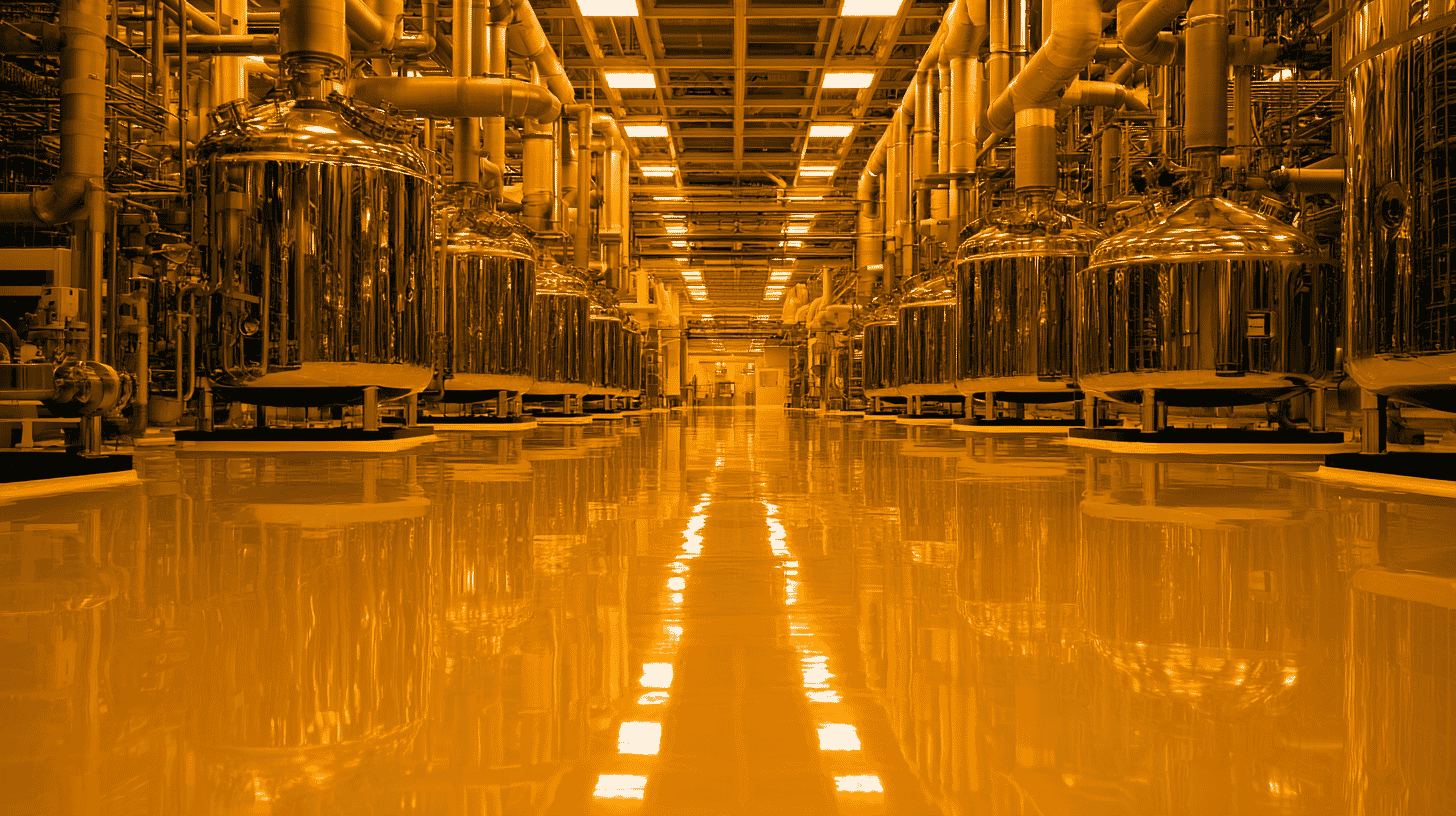
🏭 In August 2023, Tokyo Ohka Kogyo (TOK) said it would build a new photoresist plant in Koriyama, Fukushima Prefecture, because the chip market was expected to grow over the medium to long term. When the building was completed on October 8, 2026, at a cost of about 23 billion yen (about $145 million), sales of TOK's advanced EUV and ArF resists had grown 35% year on year in the first half of 2026, and the company had rewritten its targets around generative AI.
Dollar figures in this article are converted at 158.4 yen to the dollar, the rate on October 14, 2026.
What the company said in 2023
Photoresist is the light-sensitive coating used to print circuit patterns onto silicon wafers. TOK's Koriyama plant, one of its main production sites, makes EUV, ArF, KrF and other chip photoresists. The letters refer to the light sources used in lithography; EUV (extreme ultraviolet) is the one used for the most advanced chips.
On August 8, 2023, TOK announced the new production building, saying it would further raise product quality and expand supply capacity. The release called it the largest such building in Japan and put the budget at more than 20 billion yen (about $126 million), with construction from July 2024 and operations in the second half of 2026.
Koriyama has grown in steps
TOK has run the Koriyama plant since 1994. In July 2022 it opened an inspection building there for about 9 billion yen (about $57 million), saying it was built for the growing advanced-chip market and had room to expand for future demand.
On March 25, 2026, TOK signed a contract for a second site in Koriyama: 90,794 square meters for about 1.5 billion yen (about $9.5 million), more than half the size of the existing 165,764-square-meter plant site. The company says how it will be used is still under consideration.
By completion, the demand story had changed
In the published Q&A summary of its February 9, 2026 earnings briefing, TOK described the market this way:
- Memory demand was strong, centered on HBM (high-bandwidth memory, the stacked memory placed next to AI processors). EUV resist began contributing to sales in earnest in the second half of 2025, and EUV resist sales were expected to grow by double digits in 2026. Mass-production demand for GPUs and smartphones was steady.
- HBM production at DRAM makers was booming. Fewer of them were shifting back from EUV to the older ArF process, and EUV tools were being installed.
- KrF resist for NAND flash memory was expected to rise sharply from late 2025 into early 2026.
The same day, TOK raised the targets of its 2025-2027 business plan. The operating profit target went from 48 billion yen to 58 billion yen, and the EBITDA target from 61 billion yen to 72 billion yen. The reason given: sales were running above plan because of generative-AI demand, plus a weaker yen. Operating profit in 2025 had already reached 47.3 billion yen, close to the original target for 2027.
On July 30, 2026, TOK raised its 2026 forecast again. Revenue went from 261 billion yen to 291 billion yen, and operating profit from 52.2 billion yen to 60.6 billion yen, citing growing demand for AI servers in data centers. Its August results deck showed front-end photoresist sales up 30% year on year in the first half of 2026, with advanced (EUV and ArF) resists up 35%. Operating profit and EBITDA were now expected to beat the 2027 targets a year early (revenue was not).
So a plant justified in 2023 by medium- to long-term growth was finished in the middle of a surge that TOK itself attributes to generative AI. Whether the decision anticipated that, TOK's documents do not say.
Two announcements, side by side
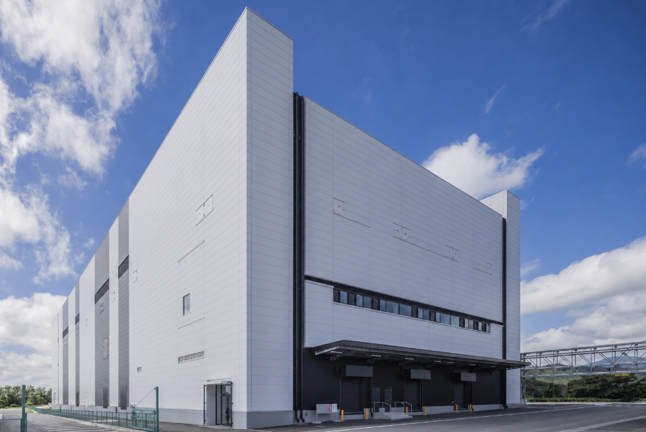
Source: Tokyo Ohka Kogyo
| August 2023 (decision) | October 2026 (completion) | |
|---|---|---|
| Scale | The largest such building in Japan | Among the largest in the world for photoresist |
| Investment | More than 20 billion yen | About 23 billion yen |
| Start of operations | Second half of 2026 | November 2026 (planned) |
| How the Koriyama plant's products are described | EUV, ArF, KrF and other resists | Various resists, including advanced EUV and ArF materials |
| Reason given | Medium- to long-term growth | Medium- to long-term growth |
| Production capacity | Not disclosed | Not disclosed |
| Mentions AI | No | No |
TOK's August investor deck goes further and calls it the world's largest photoresist production building. The label is TOK's own: none of these documents says what the comparison is based on, whether floor area, output or cost. With no capacity figure either, how much more resist Koriyama will be able to make is not public.
Completion, operation and shipments are different dates
The 2023 release put the start of operations in the second half of 2026. At the February 2026 briefing, explaining that heavier depreciation from new plants was within its expectations, TOK said it was preparing for the new Koriyama photoresist plant and a new high-purity chemicals plant in Pyeongtaek, South Korea, to start running from 2027. In the same answer, it said it was coordinating with customers so that its Kumamoto plant could run from the second half of 2026. TOK's August investor deck then marked Koriyama at the second half of 2026 on a chart of expected EBITDA, and the completion release says operations will start in November 2026.
TOK's Kumamoto plant shows how far such dates can drift. The Aso Kumamoto site in Kikuchi, Kumamoto Prefecture, which handles high-purity chemicals for chipmaking and cost about 13 billion yen (about $82 million), was due to start operations in the first half of 2025. The building was completed on June 6, 2024, and the start of operations was announced on June 8, 2026, about two years later.
For Koriyama, November 2026 is when the building is scheduled to start operating. When its output starts reaching customers in volume, TOK has not said.
What TOK said about EUV share in the same year
In the same February Q&A, TOK said that in EUV it had failed to win share in one generation, that the effect would last through 2026, and that it had won share in the next generation. It called 2026 a year of patience.
For the leading-edge node, TOK said selection was in its final stage, with about a year of evaluation ahead and results expected by year-end, and that it expected to win more share than in the previous generation. That push for share and the new building coming online fall in the same window, but TOK has not linked the two.
Betting three years ahead
From decision to completion, the Koriyama building took three years and two months, and as Kumamoto shows, operation can come later still. Had TOK made the same decision in February 2026, when it raised its targets, the same timeline would put completion in the spring of 2029.
Under its 2025-2027 business plan, announced on January 6, 2025, TOK budgeted 76 billion yen (about $480 million) for capital spending, its largest such plan to date. Its August deck lists the main projects: Koriyama (more than 20 billion yen), Aso Kumamoto (about 13 billion yen), Pyeongtaek (about 12 billion yen) and an inspection building in Incheon, South Korea (about 7 billion yen). (For why TOK matters to AI chips in the first place, see our earlier piece on the EUV photoresist maker behind AI chips.)
This Japanese chemicals maker committed more than 20 billion yen three years before the building would be ready. Would companies where you live make the same call?
References
- https://www.tok.co.jp/news/2026/261008
- https://www.tok.co.jp/news/2023/230808_4
- https://www.tok.co.jp/application/files/3516/7628/7065/0804_2.pdf
- https://www.tok.co.jp/news/2026/260325
- https://www.tok.co.jp/application/files/1817/7097/4274/q4_QA_Summary.pdf
- https://www.tok.co.jp/application/files/1517/7061/1184/260209_3.pdf
- https://www.tok.co.jp/application/files/4517/8538/4389/260730.pdf
- https://www.tok.co.jp/application/files/8017/8606/7288/account_2612_2.pdf
- https://www2.jpx.co.jp/disc/41860/140120250106546288.pdf
- https://www.tok.co.jp/news/2023/230808_5
- https://www.tok.co.jp/news/2024/240606
- https://www.tok.co.jp/news/2026/260608
- https://www.tok.co.jp/news/2026/260915






Global Discussion
4 comments