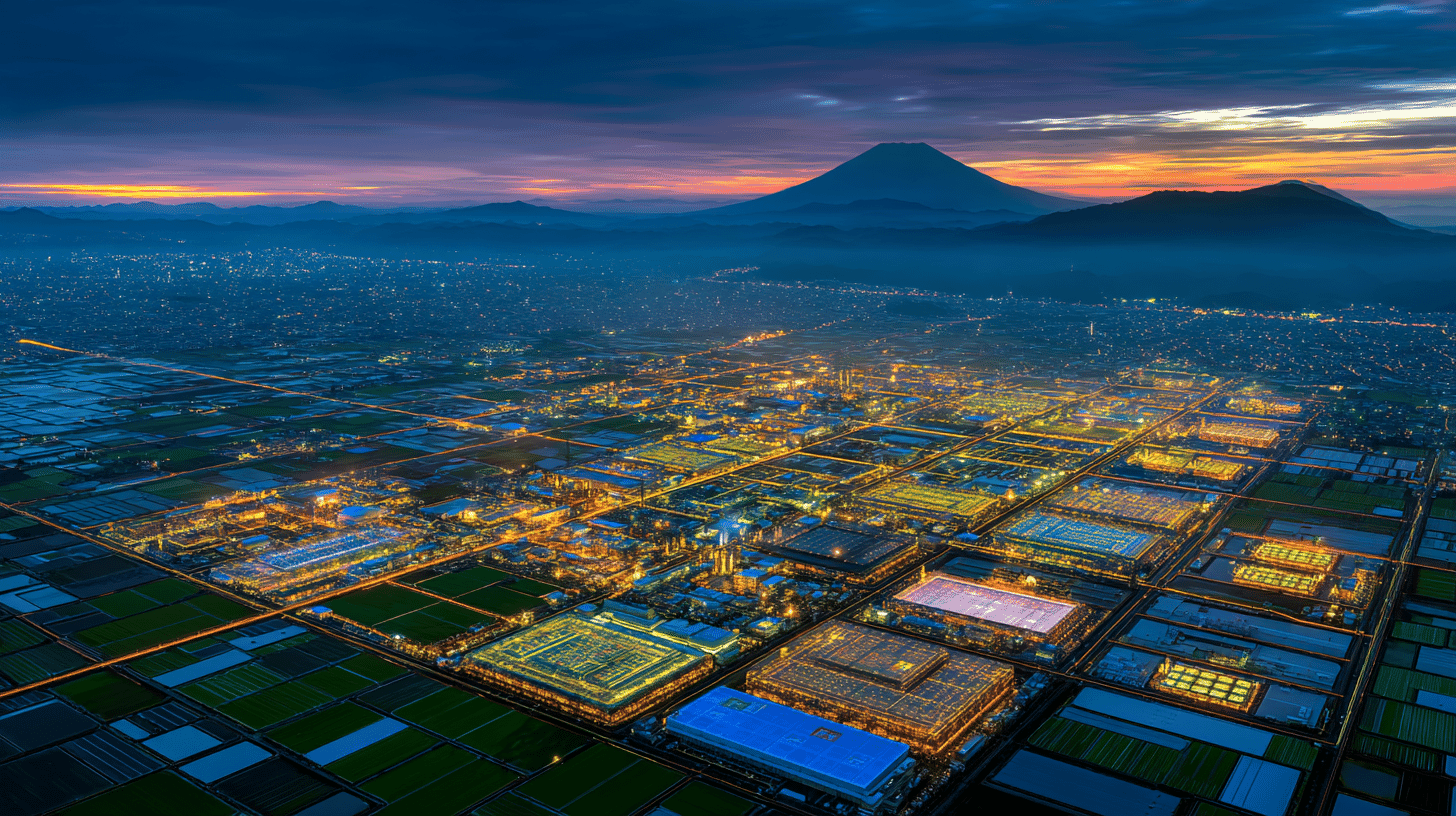
What if Japan could make the same cutting-edge chips that power ChatGPT and the latest iPhones, right in its own backyard?
That's exactly what's about to happen. TSMC, the world's largest chipmaker, just announced it will produce 3-nanometer semiconductors in Kumamoto, Japan by 2028, chips so advanced that only Taiwan makes them today. The investment? A staggering $17 billion. Here's why this is a game-changer for Japan and the global tech landscape.
From 7nm to 3nm: A Dramatic Upgrade
On February 5, 2026, TSMC Chairman and CEO C.C. Wei made a personal visit to Japan's Prime Minister Sanae Takaichi to deliver some big news: TSMC is completely overhauling its plans for its second factory in Kumamoto.
The original plan was to produce 7-nanometer chips, already respectable technology used in many smartphones and computing devices. But TSMC has decided to skip ahead and go straight to 3-nanometer production, one of the most advanced chipmaking technologies currently in mass production anywhere in the world.
To put it simply, the "nanometer" number refers to how small the circuits on a chip are. The smaller the number, the more powerful and energy-efficient the chip. Today's most advanced AI processors from companies like NVIDIA, and the latest chips in Apple's iPhones, are built using 3nm technology. Until now, these chips could only be made in Taiwan.
The total investment for TSMC's Kumamoto operations is now expected to reach approximately $17 billion (about ¥2.6 trillion), up significantly from the original $12.2 billion plan for less advanced chips.
Why the Sudden Change?
Several forces converged to make this upgrade happen.
The AI boom changed everything. When TSMC first planned its Kumamoto expansion, the automotive semiconductor market was the main target. But the explosive growth of artificial intelligence, from ChatGPT to autonomous driving systems, has created enormous demand for the most advanced chips. According to Omdia analyst Akira Minamikawa, the 7nm chips originally planned for Kumamoto are becoming a shrinking market, while AI-related demand is rapidly shifting to 3nm and even more advanced technologies.
Geopolitical risk is accelerating diversification. The potential for conflict in the Taiwan Strait has made governments and companies worldwide nervous about relying on Taiwan for virtually all cutting-edge chip production. Japan is positioning itself as a critical backup manufacturing base. As PM Takaichi noted, having 3nm production capability in Japan carries significant meaning from an "economic security" perspective.
Japan's generous subsidies sealed the deal. The Japanese government has already committed up to ¥732 billion (roughly $4.8 billion) in subsidies for TSMC's second Kumamoto plant, and is reportedly considering additional support for the upgraded plan. The Ministry of Economy, Trade and Industry plans to quadruple its budget for advanced semiconductor and AI support to approximately ¥1.23 trillion in the next fiscal year.
The Kumamoto Story So Far
TSMC's presence in Kumamoto has been building steadily. The first factory, operated through subsidiary JASM (Japan Advanced Semiconductor Manufacturing), began mass production in late 2024, producing chips using more mature 12nm to 28nm technology. That factory, a joint venture with Sony, Denso, and Toyota.
As of April 2025 it employed about 2,400 people and had achieved manufacturing performance on par with TSMC's facilities in Taiwan.
The economic impact has been significant. The Kyushu region, already nicknamed "Silicon Island" for its concentration of semiconductor companies, has seen an estimated ¥6.9 trillion ($45 billion) in economic ripple effects projected over ten years from TSMC-related investments. About 90 companies have established or expanded operations in the Kumamoto area since TSMC announced its entry.
However, the journey hasn't been entirely smooth. Construction of the second factory was delayed due to traffic congestion issues caused by the first factory's operations. There were also concerns that the automotive chip market, the original target, wasn't growing as fast as expected, raising questions about whether the factory would run at full capacity.
The pivot to 3nm production effectively answers those concerns by targeting the red-hot AI chip market instead.
What Will These Chips Be Used For?
Industry experts caution that Kumamoto's 3nm factory won't necessarily be producing the absolute cutting-edge AI training chips used by companies like NVIDIA, those will likely continue to be made in Taiwan and potentially at TSMC's Arizona facility in the United States.
Instead, Kumamoto's 3nm production could serve several critical markets. AI inference chips used in data centers to run trained AI models are one likely application. Edge AI processors for autonomous vehicles and robotics, areas where Japanese companies like Toyota have enormous demand, are another strong candidate. Advanced processors for next-generation smartphones and computing devices could also be produced.
The key insight from several analysts is that having any 3nm production capability in Japan dramatically changes the equation for Japanese companies. Equipment makers and materials suppliers will benefit from having a cutting-edge factory nearby, potentially sparking a broader renaissance in Japan's semiconductor ecosystem.
Japan's Bigger Semiconductor Comeback
TSMC's Kumamoto upgrade is just one piece of Japan's ambitious semiconductor revival strategy.
In Hokkaido, domestic startup Rapidus is building a factory aimed at producing even more advanced 2nm chips, with backing from IBM's technology and approximately ¥2 trillion in government support. The Japanese government has reportedly concluded that Rapidus and TSMC will serve different market segments rather than competing directly.
The national goal is bold: triple the combined revenue of domestic semiconductor manufacturers to ¥15 trillion by 2030, compared to 2020 levels. Between TSMC's investments in Kumamoto and Rapidus's ambitions in Hokkaido, Japan is essentially building two separate paths back to the frontier of chip manufacturing, one through foreign partnership, and one through domestic innovation.
Challenges Ahead
Not everyone is celebrating without reservation. Several important questions remain.
The first is about customers. Advanced chip manufacturing is enormously expensive, and factories need committed, high-volume customers to justify the investment. Japan currently lacks major domestic companies designing chips at the 3nm level. Whether Japanese AI startups and traditional manufacturers can create enough demand remains unclear.
The second concern is workforce. The semiconductor industry worldwide faces severe talent shortages, and Japan is no exception. JASM plans to grow its Kumamoto workforce to over 3,400, but finding and training engineers capable of running 3nm production lines is a significant challenge.
Third, there's the question of whether this is truly a "Japan" success story or primarily a Taiwanese company operating on Japanese soil. As one industry observer noted, if Kumamoto remains simply a production site, Japan gains jobs and tax revenue but limited technology transfer. The real prize would be accumulating knowledge in process improvement, yield optimization, and equipment development, capabilities that could lift Japan's entire semiconductor ecosystem.
Finally, the plan is still in early stages. Sources familiar with the matter emphasize that details are still being discussed and could change. The semiconductor industry moves fast, and what seems like the right bet today might look different in two years.
A Pivotal Moment
Despite the caveats, TSMC's decision to bring 3nm production to Japan represents a watershed moment. Just five years ago, the idea that cutting-edge chips would be manufactured in Japan seemed like a distant dream. The country had steadily lost ground in semiconductor manufacturing since the 1990s, watching as Taiwan, South Korea, and the United States pulled ahead. Now, with $17 billion in investment, strong government backing, and the tailwind of insatiable AI demand, Japan is positioning itself as a serious player in the advanced chip manufacturing game once again.
What about your country? Is your government investing in semiconductor manufacturing? Do you think having domestic chip production matters for economic security, or is the global supply chain working fine as is?
References
- https://www.bloomberg.com/jp/news/articles/2026-02-05/T9YJDOKK3NY800
- https://www.nikkei.com/article/DGXZQOGM295DG0Z20C26A1000000/
- https://www.trendforce.com/news/2026/02/05/news-tsmc-reportedly-to-upgrade-kumamoto-2nd-plant-from-67nm-to-3nm-boosting-japans-chip-capabilities/
- https://semiwiki.com/semiconductor-manufacturers/tsmc/363007-tsmc-kumamoto-pioneering-japans-semiconductor-revival/
- https://newspicks.com/news/15980530/









Global Discussion
15 comments