Japan may write a study of nuclear-powered submarines into its security documents. Why nuclear propulsion is not nuclear arms, why the barrier is a 1965 legal reading, and what Australia, Korea and Brazil show.
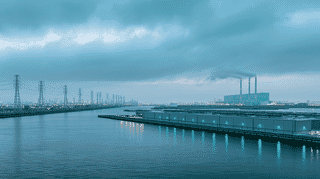
JERA, Dell and RHAELM plan a 400 MW AI data center at JERA's Chiba gas plant, powered without the public grid. Why there, what gas means, and the US case regulators blocked.
Hafnium keeps advanced chips and jet engines running, yet the world makes about 71 tonnes a year, nearly all of it in France and the United States. An Osaka chemical maker now wants a share of it by 2028.
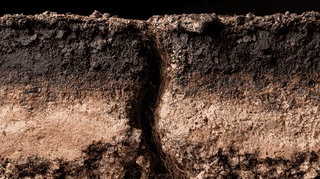
Glassy radioactive particles called cesium balls were thought to stay in Fukushima's topsoil. A Kyoto University team found them inside 39 of 52 earthworms, and one 15.5 centimeters down.
Japan set targets to rebuild its reactors even as its utilities keep getting caught faking data and fixing prices. How the US, France and Korea arrange nuclear oversight, and why no model is scandal-proof.
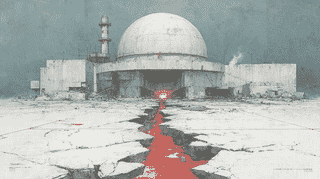
Hamaoka nuclear plant sits right atop the Nankai Trough megaquake zone. Its operator, Chubu Electric, shrank the key seismic-safety figure the plant is built against, and kept altering data even after regulators opened a probe, rewriting 69 of 225 datasets. On July 1 the NRA called it fabrication and a cover-up. The real test isn't the reactor's engineering; it's whether Japan's post-Fukushima watchdog has teeth.
METI has unveiled Japan's first post-Fukushima numeric target for replacing nuclear reactors: up to 5 by the 2040s, 14 by the 2050s. Behind the decarbonization, energy-security and AI-demand drivers lies a harder question: regulatory capture, the Nuclear Village, and whether the regulator can be trusted.
The world's first factory built to mass-produce diamond semiconductors has opened in Okuma, the Fukushima town that hosts the wrecked Daiichi nuclear plant. How a material researchers chased for 40 years found its purpose in the place that needed it most.
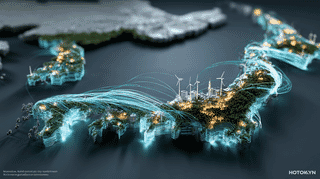
By fiscal 2034, new data centers and semiconductor fabs will add peak electricity demand equal to seven nuclear reactors in Japan, with roughly 60 percent of capacity clustered around Tokyo and the connection queue backed up. The government's answer is Watt-Bit Integration. Set against Virginia's pricing fix, Ireland's renewables mandate, and Singapore's hard area cap, Japan's regional-distribution-plus-decarbonization bet comes into focus.
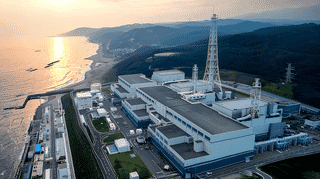
On April 16, 2026, TEPCO's Kashiwazaki-Kariwa Unit 6 resumed commercial operation for the first time in 14 years, the first post-Fukushima restart for the utility responsible for the 2011 disaster. With Middle East tensions squeezing LNG supply, electricity prices climbing, and 2050 carbon neutrality targets looming, Japan's energy policy has reached an inflection point. A deep dive into the restart's context, comparisons with Germany, France, and South Korea, the 'enclave mega-solar' scandal denting renewables, and how ordinary Japanese people are actually reacting.
Japan's first nuclear-powered ship "Mutsu," launched in 1969, was plagued by a radiation leak incident and fierce public opposition. Yet engineers cut the hull apart, removed the reactor, and spent roughly $1.3 billion (in today's value) transforming it into "Mirai" — one of the world's largest ocean research vessels. Over 28 years, Mirai sailed 2.3 million km (58 trips around Earth), pioneered Arctic research, and even surveyed Fukushima's nuclear contamination. Retired in December 2025, its story of dramatic reinvention now passes the torch to the icebreaking successor "Mirai II."
Hiroshima University and Phenitec Semiconductor achieved the world's first SiC integrated circuit prototype production in a commercial fab. This revolutionary semiconductor technology operates at 500°C and under high radiation, enabling applications in extreme environments like Venus surface exploration and Fukushima nuclear decommissioning—expanding humanity's frontier through Japanese innovation.
Japanese-led international research team reveals the quenching mechanism of thorium-229 isomers crucial for next-generation nuclear clocks. Discovery shows electrons in crystals reset nuclear states, advancing portable solid-state nuclear clocks for GPS and dark matter research.
Japan's Ministry of Economy, Trade and Industry allocates approximately 300 billion yen for generative AI in its 2026 budget proposal. Supporting domestic AI development with 1 trillion yen over 5 years in partnership with private companies like SoftBank. Also advancing next-generation nuclear reactor development to strengthen Japan's industrial competitiveness.