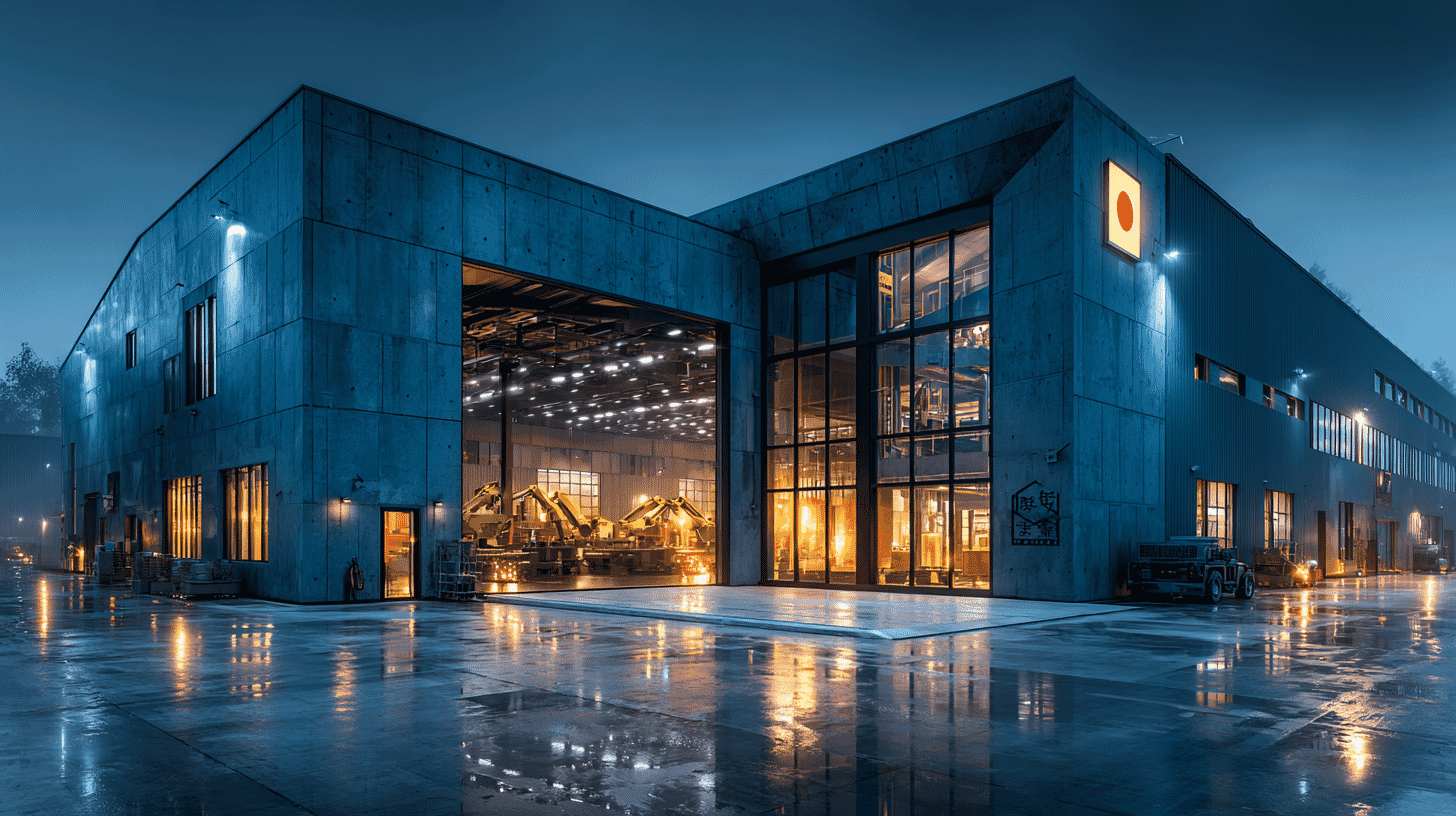
Japan's government is considering something it has not done since World War II: taking ownership of defense equipment factories. For 80 years, Japan left weapons manufacturing entirely to private companies. The lessons of Ukraine's ammunition crisis are forcing a rethink.
The Defense Ministry's Five Key Issues
On March 23, 2026, Japan's Ministry of Defense presented five critical discussion points to the Liberal Democratic Party's (LDP) Security Affairs Committee. These points will guide the revision of Japan's three key security documents, the National Security Strategy, National Defense Strategy, and Defense Buildup Program, scheduled for completion by the end of 2026.
Among the most significant proposals: the government would acquire and own manufacturing equipment currently held by private defense contractors. The official language calls for "expansion of government involvement, including state ownership of manufacturing facilities."
The five discussion areas are:
- Securing sustained warfighting capability (strengthening the defense production base)
- Adapting to new warfare involving drones and unmanned systems
- Strengthening deterrence and response capabilities in the Pacific
- Reinforcing the Japan-U.S. alliance and partnerships with like-minded nations
- Enhancing information warfare capabilities
The LDP plans to compile its formal recommendations to the government by the end of May 2026.
The Return of the "Kōshō," and How It Differs From Before
A key detail: the coalition agreement signed in October 2025 between the LDP and Nippon Ishin no Kai (Japan Innovation Party) explicitly includes a commitment to promote policies related to state-run "kōshō", a term that historically referred to government-operated arsenals and munitions factories.
Before and during World War II, Japan operated extensive state-run arsenals. The Yokosuka Naval Arsenal and Osaka Artillery Arsenal were massive industrial complexes that produced everything from battleships to artillery shells. After Japan's defeat in 1945, the Allied occupation forces dismantled all of them, and defense manufacturing was handed over entirely to private industry.
The current proposal would reshape this 80-year-old structure, but through a fundamentally different model. The leading concept is "GOCO", Government Owned, Contractor Operated. Under this arrangement, the government would purchase and own factory equipment and facilities, while private companies would continue to manage day-to-day operations. This is significantly different from the wartime model where the military directly controlled production.
The United States has used the GOCO model extensively. Fighter jets, missiles, and ammunition are produced in government-owned facilities operated by companies like Lockheed Martin and General Dynamics. Japan appears to be studying this American approach as it designs its own system.
It is worth noting that state purchase of production equipment is not entirely new here. The Defense Production Base Strengthening Act, passed in 2023, already created a scheme under which the government buys the manufacturing facilities of companies that cannot restart or hand on an unprofitable line, then contracts their management out. What is being considered now is a step up in the degree of state involvement, not the invention of it.
Why Now? Three Converging Pressures
The Exodus of Defense Contractors
Japan's defense industry has a structural problem that sets it apart from Western counterparts. Most Japanese defense manufacturers, Mitsubishi Heavy Industries, Kawasaki Heavy Industries, NEC, Mitsubishi Electric, treat defense work as a small sideline. On average, defense contracts account for only about 4% of these companies' total revenue.
With low profit margins and only one customer (the Ministry of Defense), the business case for staying in defense has been weak. Over the past two decades, more than 100 companies have exited the defense sector. Komatsu abandoned armored vehicle development. Yokogawa Electric left the aircraft display business. Sumitomo Heavy Industries stopped making machine guns.
The supply chain implications are enormous: roughly 1,300 companies contribute to building a single tank, about 1,100 for a fighter jet, and approximately 8,300 for a destroyer. When even one key supplier exits, it can cripple an entire production line.
A Record Defense Budget With Nowhere to Spend It
Japan's defense spending has surged to unprecedented levels. The fiscal year 2026 defense budget reached approximately $58 billion (¥9.04 trillion), a record high for the 12th consecutive year. This represents a 9.4% increase from the previous year and is part of a five-year, $275 billion (¥43.5 trillion) Defense Buildup Program running from 2023 to 2027.
Under Prime Minister Sanae Takaichi, Japan achieved its target of spending 2% of GDP on defense two years ahead of schedule. If fully realized, this would make Japan the world's third-largest defense spender after the United States and China.
But money alone doesn't solve the problem. If factories lack the capacity or workforce to produce what's needed, a bigger budget simply means more equipment purchased from overseas, mainly the United States, through the Foreign Military Sales (FMS) program. The nationalization plan aims to ensure that increased spending actually strengthens Japan's domestic production capabilities.
Ukraine's Ammunition Reality Check
The Russia-Ukraine war has been the single most powerful catalyst for this policy shift. The conflict demonstrated that modern conventional warfare can consume ammunition at rates that exceed even NATO's combined production capacity. Artillery shells were being fired at a rate of tens of thousands per day, and Western stockpiles proved inadequate.
For Japan, this isn't hypothetical. The country faces military pressure from three nuclear-armed neighbors: China's expanding military and assertive posture toward Taiwan, North Korea's continued missile development, and Russia's increased activity near Japanese territory. The question of whether Japan's Self-Defense Forces could sustain operations in a prolonged conflict has become urgent.
How Japan's Defense Industry Compares to the West
The United States: Defense as Big Business
America's defense sector is dominated by dedicated defense giants. Lockheed Martin alone generated roughly $71 billion in revenue in 2024, with defense as its core business. RTX (formerly Raytheon), Northrop Grumman, Boeing's defense division, and General Dynamics form an industrial ecosystem where defense is the primary, not peripheral, activity.
The U.S. government also maintains an extensive network of GOCO facilities, ensuring that production infrastructure exists even when private companies might otherwise find it unprofitable to maintain idle capacity.
United Kingdom and Europe: A History of Nationalization and Privatization
Britain's BAE Systems, with annual revenue of approximately $36 billion, was created through the merger and privatization of formerly state-owned entities, including the British Aircraft Corporation and Royal Ordnance. The UK essentially went from state ownership to privatization.
France maintains significant government stakes in companies like Dassault and Thales. Germany's Rheinmetall has seen its stock price and production orders surge since the Ukraine war began. Across Europe, the war has triggered a scramble to rebuild ammunition production capacity that had atrophied after the Cold War.
Japan's Unique Dilemma
Japan's post-war pacifism and self-imposed arms export restrictions (the former "Three Principles on Arms Exports," now the "Three Principles on Transfer of Defense Equipment and Technology") confined its defense industry to a domestic-only market. Companies were forced into low-volume, high-variety production without the economies of scale that exports would provide.
Recent policy changes have begun opening doors. Australia selected Mitsubishi Heavy Industries to build an upgraded Mogami-class frigate, and Japan has exported radar systems to the Philippines. But compared to established Western defense exporters, Japan remains a newcomer.
The Debate: Why Opinions Are Divided
The Case For
Security hawks argue that ammunition supply is too critical to leave entirely to private sector economics. Companies exit unprofitable businesses, but national defense requirements don't disappear. State ownership of manufacturing facilities would guarantee production line maintenance during peacetime and enable rapid scaling during crises.
Proponents also point out that Japan already has legal groundwork. The Defense Production Base Enhancement Act, enacted in October 2023, allows the government to acquire facilities from companies that can no longer sustain defense operations. The GOCO model would extend this concept proactively rather than reactively.
The Case Against
Critics raise both historical and practical concerns. The word "kōshō" carries heavy wartime connotations, and opposition parties worry that reviving state-run arsenals signals a move toward remilitarization.
Defense journalist Shin'ichi Kiyotani has argued that Japan's defense bureaucracy currently lacks the expertise and institutional culture to manage state-owned production effectively. He has studied models in the UK, South Africa, Jordan, Switzerland, and Finland, and argues that without fundamental reform of procurement practices, simply creating government-owned factories would result in inefficiency and waste.
There are also fiscal concerns. With Japan's government debt already exceeding $9 trillion (¥1.15 quadrillion) and interest payments rising due to the end of negative interest rate policy, critics question whether taxpayers should bear the additional burden of maintaining state-owned factories.
What Happened Next: From Concept to Legislation
The discussion moved past March.
At an LDP Security Affairs Committee meeting on April 6, the Defense Ministry said it would strengthen direct state involvement in securing the production base for defense equipment. Within the government and ruling parties, the idea has widened from acting as a broker for equipment transfers between companies to taking a leading role in production itself.
Then in July 2026, reports emerged that the government is preparing to submit legislation to the Diet as soon as 2027 to nationalise defense equipment production plants. The model in mind is the one this article described in March as the leading candidate: the state owns the facilities, private companies run them. A revision of the Defense Production Base Strengthening Act is under consideration, and the plan was written into the draft of the government's Basic Policy on Economic and Fiscal Management.
Once a study item reaches the government's basic policy document, it has stopped being a concept and become a schedule.
What Comes Next
Alongside factory nationalisation, the government is exploring startup participation in defense, flexible contract structures, and expanded arms exports to strengthen production capacity.
This is the most significant shift in Japan's defense industrial policy since the post-war period. The country is trying to hold its identity as a peace-oriented nation against the practical demands of a deteriorating security environment. What it means that the word kōshō has returned to a policy document after 80 years will be asked more directly as the bill takes shape.
How does your country handle defense manufacturing? Is it primarily a government responsibility, a private sector enterprise, or some hybrid model? We'd love to hear your perspective in the comments.
References
- https://www.nikkei.com/article/DGXZQOUA239Q10T20C26A3000000/
- https://news.yahoo.co.jp/articles/4977f9be01e5d6d6871675d52394eacb1edd9284
- https://www.defensenews.com/global/asia-pacific/2025/12/26/japans-cabinet-oks-record-defense-budget-that-aims-to-deter-china/
- https://www.tokyo-np.co.jp/article/436360
- https://www.mod.go.jp/j/policy/agenda/meeting/drastic-reinforcement/pdf/siryo03_02.pdf






Global Discussion
14 comments