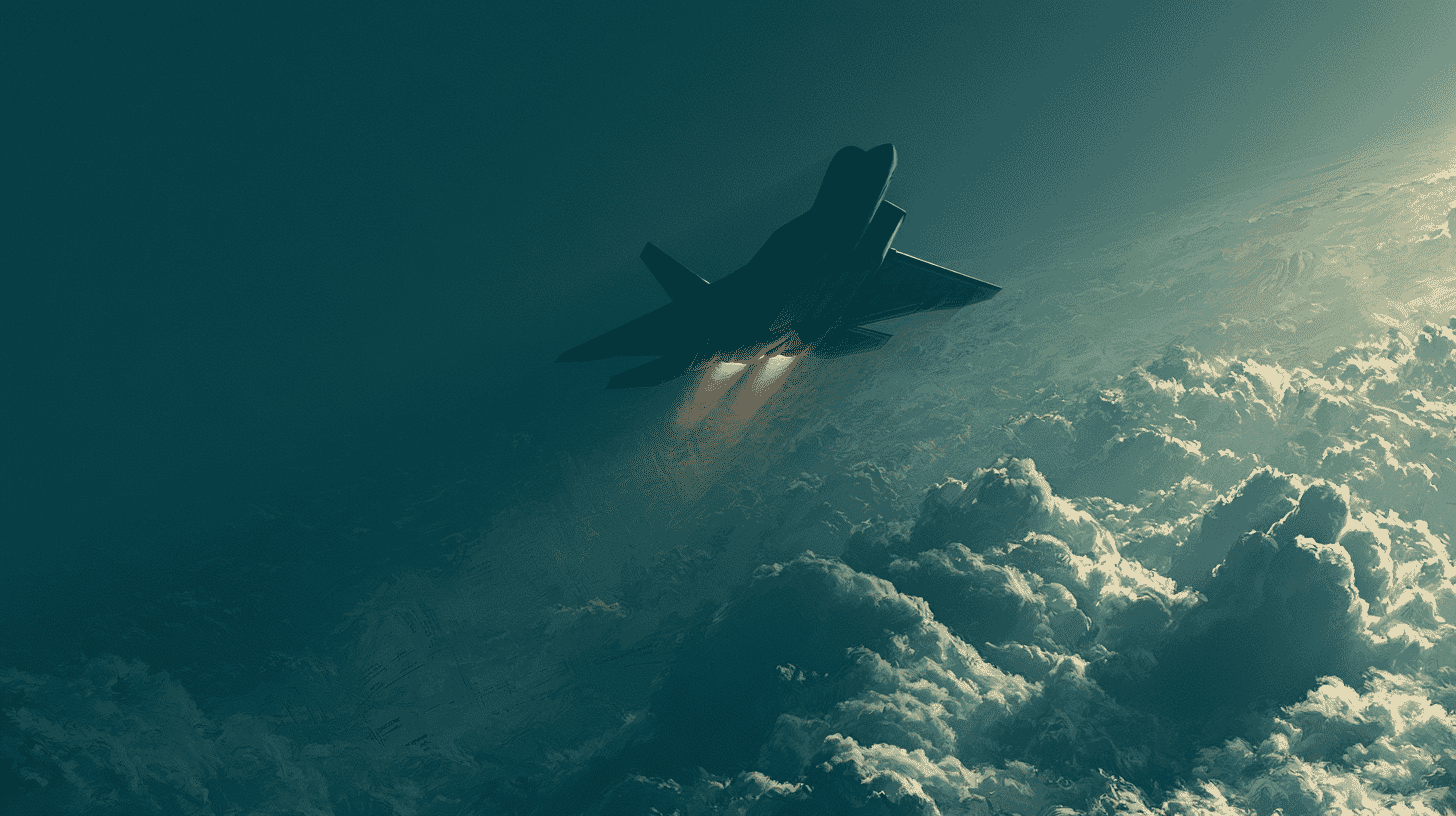
✈️ For most of this year, the question shadowing the world's most ambitious fighter program wasn't about stealth coatings or engine thrust. It was blunter than that: could Britain find the cash? On June 30, on the last day before the money ran out, it did. The UK's long-delayed defense spending plan finally landed, and the three-nation jet Japan is counting on lived to fight another day.
Britain moved at the eleventh hour
The Global Combat Air Programme, GCAP, the sixth-generation stealth fighter Japan, the UK and Italy are building together, had been running on fumes. Since April, the work was kept alive by a three-month "bridge" contract worth 686 million pounds (about $907 million), designed to do one thing: buy time until Britain settled its defense budget. That bridge expired at the end of June.
Then, on June 30, the UK published its Defence Investment Plan, a four-year map of British defense spending worth £298 billion, of which only about £15 billion is genuinely new money. It earmarked £8.6 billion ($11.4 billion) for GCAP over those four years. With the money finally on the books, the three governments agreed to extend the industrial contract through the end of 2027, an 18-month commitment replacing the hand-to-mouth short-term deals that came before.
Update: The contract was signed on July 1 and announced on July 3. The GCAP Agency, an arm of GIGO, awarded prime contractor Edgewing £4.6 billion ($6.1 billion) for an 18-month package running to December 31, 2027, funded in equal shares of roughly £1.53 billion by the UK, Italy and Japan. It completes the advanced concept and assessment phase and carries the programme into joint detailed design and development, and also covers the sensing consortium and the Rolls-Royce, Avio Aero and IHI propulsion team. GCAP Agency chief executive Masami Oka said the future of the programme had never been more assured. (Added July 29, 2026)
Why Tokyo was the one sweating
GCAP was announced in December 2022, merging Japan's next-fighter project with the UK-Italy Tempest effort. The plan: field a sixth-generation stealth jet by 2035 to replace Japan's F-2 and the Eurofighter Typhoons flown by Britain and Italy. It's coordinated by an intergovernmental body called GIGO, set up in Reading, England in July 2025 under former Japanese defense vice-minister Masami Oka. The aircraft itself is being built by Edgewing, a joint venture owned in equal thirds by Britain's BAE Systems, Italy's Leonardo, and Japan's JAIEC, a consortium backed by Mitsubishi Heavy Industries.
For Japan, 2035 is not a soft target. The F-2 fleet is scheduled to begin retiring around then, and the entire plan assumes GCAP shows up to replace it. Slip the timeline and Japan faces a hole in its air defense exactly as Chinese and Russian aircraft probe its skies with growing frequency. Britain and Italy have more slack, since their Typhoons are meant to fly into the 2040s. That asymmetry is why, as one round of UK delays followed another, it was Tokyo that grew visibly impatient. Reporting described Japanese Defense Minister Shinjiro Koizumi as "unusually blunt" with his British counterparts.
The stakes weren't abstract. A BAE Systems executive warned publicly that the 4,000-plus UK engineers on GCAP could be reassigned if long-term funding didn't materialize. Skilled aerospace teams, once scattered, don't reassemble on command. By May, Italy had revised its estimate for the program's early phase to 18.6 billion euros ($21.2 billion), roughly three times what Rome's parliament had first been told.
The document that saved the jet helped sink a government
Here's the twist. The Defence Investment Plan that rescued GCAP is the same document whose delay had been tearing at Britain's government for weeks.
It was originally due in autumn 2025 and never came, held up by a standoff between the Ministry of Defence and the Treasury over money. The fallout was real. Defence Secretary John Healey resigned on June 11, and the armed forces minister quit the same day over the spending plan. Dan Jarvis has since taken over the defence brief. That was part of a wider collapse of confidence in Prime Minister Keir Starmer, who announced on June 22 that he would step down.
So when the plan was finally unveiled on June 30, it was signed off by an outgoing prime minister on his way out the door, a parting act that, among other things, kept a trilateral fighter program from stalling. Andy Burnham, the former Greater Manchester mayor now favored to succeed Starmer, is expected to stand by the GCAP commitment. But the handover is a reminder of how exposed the program had become to the churn of one partner's domestic politics.
The bet on building without America
Step back, and GCAP is a bigger gamble than a single budget line.
For decades, Japan's fighter fleet has run on American iron, F-15s and F-35s, and its one prior "domestic" fighter, the F-2, was co-developed with the United States under heavy American constraints. GCAP is different. It's the first time Japan is building a fighter with partners other than the US, as an equal shareholder rather than a junior customer. The three nations split ownership evenly, and the design authority sits with a shared company rather than a Pentagon prime contractor.
That is the strategic point, and it's why others are watching. Canada, wary of leaning too hard on US suppliers under the Trump administration, joined as an observer in early 2026. Germany, stuck in its own troubled fighter project with France and Spain, has been sizing up GCAP as an alternative. If the program delivers, it could put the world's first sixth-generation fighter in the air, and offer rare proof that a top-tier weapons platform can be built outside Washington's orbit.
But the same year that made the case for the bet also exposed its catch. Japan picked a partner precisely to gain independence from the US, then spent months hostage to whether a British treasury would sign a spending plan. Swap dependence on Washington for dependence on Westminster, and you've traded one kind of exposure for another. "Good on Britain for coming through" is the honest reaction. It is not the same thing as certainty.
2035 is still a long way off
For now, the crisis is over. The money is committed, the contract runs to the end of 2027, and a demonstrator aircraft is meant to fly before then. Britain, after a year of dithering, delivered on the day it had to.
The harder questions haven't gone anywhere. Can a three-country program with three sets of politics actually hit 2035? Will Burnham's government treat GCAP as settled or reopen it? Will Japan's F-2 bow out on schedule with a replacement ready to take its place? None of that is answered by one budget document. But a program that spent this year asking whether it would survive can, at least, get back to the harder work of building the thing.
In Japan, the case for developing critical defense technology alongside allies, rather than buying it off the shelf from a single superpower, just passed a stress test. Where does your country come down on that trade-off: build it together with partners, buy from the strongest supplier, or go it alone?
References
- https://www.defensenews.com/global/europe/2026/07/01/uk-defense-plan-to-unlock-fresh-gcap-contract-before-farnborough-airshow/
- https://defence-blog.com/uk-japan-and-italy-extend-gcap-fighter-contract-through-2027/
- https://www.janes.com/defence-intelligence-insights/defence-news/defence/gcap-international-contract-to-be-signed-by-end-of-month-says-uk-government
- https://www.defenceeye.co.uk/2026/06/26/gcap-now-a-go/
- https://en.wikipedia.org/wiki/Global_Combat_Air_Programme
- https://en.wikipedia.org/wiki/2026_Labour_Party_leadership_crisis
- https://www.asahi.com/articles/ASV6Z5HW1V6ZUHBI02MM.html



Global Discussion
4 comments