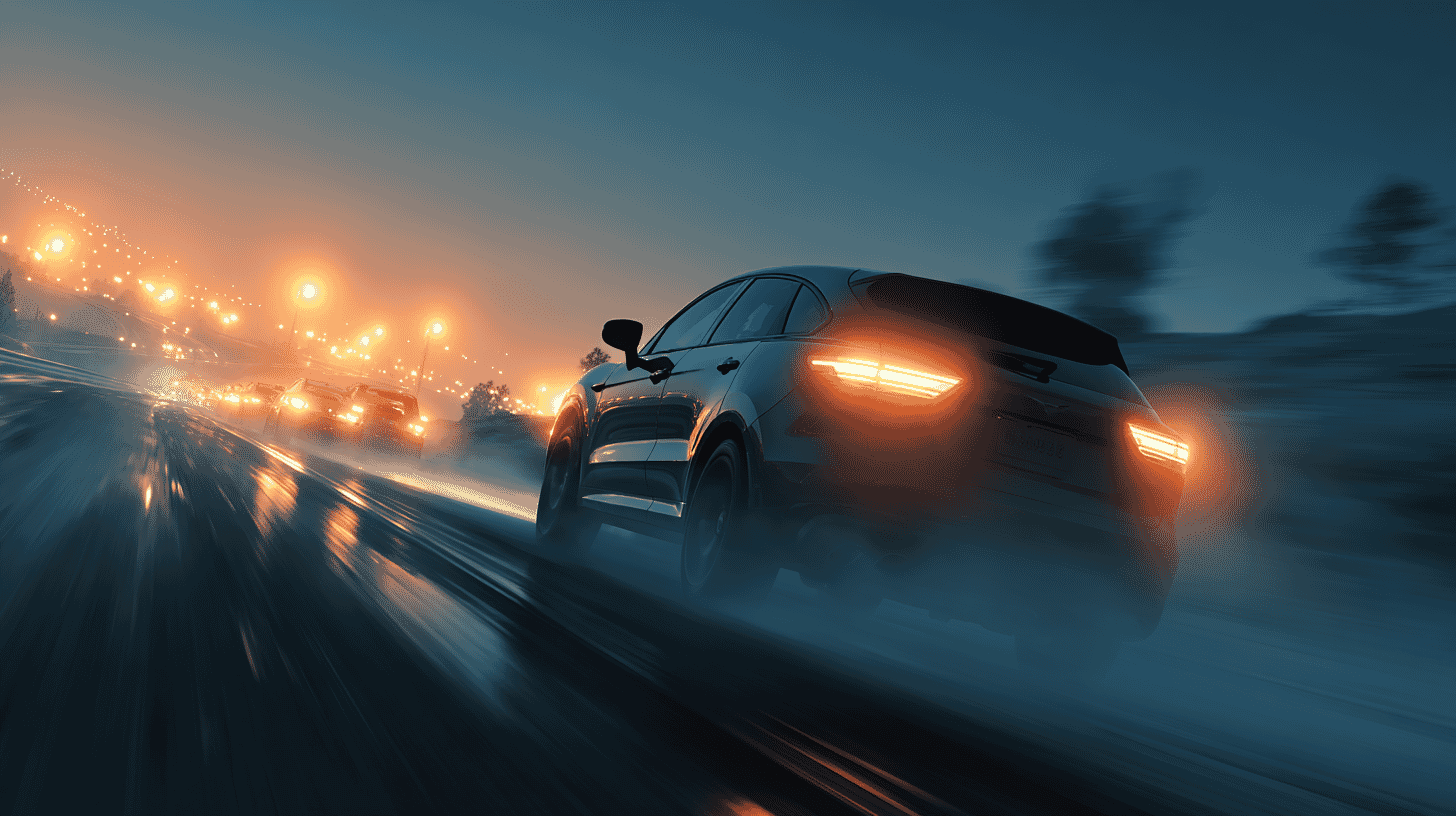
🚙 While Honda just took its biggest loss ever cancelling EVs, and Toyota's RAV4 went all-hybrid for 2026, Mazda is making a quieter, and possibly smarter, bet: redesign the SUV that already pays the bills, keep it on combustion power for now, and price it under every Japanese rival.
The all-new third-generation CX-5 went on sale in Japan today. Here's why this single car may matter more to Mazda than anything Tesla or BYD is doing.
The Most Important Car at Mazda Just Got Rebuilt From Scratch
On May 21, 2026, Mazda put its all-new third-generation CX-5 on sale across Japan, with a starting price of 3.3 million yen (roughly $20,800 at the current ¥159 rate). The model is now in showrooms in Europe, North America, and Japan, with the global rollout completed within nine months of the European debut.
That timing matters. The CX-5 has carried Mazda's business for the past decade. Since launching in 2012, it has been sold in more than 100 countries and crossed 5 million cumulative global sales in January 2026, the fastest-selling model in Mazda's history, and only the third nameplate ever (after the 323 and Mazda3) to reach that milestone.
In the United States alone, the CX-5 sold 136,335 units in 2024 to become Mazda's best-selling vehicle. And in Japan, where overall car sales have been weak, the previous generation has accounted for roughly a quarter of Mazda's passenger volume in some periods.
This is the car that funds everything else Mazda does. Letting it grow stale would be unthinkable. Yet the previous generation had been on sale since December 2016, roughly nine and a half years. The third-generation redesign isn't just an update; it's the company betting its near-term future on getting one car right.
What's New: Bigger Cabin, Google Inside, No More Diesel
Outside, the new CX-5 looks familiar. Mazda's "Kodo: Soul of Motion" design language is intact, with sharper headlights, L-shaped taillights borrowed from the larger CX-70 and CX-90, and a cleaner grille treatment. Some Japanese car critics have noted that the styling is more conservative than expected, but Mazda's chief designer has hinted this is intentional, after a stretch of bolder forms that didn't all land with mainstream buyers.
The real changes are underneath and inside. The body is longer with a stretched wheelbase, opening up rear-seat legroom and cargo space, both practical complaints about the previous CX-5 that Mazda has clearly heard. Body dimensions are now 4,690 mm long, 1,860 mm wide, 1,695 mm tall.
Mazda also rebuilt the electronic architecture from scratch. The new "MAZDA E/E ARCHITECTURE+" platform carries the largest touchscreens Mazda has ever fitted to a passenger car, a 15.6-inch display in higher trims and 12.9-inch in lower, plus Mazda's first Google-built-in infotainment system, with native Google Maps and a Gemini voice assistant.
That's a quiet but meaningful shift. For years Mazda resisted big touchscreens, arguing that physical controls and a rotary dial kept drivers' eyes on the road, a philosophy that helped the brand win Consumer Reports' inaugural Safety Verdict ranking in February 2026, beating Volvo and Mercedes. The new CX-5 doesn't abandon that thinking entirely, but it does concede that buyers now expect a phone-grade screen experience inside their car.
Powertrain decisions are the other surprise. There is no diesel option, ending a long-running CX-5 signature in Europe. There is no plug-in hybrid yet. Every CX-5 sold at launch uses a 2.5-liter "e-SKYACTIV G" mild-hybrid system: 178 horsepower from the engine plus a small 6.5-horsepower motor and a 10-amp-hour battery. It's the cautious option: more efficient than a pure gas engine, far less complex (and cheaper to build) than a full hybrid.
A proper "strong" hybrid is coming in 2027, using Mazda's all-new SKYACTIV-Z engine, a 2.5-liter unit designed from the ground up for hybrid duty, with lean-burn combustion and compression-ignition technology Mazda has been refining for years. That powertrain is meant to comply with Europe's incoming Euro 7 and the U.S. Tier 4 / LEV4 emissions rules.
The Price Tells the Real Story
In Japan, the lineup is unusually simple: three grades (S, G, L) in front- or all-wheel drive, from 3.3 million yen to 4.31 million yen ($20,800 to $27,100). Mazda is targeting 2,000 sales a month domestically.
In the United States, the 2026 CX-5 starts at $29,990 before destination. To put that in context against its main rivals at base trim:
- Mazda CX-5: $29,990 (standard all-wheel drive)
- Hyundai Tucson: $29,450
- Honda CR-V: $30,920
- Toyota RAV4: $31,900 (hybrid-only for 2026)
The CX-5 is the cheapest entry point among the big Japanese-brand compact SUVs in the U.S., and it's the only one in this list that includes all-wheel drive as standard. That positioning is not an accident. Mazda's North American CEO Tom Donnelly told WardsAuto that the new CX-5 is built to grow share against the RAV4 and CR-V, both of which sell at higher volumes than the CX-5 in the U.S.

Source: Mazda Newsroom
Why Mazda Is Not Joining the EV Race This Round
To understand the strategic logic, look at what's happening to other Japanese automakers right now.
Honda just announced its first net loss as a public company, up to 690 billion yen ($4.3 billion), after cancelling its entire North American Honda 0 EV program in March 2026 and walking back its 2040 "end of combustion" pledge. Honda is now rebuilding around hybrids, and pulled out of South Korea entirely as part of the same cost-cutting.
Sony and Honda's joint AFEELA EV project, shown at CES every year from 2023 to 2026, was killed in March 2026 before a single car shipped; the joint venture itself was scaled back in April. Ford in the U.S. wrote down $19.5 billion on its EV business. Stellantis cancelled multiple EV programs. More than twenty automakers globally have delayed or scrapped EV launches in the past year.
Meanwhile, BYD passed Tesla in 2024 to become the world's largest EV maker, building its lead on cheap, mass-market electric cars that start around 2-4 million yen ($12,500-$25,000) in many markets. Tesla still dominates the higher-margin U.S. EV segment but has slowed its expansion. EV demand growth has stalled in the U.S. and parts of Europe, while hybrids, particularly Toyota's, have surged.
In that environment, Mazda's strategy starts to look less timid. The company has formally adopted what it calls a "light-asset strategy": using mild hybrid and Toyota-supplied hybrid systems for the near term, focusing capital on developing its own SKYACTIV-Z engine and a proprietary EV platform for later in the decade. It is, in effect, Toyota's multi-pathway playbook executed by a smaller company that can't afford to bet wrong.
The CX-5 is the test case. If Mazda can sell hundreds of thousands of mild-hybrid SUVs annually in markets where buyers say they want EVs but aren't actually buying them in expected numbers, the strategy is vindicated. If buyers defect to RAV4 hybrid or to cheaper Chinese EVs in markets like Europe, the math gets harder.
How It Stacks Up Against the Competition
Against the Toyota RAV4, which went hybrid-only for 2026 and gets up to 42 mpg combined, the CX-5's mild-hybrid 2.5-liter looks behind on paper. Fuel economy in U.S. trim is expected in the mid-20s mpg combined, against the RAV4's 37-42 mpg range. The 2027 SKYACTIV-Z hybrid will narrow that gap, but the RAV4 has a one-year lead in U.S. dealerships.
Against the Honda CR-V, which offers both turbocharged gas and a hybrid, the CX-5 wins on interior materials and standard all-wheel drive but loses on fuel economy and powertrain choice.
Against the Hyundai Tucson, the cheapest of the four, the CX-5 trades on Mazda's reputation for driving feel and build quality. U.S. News and other comparison reviews from earlier this year have praised the new CX-5's cabin quality and handling, while questioning the lack of a hybrid at launch.
Where the CX-5 doesn't really compete is in the BYD and Tesla price brackets in their home markets. Mazda has only a small presence in China (where Changan Mazda produces some units locally and where the brand has been losing share for years). In the U.S., Tesla's Model Y costs $36,490 before any incentives, and BYD doesn't sell to retail buyers at all due to a 100% tariff. The competition for the CX-5 is mostly other gas and hybrid SUVs, not pure EVs.
What the Sales Numbers Will Have to Show
Mazda hasn't published a hard global volume target for the new CX-5, but the existing trajectory points to roughly 330,000 units per year globally. The 5-million cumulative milestone took just under 14 years; replacing that base of customers, and growing it modestly, is the explicit goal of the third-generation car. The company has flagged the CX-5 as the central model in its 2027 business plan.
In Japan, monthly target is 2,000 units. In the U.S., Donnelly said publicly he expects to grow share against RAV4 and CR-V, without putting a number on it. In Europe, where the new CX-5 has been on sale since late 2025, demand has reportedly been "strong," in Mazda's words, though specific data has not been released.
Whether it works will depend on three things outside Mazda's control: how fast EV demand re-accelerates if Chinese-built EVs reach price parity in Europe, whether U.S. tariffs on Japanese-built vehicles ease or tighten, and whether the 2027 hybrid arrives quickly enough to neutralize the RAV4's efficiency advantage.
A Bet on Doing Less, Better
What's striking about the new CX-5 isn't any single feature. It's the discipline. Mazda sells fewer vehicles worldwide than Toyota, Honda, Nissan or Suzuki. It doesn't have the cash to bet on every powertrain simultaneously. It doesn't have a flashy EV concept car. It doesn't have a software subsidiary, a robotaxi program, or a humanoid robot in development.
What it has is one very good compact SUV that has now been redesigned for the first time in nine years, priced to undercut its closest rivals, and positioned to ride the same hybrid resurgence that has saved Toyota and embarrassed Honda. The third-generation CX-5 is, in some ways, a refreshingly old-fashioned move in an industry that has spent the last five years promising revolutions it couldn't deliver.
Whether you find that reassuring or unambitious probably depends on whether you've already moved on to an EV. In your country, are people still buying gas and hybrid SUVs in big numbers? Or has the EV transition already taken hold? We'd love to hear what the showroom floor looks like where you are.
References
- https://newsroom.mazda.com/en/publicity/release/2026/202605/260521a.html
- https://newsroom.mazda.com/en/publicity/release/2026/202601/260129a.html
- https://kuruma-news.jp/post/1061163
- https://news.mazdausa.com/2025-07-10-Mazda-Reveals-All-New-2026-CX-5
- https://www.wardsauto.com/news/mazda-ceo-tom-donnelly-redesigned-cx5-sales-popular-consumers-dealers/813314/
- https://www.kbb.com/car-news/2026-mazda-cx-5-holds-the-line-on-pricing
- https://car.watch.impress.co.jp/docs/news/2106551.html









Global Discussion
5 comments