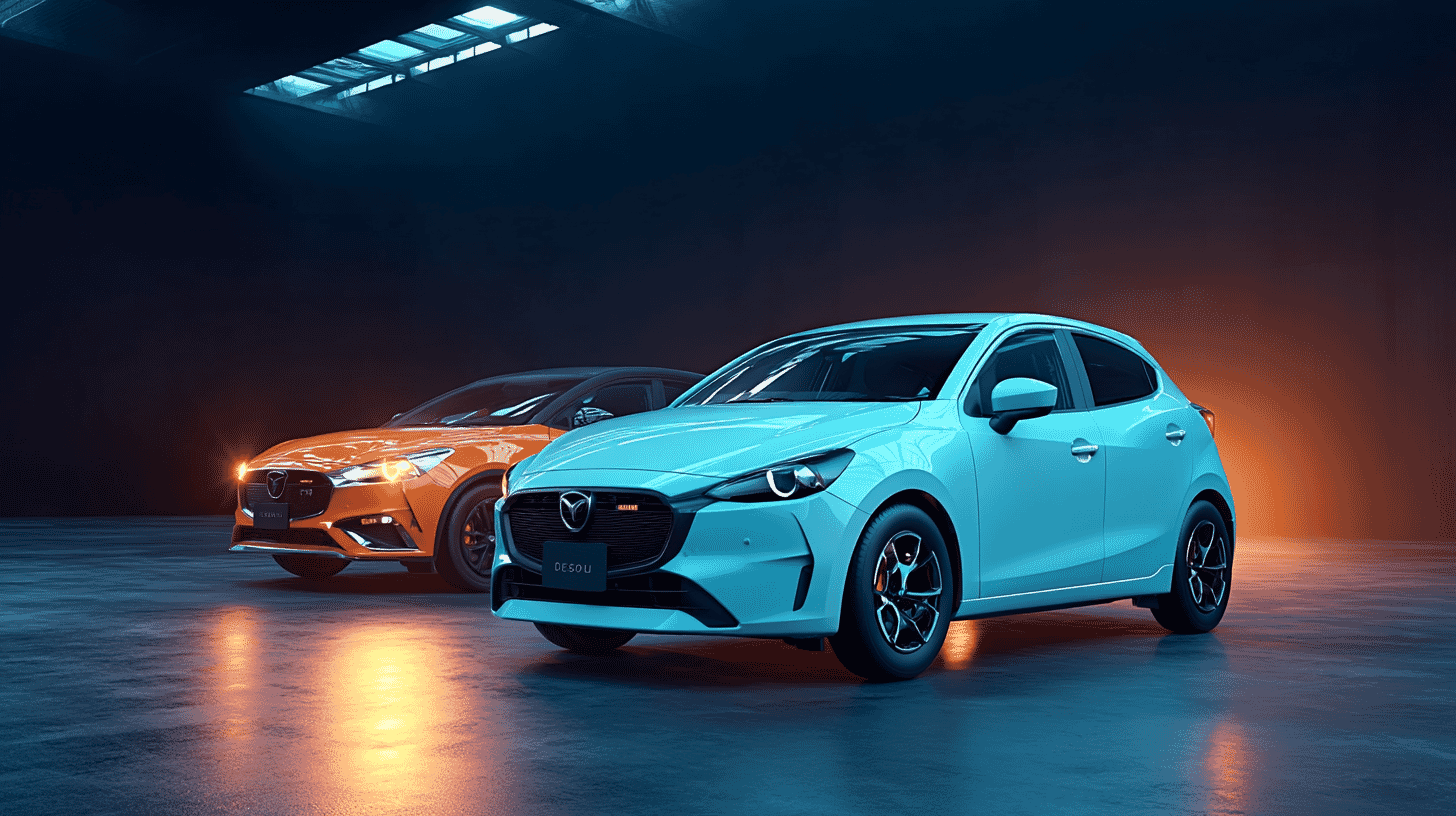
The car that saved Mazda from collapse in 1996, and went on to be a household name on Japanese roads for 30 years, is heading for retirement. Mazda will end domestic production of its compact Mazda2 (formerly known as Demio) at its Hofu plant in Yamaguchi Prefecture at the end of August 2026. Domestic sales will continue only until existing stock runs out. Once it does, you won't be able to buy a new Mazda compact car in Japan. Here's the story of one of Japan's most beloved superminis, and why its quiet exit reveals a larger shift happening in the country's auto industry.
What Just Happened
On April 24, 2026, multiple Japanese outlets, including Nikkei, Kyodo News, Chugoku Shimbun, and TBS-affiliated RCC, reported that Mazda will end domestic production of the Mazda2 at the end of August 2026. The Hofu factory in Yamaguchi Prefecture, which has built the model for over a decade, will stop the line. Once the remaining inventory is sold, Mazda will have effectively withdrawn from Japan's compact car market entirely.
Overseas production and sales, however, will continue. Plants in Thailand and Mexico will keep building the car for export to Europe, Latin America, and emerging markets. It's only the "Mazda2 driven by Japanese people on Japanese roads" that's vanishing.
The Demio Was Mazda's Savior
To understand the weight of this news, you need to go back to 1996.
Mazda was, frankly, on the brink. The company had over-extended itself in the bubble years with a confused multi-channel sales strategy, selling cars under brands like Eunos, Autozam, and Ɛ̃fini, that ended in what's known in Japan as the "Cronos tragedy." Losses piled up, and Mazda fell under Ford's control as part of a desperate restructuring. The company's survival was genuinely in doubt.
Into this context came the first-generation Demio in August 1996. Marketed as a "new-genre wagon," it had a tall hatchback body that crammed surprisingly spacious storage into a compact footprint while still fitting into Japan's notoriously tight mechanical parking towers. Its tagline, "looks small, fits big", landed perfectly with families. By 1998, Demio was selling over 100,000 units a year and had become the cornerstone of Mazda's recovery.
In Japanese auto industry circles, this Demio earned nicknames like "Mazda's savior," "Mazda's adrenaline shot," and even "kamikaze" (in the older sense of "divine wind"). Alongside the Honda Fit and Toyota Vitz (now Yaris), it helped define Japan's golden age of compact cars.
Four Generations, Three Decades
Across four generations from 1996 to 2014, the Demio kept evolving.
The first generation (1996-2002) was a tall mini-wagon that anticipated the B-segment minivan trend. It was even sold by Ford in Japan as the Festiva Mini Wagon.
The second generation (2002-2007) moved to a hatchback shape on the DY platform jointly developed with Ford. This was the version where exports first wore the "Mazda2" badge, signaling Mazda's global ambitions.
The third generation (2007-2014) is the one car enthusiasts genuinely revere. Its 1.3-liter manual model gained a reputation among critics for handling so sharp and responsive that some compared it to a Lotus Elise. It also represented Mazda's break from Ford dependence, switching to a homegrown DE platform.
The fourth generation (2014-present) introduced Mazda's now-signature "Kodo" design language and SKYACTIV technology suite. It won the 2014-2015 Japan Car of the Year award and offered an unusually sophisticated 1.5-liter clean diesel for a compact car. In September 2019, Mazda renamed the Japanese-market version from Demio to Mazda2 to align with global branding, ending the Demio name in its home market after roughly 23 years.
Why It's Ending Now
There isn't a single reason. Several structural pressures converged.
The SUV tide. In its peak years, the Demio sold 6,000-8,000 units a month. By 2025, that had fallen to roughly 2,000 a month, totaling about 23,000 units for the year, about a quarter of its peak. Mazda's Japanese lineup is now dominated by SUVs: CX-5, CX-30, CX-60. The crossover wave that swept the world reshaped Mazda's home market too.
Profit pressure on small cars. Compact cars are a tough segment to make money in, especially when raw materials and labor costs are climbing. The Mazda2 retails for roughly ¥1.375 million to ¥2.321 million (about $8,700 to $14,700), thin margins compared to a CX-60. Concentrating resources on higher-margin SUVs is a hard but defensible call.
Aging architecture. The current model dates to 2014. After 12 years on the same platform, a full redesign would require enormous investment, and it's hard to see that paying off in a shrinking B-segment.
Trump tariff fallout. Since 2025, US tariffs have hit Mazda especially hard because the company has the lowest US-local production ratio among major Japanese automakers. With several hundred billion yen of additional costs hitting annually, Mazda has been forced to focus capital on its most profitable segments.
The Mazda2 Survives Abroad
Production in Thailand and Mexico continues, supplying Europe, Latin America, and Asian emerging markets. In Europe specifically, Mazda has sold the "Mazda2 Hybrid", which is actually a rebadged Toyota Yaris Hybrid built under a partnership, since 2022. That arrangement is expected to continue.
There's also speculation that Mazda's Thai facility is preparing an entirely new compact model. The brand has hinted at a successor through its "VISION X-COMPACT" concept shown at recent motor shows, possibly previewing a small crossover (some reports speculate it'll be called CX-20) that would replace the Mazda2's role in the lineup.
Is Japan's Compact Car Culture Dying?
Mazda2's exit is being read as a symbolic moment for Japan's compact car culture.
In 1996, the Japanese B-segment was a crowded battlefield: Honda Fit, Toyota Vitz, Nissan March, Mazda Demio. Today, the Fit is still around but quieter, the Yaris has pivoted hard toward hybrids, the Nissan March exited the Japanese market in 2022, and now the Mazda2 follows. The "cheap, practical, small car", once a staple of Japanese driveways, is steadily disappearing from showrooms.
Two segments are absorbing the demand: kei cars (Japan's unique 660cc microcar class with tax incentives) and compact SUVs. The kei market remains strong thanks to favorable taxation and rural utility. Meanwhile, compact crossovers like the CX-3 and Yaris Cross are taking over the role once played by traditional B-segment hatchbacks. The "I want something tall with good visibility" instinct that drives global SUV demand is alive and well in Japan too.
How Other Markets Compare
Europe still has a real B-segment, Fiat 500, Renault Clio, VW Polo all soldier on, sustained by narrow medieval streets and high fuel prices that make small cars genuinely practical.
The US already gave up. Mazda2 left America in 2015. The Ford Fiesta ended production in 2019. The subcompact category in the US is essentially extinct, replaced by trucks and SUVs of every size.
Emerging markets, Thailand, the Philippines, Indonesia, Mexico, are still a strong fit for the Mazda2. Which is exactly why Mazda is keeping production going there. The decision to end Japanese production is, ultimately, a market-selection decision: the cars will keep being built, just not for Japanese buyers.
How is it where you are? Are compact cars still selling in your country? Was a small, affordable hatchback your "first car"? If you've ever owned or driven a Demio or Mazda2, we'd love to hear what compact car culture looks like where you live.
References
- https://news.yahoo.co.jp/articles/d5acacbf02844453b518a46b8648d460efb5af7d
- https://news.yahoo.co.jp/articles/34c1a6309dca928d183c15d40edb148b41625039
- https://www.chugoku-np.co.jp/articles/-/822292
- https://ja.wikipedia.org/wiki/マツダ・MAZDA2
- https://en.wikipedia.org/wiki/Mazda2
- https://research.nicoxz.com/articles/mazda2-demio-japan-production-end
- https://newsroom.mazda.com/en/publicity/release/2019/201907/190718a.html
- https://www.autoblog.com/news/mazdas-smallest-car-just-refuses-to-retire








Global Discussion
15 comments