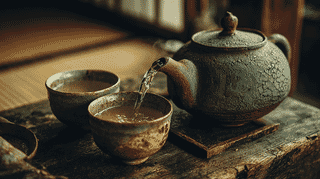
While matcha sells out worldwide, the kyusu, the side-handled teapot once found in every Japanese home, is quietly disappearing. What a kyusu is, where its odd shape came from, why it fell out of use, and why you should try a cup brewed in one when you visit Japan.
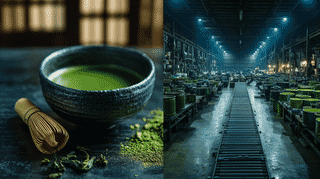
Seventeen years after Starbucks rolled out matcha latte globally, Japanese tea prices have tripled in a year and China now produces 5,000 tons of matcha—matching Japan. Inside the supply structure that pushed 38 major Japanese tea firms to issue an emergency statement.
With matcha scarce and prices soaring, an unglamorous Japanese herb called yomogi (mugwort) is being talked up as the next matcha. One Osaka supplier shipped a record 754 tons in 2025 and expanded cultivation 1.5x, while mugwort-steam salons grew 1.8x in three years. A trading-company veteran turned mugwort farmer is now branding the weed.
Global matcha production has roughly doubled in just five years. Japan can no longer meet world demand alone, and Chinese matcha is rapidly filling the gap. Should matcha be defended as Japanese cultural heritage, or embraced as a global beverage? We explore the strategic crossroads facing Japan's matcha industry.
On April 22, 2026, the world's first global matcha industry body launched in Tokyo. Led by 28-year-old tea master Ryo Iwamoto, the International Matcha Association (IMA) brings together the CEO of the Specialty Coffee Association, UC Davis tea scholars, and Future Food Institute to tackle counterfeiting and the absence of international standards in a $4.4 billion global market.