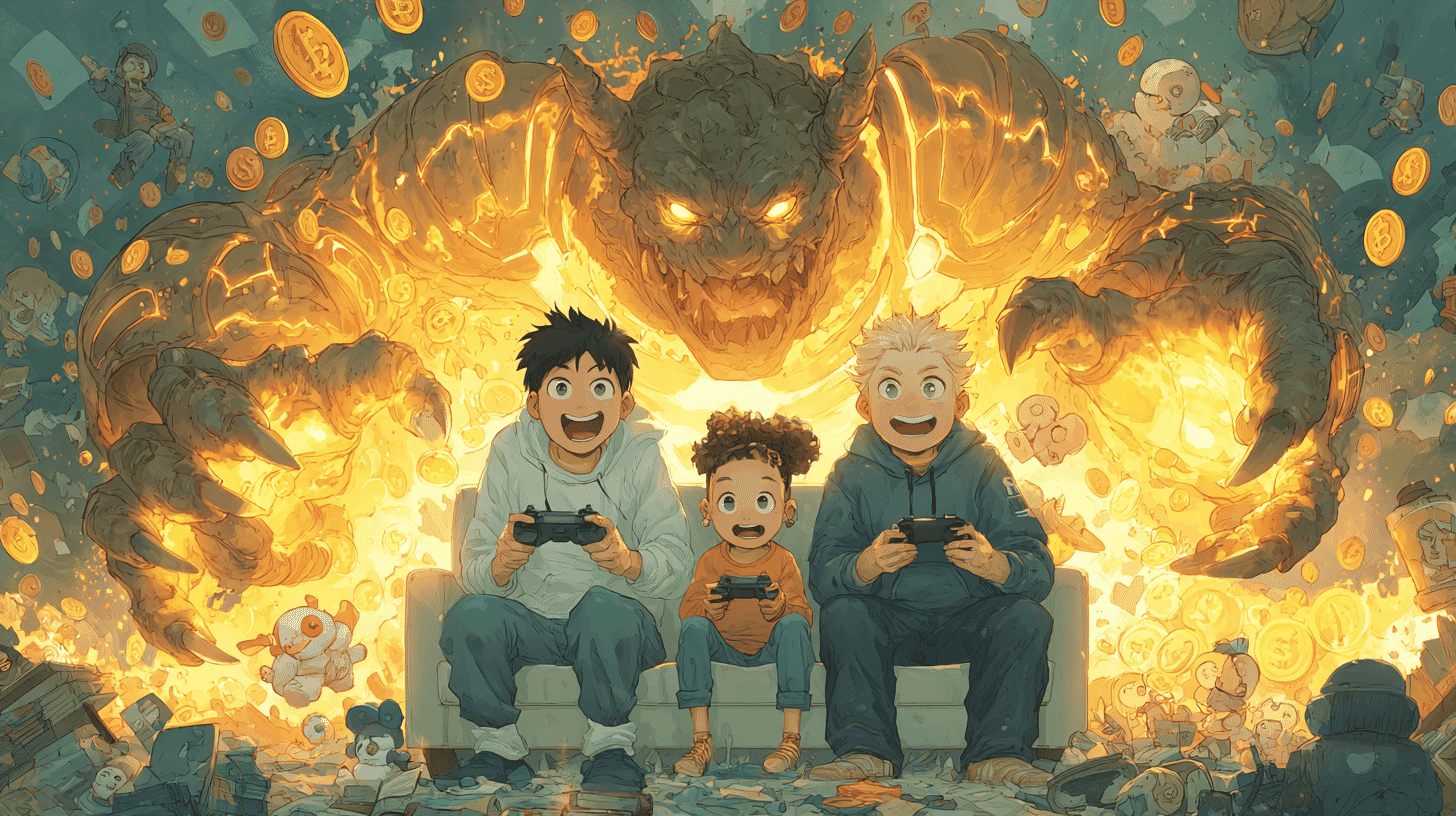
The activist investor who once told Nintendo to charge 99 cents for Mario to jump higher has bought 8.86% of KADOKAWA, the parent company of Elden Ring developer FromSoftware. Sony already holds roughly 10%. The shareholder map around one of Japan's biggest entertainment empires just got complicated.
What Happened?
On March 19, 2026, financial filings revealed that Hong Kong-based hedge fund Oasis Management Company has acquired an 8.86% stake in KADOKAWA Corporation (TSE: 9468), the Japanese media conglomerate that owns FromSoftware, the studio behind Elden Ring, Dark Souls, Sekiro, and Bloodborne.
Oasis purchased approximately 13.2 million shares at a total cost of roughly $265 million. The filing with Japan's Kanto Local Finance Bureau states that the purpose of the investment is "portfolio investment and important proposal activities", corporate speak for "we plan to push for changes."
The largest single transaction came on March 12, when Oasis acquired 5,805,100 shares in an off-market trade at ¥3,149 (about $21) per share, lifting its stake by 3.90 percentage points in a day and crossing the 5% threshold that triggers mandatory disclosure under Japanese securities law.
The buying did not stop there. A March 24 filing showed 10%, March 26 showed 11.85%, and a March 30 filing showed 13.76% (effective date March 23). A June 23 filing put Oasis at 15.25%, or 22,715,600 shares. Sony's roughly 10% was passed long ago.
Who Is Oasis Management?
Oasis Management Company was founded in 2002 by Seth Fischer and is headquartered in Hong Kong, with offices in Tokyo and Austin. It is an activist investor of the quiet, spreadsheet-wielding variety: buy a significant stake, then push hard for operational changes that lift shareholder returns.
The Nintendo Campaign (2013–2014)
For gamers, the most important chapter in Oasis's history is its sustained pressure campaign against Nintendo. Between June 2013 and June 2014, Fischer sent at least three open letters to then-president Satoru Iwata demanding the company immediately enter the mobile gaming market.
The letters went well past polite suggestion. Beyond the now-infamous "Just think of paying 99 cents just to get Mario to jump a little higher," Fischer complained that "unfortunately, I have to go through the trouble of buying a Nintendo device (one that is sold at a loss) to access Mario," dismissing Nintendo's hardware-centric model outright. The final letter carried an ultimatum: if the suggestions were not implemented within a year, Oasis would present a slate of new director candidates at the next annual general meeting.
Nintendo rejected the core advice, built the Switch, and proved the hardware-first strategy sound. It did eventually enter mobile gaming, and when Pokémon GO became a global phenomenon in 2016, Oasis reportedly stood to make tens of millions of dollars.
A Track Record of Aggressive Campaigns in Japan
Oasis's activism in Japan extends well beyond Nintendo:
- Kyocera (2015): Oasis demanded that Kyocera sell its $8.3 billion stake in telecom giant KDDI and return $4 billion to shareholders, one of the most audacious payout demands ever made to a Japanese company. In 2025, Oasis voted against Kyocera's top management at the annual meeting
- Fujitec (2022–2023): Oasis accused elevator maker Fujitec's founding Uchiyama family of abusing its control over the company. Oasis-nominated directors were elected at a shareholder meeting, and the board subsequently ousted Chairman Takakazu Uchiyama, one of the most decisive activist victories in Japanese corporate history
- PanaHome (2017): When Panasonic moved to fully acquire its housing subsidiary PanaHome, Oasis opposed the deal on price. Panasonic ultimately raised its offer
- Tokyo Dome: During COVID-19, Oasis pushed for digitalisation and operational changes at the iconic venue, contributing to a stock price recovery
- Kao Corporation (2024–2026): As a major shareholder in the consumer goods giant, Oasis proposed changes it claimed could lift the stock 76–97%. In March 2026, weeks before the KADOKAWA disclosure, it formally requested an extraordinary general meeting at Kao to investigate supply chain practices
- Kobayashi Pharmaceutical (2024–2025): Following a product safety scandal involving a red yeast rice supplement, Oasis demanded new outside directors and an independent investigation, then escalated to preparing shareholder derivative litigation against the company's directors
- DIC Corporation (2024–2025): Oasis built its stake in the chemical maker to roughly 11.5% and attacked the company's art holdings, arguing DIC had never analysed them on quantitative measures such as return on assets and should sell the works to fund shareholder returns and the core business. The collection at the DIC Kawamura Memorial Museum of Art was worth more than a third of DIC's market capitalisation. In December 2024 DIC announced it would move the museum to Tokyo and cut the works on display to a quarter; the Chiba site closed in April 2025. For anyone watching an entertainment company, that episode is the tell: cultural assets held by a corporation are, on this view, capital sitting idle
Regulatory History
Oasis has also faced regulatory sanction. In 2011, Hong Kong's Securities and Futures Commission (SFC) reprimanded and fined both Oasis and Fischer HK$7.5 million (roughly $960,000) each over trades in Japan Airlines shares in 2006. The SFC found that Oasis placed orders in the final 15 minutes of trading to depress JAL's closing price ahead of a new share offering, so it could buy the new shares more cheaply.
Why KADOKAWA?
KADOKAWA is far more than a game publisher. It is a sprawling media conglomerate spanning publishing, anime production, gaming, web services, and education. For the gaming community, the key asset is its roughly 70% ownership of FromSoftware, whose Elden Ring has sold over 25 million copies worldwide.
Beyond FromSoftware, KADOKAWA's gaming portfolio includes Spike Chunsoft (Danganronpa) and Acquire (Tenchu, Mario & Luigi: Brothership). The company also operates multiple anime studios and is one of Japan's largest publishers of light novels and manga, a vast IP reservoir that feeds anime, games, and merchandise.
The recent financials tell a harder story. For the nine months to December 2025, revenue fell 1.7% year-on-year to ¥202.9 billion (roughly $1.36 billion), while operating profit plunged 59.7% to ¥6.3 billion (about $43 million). The main cause was the comedown from a prior year carried by Elden Ring and Oshi no Ko; sluggish domestic print sales did not help. To an activist, numbers like that read as room to improve.
The Sony Factor
To understand why Oasis's move matters, you need to know about Sony's role in the KADOKAWA story.
In November 2024, reports emerged that Sony Group was in talks to fully acquire KADOKAWA. The news sent KADOKAWA's stock soaring. Ultimately, the deal was restructured: in December 2024, Sony and KADOKAWA announced a strategic capital alliance instead of a full buyout. Sony invested approximately $335 million through a private share placement, becoming KADOKAWA's largest shareholder with roughly 10%.
The partnership aims to maximize the global potential of KADOKAWA's IP portfolio. Think anime co-productions distributed through Sony's Crunchyroll (which boasts over 15 million paying subscribers), Hollywood adaptations through Sony Pictures, and expanded game publishing through PlayStation's global infrastructure.
As of March 2025, KADOKAWA's top three shareholders each held roughly 10%. At 8.86% Oasis was already one of the most influential voices at the table, and it kept going. On March 27, KADOKAWA announced Oasis had become its largest shareholder with 11.89% of voting rights. By June the stake reached 15.25%, with Oasis stating it may add a further 5% or more. At the annual general meeting on June 24, it filed a shareholder proposal to remove the company's president.
What Could This Mean for FromSoftware?
Every gamer is asking, and the honest answer is that it is too early to tell. There are grounds for both calm and concern.
For calm: FromSoftware has operated with remarkable creative independence under KADOKAWA. Director Hidetaka Miyazaki and his team have consistently chosen design integrity over trend-chasing, proving that difficult games can also be enormously commercial. The studio is developing The Duskbloods, a Nintendo Switch 2 exclusive, and continuing updates for the multiplayer title Elden Ring: Nightreign. Oasis owns shares in KADOKAWA, not in FromSoftware, so any influence is indirect.
For concern: Activist investors exist to maximise shareholder returns. If Oasis pushes KADOKAWA on profitability through cost-cutting, restructuring, or monetisation, those pressures can reach subsidiaries. The 2014 Nintendo letter is a reminder of what monetisation looks like when an activist writes the brief.
A Pattern in Japanese Entertainment
Oasis's move fits a broader trend of activists targeting Japanese entertainment companies. In December 2025, Singapore-based 3D Investment Partners, holding 14.36% of Square Enix, published a presentation running past 100 pages that laid out the company's management problems and invited other shareholders to weigh in.
Japan's content industry has become an increasingly attractive target for international capital. The domestic market exceeds $94 billion, and overseas revenue from Japanese content reached roughly $39 billion in 2023, quadrupling over the previous decade. The government has set a target of $134 billion in overseas content revenue by 2033.
To investors, that trajectory makes Japanese entertainment companies look underpriced. To fans and creators, the worry is whether short-term profit-seeking erodes the creative freedom that made Japanese games, anime, and manga distinctive in the first place.
What Happens Next?
Oasis has not yet made public demands of KADOKAWA. But its record at Nintendo, Kao, and Kyocera suggests proposals are coming. Likely areas:
- Improved capital efficiency or bigger shareholder returns through dividends and buybacks
- Strategic review of underperforming business segments
- Governance changes or board representation
- Monetisation of KADOKAWA's vast but underleveraged IP portfolio
The question is whether Sony, the strategic partner, and Oasis, the activist, end up aligned or opposed. Both may want KADOKAWA's IP to travel further. How to get there is where they can split, and FromSoftware's way of making games sits downstream of that answer.
For now the gaming community watches and waits. FromSoftware fans know better than anyone that the hardest fights are the ones where you cannot see the next move.
In Japan, many people worry that investor pressure could compromise the creative vision of beloved game studios. What's the situation with activist investors and gaming companies in your country? We'd love to hear your perspective.
References
- https://gamebiz.jp/news/422942
- https://automaton-media.com/en/news/8-86-of-kadokawa-now-owned-by-international-activist-investor-oasis-management/
- https://www.nikkei.com/article/DGXZQOUC197VW0Z10C26A3000000/
- https://0115765.com/archives/176532
- https://www.nintendolife.com/news/2026/03/investor-who-urged-nintendo-to-monetise-marios-jumps-acquires-shares-in-kadokawa








Global Discussion
16 comments