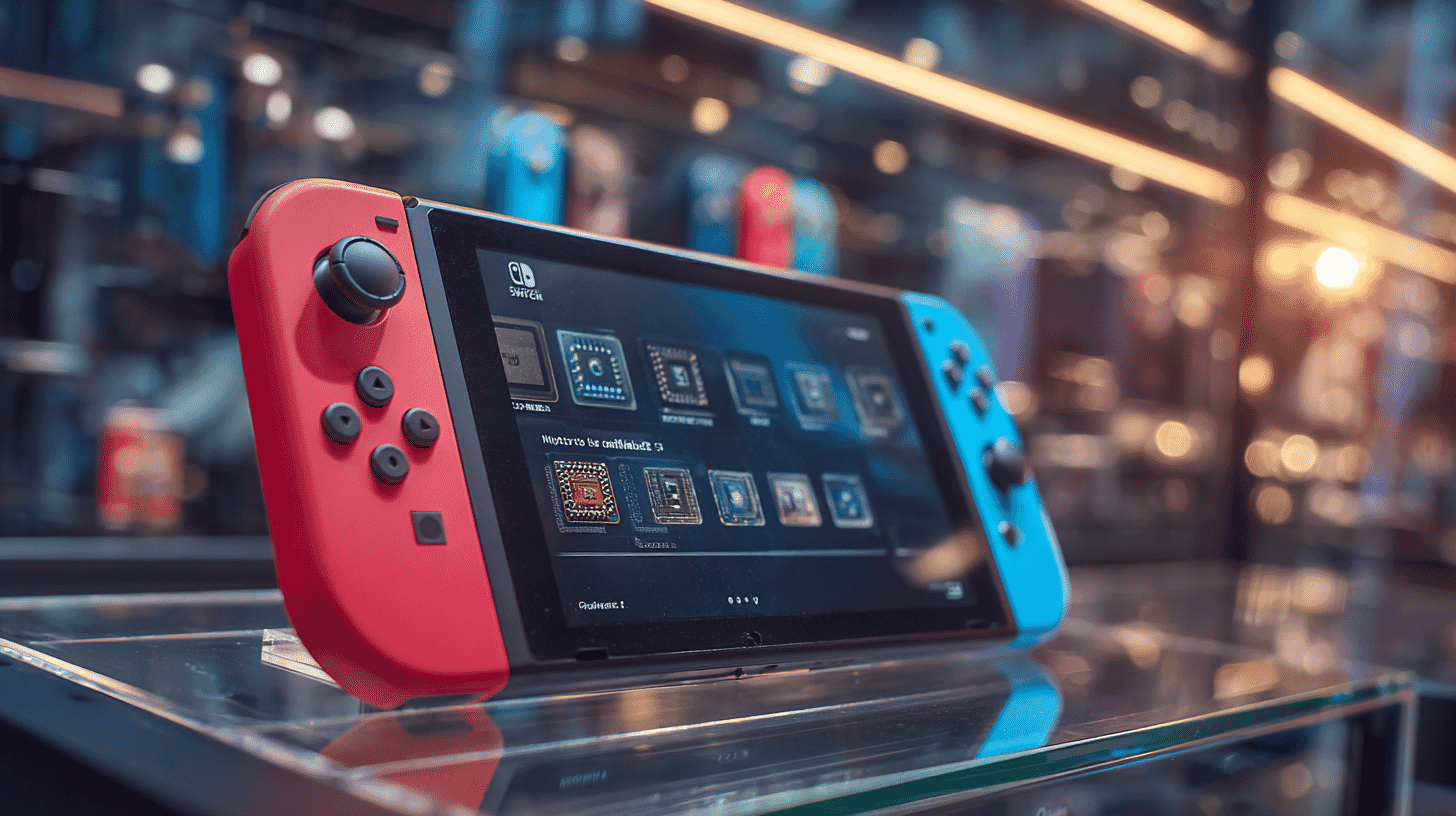
🎮 On May 8, 2026, Nintendo announced its best fiscal year on record: 19.86 million Switch 2 units sold in about ten months, beating both the original 15-million target and the revised 19-million projection. Then, the same day, came a second announcement: a 10,000 yen (roughly $64) price hike for the Japanese Switch 2, effective May 25. A 20% jump. The U.S., Canada and Europe wait until September 1 for theirs ($50, CA$50 and €30). Japan goes first, and steepest. Why is the country that designs the console paying the largest relative increase? The answer combines AI-driven memory prices, a weak yen, and a strange moment in console history when the home market pays more, sooner, than the export markets.
19.86 Million Sold: The Fastest-Selling Console in Nintendo History
Let's start with the numbers. Nintendo Switch 2, launched on June 5, 2025, hit 19.86 million units sold cumulatively by March 31, 2026, roughly 10 months after launch.
Beating the Plan by 4.86 Million
Nintendo originally set a fiscal 2026 (ending March 2026) sales target of 15 million units, then revised it upward to 19 million mid-year. The actual result came in 860,000 units above even that revised number, and 32.4% above the original plan.
For context: the original Nintendo Switch (launched March 3, 2017) sold 15.05 million units in its first full fiscal year, the twelve months to March 2018. Switch 2 cleared that by 4.81 million in roughly ten months on the market. Nintendo's own phrasing is that first-year sales reached "a level the company has never experienced with previous hardware."
The Software Numbers Are Wild
Hardware was driven by record-breaking software sales:
| Title | Units Sold | Notes |
|---|---|---|
| Mario Kart World | 14.7 million | Includes bundled copies |
| Donkey Kong Bananza | 4.52 million | Released July |
| Pokémon LEGENDS Z-A Switch 2 Edition | 3.94 million | Packaged version only |
| Total Switch 2 software | 48.71 million |
Mario Kart World hit 14.7 million units against 19.86 million console sales, an attach rate of around 74%. That's an absurd number for the console market; nearly every Switch 2 owner bought the game.
The March 2026 release of Pokémon Pokopia also contributed to hardware momentum at fiscal year-end, Nintendo noted in its earnings materials.
Doubled Revenue: The "2x Nintendo" Year
Hardware and software momentum drove Nintendo's consolidated financials to record-shattering levels:
- Revenue: ¥2.31 trillion (~$14.7 billion), up 98.6% year-over-year
- Operating profit: ¥360.1 billion, up 27.5%
- Recurring profit: ¥542.1 billion, up 45.6%
- Net income: ¥424 billion, up 52.1%
Revenue effectively doubled. Operating margin, however, fell from 24.3% to 15.6%, because hardware, the thinner-margin half of the business, made up a much larger share of the mix.
And Then Came the Price Hike
You would expect a stock rally and a celebratory press conference. Instead, Nintendo paired the earnings report with a second announcement: hardware prices are going up.
Japan: 10,000 Yen Increase Effective May 25
| Model | Old Price (incl. tax) | New Price | Change |
|---|---|---|---|
| Switch 2 (Japan-only model) | ¥49,980 | ¥59,980 | +¥10,000 / +20.0% |
| Switch 2 (Multi-language) | ¥69,980 | Unchanged | No change |
| Switch (OLED Model) | ¥37,980 | ¥47,980 | +¥10,000 |
| Switch (V2) | ¥32,978 | ¥43,980 | +¥11,002 / +33.4% |
| Switch Lite | ¥21,978 | ¥29,980 | +¥8,002 / +36.4% |
Every Switch model in Japan is being raised, including the original console, now nine years old. The Switch Lite takes a 36.4% relative increase, the steepest of all.
Overseas: September 1, $50 in the U.S.
| Region | Old Price | New Price | Change |
|---|---|---|---|
| U.S. | $449.99 | $499.99 | +$50 |
| Canada | CA$629.99 | CA$679.99 | +CA$50 |
| Europe | €469.99 | €499.99 | +€30 |
In Japan, the ¥10,000 increase works out to roughly $64 at 157 yen to the dollar, close to the U.S. $50 hike in absolute terms. The new Japanese price of ¥59,980 equals about $382, some $118 below the new U.S. price of $499.99. The percentage is where the gap opens: 20% in Japan against 11% in the U.S.
Nintendo Switch Online Also Increases
Online subscription prices are rising in Japan and South Korea starting July 1:
- Individual 12-month: ¥2,400 → ¥3,000 (+25%)
- Family 12-month: ¥4,500 → ¥6,000 (+33%)
- Monthly: ¥306 → ¥400
Nintendo cited "appropriate alignment among regional pricing", the U.S. price ($19.99 for individual annual) had been notably higher than Japan's, so this brings them closer together.
The Curious Case of the Multi-Language Model
One detail buried in Nintendo's press release: the multi-language Switch 2 sold through My Nintendo Store (¥69,980) is NOT being raised. This narrows the gap between the Japanese-only and multi-language models from ¥20,000 to ¥10,000.
Nintendo didn't explain why, but observers point to anti-reseller measures. The cheaper Japanese-only model is the one scalpers export to higher-priced markets. Holding the multi-language price steady while raising the domestic version narrows the arbitrage spread without penalizing tourists who legitimately buy a console to take home.
Why? AI Is Eating the Memory Market
Nintendo's official statement attributed the price hike to "changes in market conditions, and after considering the global business outlook." President Shuntaro Furukawa added: "We sincerely apologize for the impact these price revisions may have on our customers and other stakeholders, and we deeply appreciate your understanding."
The vague language masks a specific cause: a historic surge in memory chip prices driven by AI.
The AI Data Center Domino Effect
Since late 2024, generative AI has triggered explosive demand for DRAM and NAND flash memory used in data centers. The LPDDR5X memory inside Switch 2 is no exception. Nikkei reports that Switch 2 memory costs have risen approximately 40% year-over-year.
Memory giant Micron has signaled that supply constraints could persist through 2026 and beyond. Tom's Hardware reports that prices for memory cards and USB drives have spiked up to 261% on some products. PC builders call it the "memory crisis", and it's now reached console manufacturers.
Sony Already Did This, Microsoft Too
Nintendo isn't acting in isolation. On March 27, 2026, Sony announced U.S. increases effective April 2: the standard PS5 from $549.99 to $649.99, the Digital Edition to $599.99, and the PS5 Pro up $150 to $899.99. It was Sony's second hike in under a year. Microsoft followed on June 25, raising Xbox Series X|S prices from August 1, with 1TB models up $150 and 512GB models up $100 (a development that postdates this article's publication). All three console makers landed on the same answer in the same year.
Nintendo had previously said its component procurement strategy would limit the near-term hit, and Furukawa declined in January to comment on "hypothetical" price increases. Four months later, the hypotheticals were policy.
Why Did Japan Go First, And Hardest?
The most common reaction among Japanese consumers: "Why is Japan getting hit first, and with the steepest percentage?" Several factors converge here.
Currency Math
The yen has weakened. At Switch 2's June 2025 launch, Japan's ¥49,980 worked out to roughly $345 at about 145 yen per dollar, over $100 below the U.S. $449.99.
By May 2026 the dollar was trading near 157 yen and the gap had widened further. Even after the hike, ¥59,980 equals about $382, still $118 less than the new U.S. price. Japan remains the cheapest Switch 2 market in the world. The spread was simply judged too wide.
Anti-Scalping and Anti-Reseller Logic
A console that's significantly cheaper in Japan than abroad is an open invitation for scalpers and parallel exporters. Reports from Switch 2's launch documented bulk purchases by resellers in Japan, with units flowing out via Mercari, Rakuten, and global auction sites. Some resellers were caught listing dozens or even hundreds of units at marked-up prices on overseas platforms.
The decision to raise the domestic version while keeping the multi-language model stable creates an interesting structural deterrent: foreigners who legitimately want to buy a Switch 2 in Japan to take home can use the multi-language version at the same ¥69,980 they'd have paid before.
Geographic Cost Reality
Switch 2's primary memory chips come from Samsung (South Korea), SK Hynix (South Korea), and Micron (U.S.). Costs are denominated in dollars and won. Combined with yen weakness, this means cost increases hit Japanese-domestic-targeted SKUs first and hardest.
FY27 Forecast: Down to 16.5 Million
Reflecting price hike effects, Nintendo set its FY27 (ending March 2027) Switch 2 sales target at 16.5 million units, down 16.9% from the 19.86 million sold in FY26.
The earnings materials state: "Considering the high sales level in the first year and price changes for some products, we expect a year-over-year decline in FY27, but still see this as a healthy diffusion pace for a second-year console."
The financial outlook:
- Revenue: ¥2.05 trillion, down 11.4%
- Operating profit: ¥370 billion, up 2.7%
- Net income: ¥310 billion, down 26.9%
Revenue falls but operating profit edges up, which is the design: sell fewer units, protect the margin. The forecast assumes 150 yen to the dollar and 175 yen to the euro, and books roughly ¥100 billion of cost impact from memory-led component inflation and U.S. tariffs.
Software Pipeline Could Soften the Blow
Nintendo projects 60 million Switch 2 software units for FY27, up 23.2% from FY26's 48.71 million. The first-half first-party slate arrived on schedule:
- May 21: Yoshi and the Mysterious Encyclopedia
- June 25: Star Fox, a remake of the Nintendo 64 original
- July 23: Splatoon Raiders, the series' first spin-off
Plus a slate of major third-party releases. The strategy is straightforward: absorb hardware softness with software momentum.
International Reaction: "Japan Got Hit the Worst"
Coverage by major Western outlets has been broadly sympathetic. IGN ran the headline "Japan got hit the worst." Polygon, Variety, CNBC, Bloomberg, PC Gamer, and others led with the price hike, framing it as collateral damage from the AI memory crisis.
On ResetEra and Reddit's r/NintendoSwitch, the running debate is whether to buy before September, since U.S. and European prices hold until then. Some commenters sympathize with Japanese buyers; others argue Japan had simply been too cheap and the correction was overdue.
The New Reality of Console Economics
Today's price hike signals something larger: the era of using hardware as a low-margin loss leader to win console wars may be ending.
Traditionally, console makers sold hardware at thin margins or at a loss and recovered through software royalties. The AI-driven memory surge is breaking that math. PS5 up as much as $150, Switch 2 up $50, Xbox Series X|S up $100 to $150: three makers reaching the same conclusion in the same year is not coincidence. PS5 and Xbox are now the first consoles in history to cost more than they did at launch.
For gamers, this is unwelcome. For platform holders, the question is how to keep a paying base when console prices climb into mid-range gaming PC territory.
Japan Switched Over on May 25, Overseas Follows on September 1
Japanese buyers had just over two weeks between announcement and changeover. Retailers ran "last chance at the old price" promotions and a buying surge followed. Switch 2 has been intermittently supply-constrained since launch, though, so whether anyone actually got one at the old price came down to stock.
Japan's new prices took effect as scheduled on May 25. The U.S., Canadian and European increases land on September 1, leaving those markets a longer runway.
🎮 AI-driven memory price surges are a global problem, but how console makers pass them on varies wildly by region. Is the price hike making news in your country? Would you still buy hardware at these prices? Let us know in the comments.
References
- https://news.yahoo.co.jp/articles/d48aeb779f423a60e5bd79e666781793757e8f73
- https://automaton-media.com/articles/newsjp/20260508-441819/
- https://www.cnbc.com/2026/05/08/nintendo-switch-2-price-hike-sales-fall-memory-crunch.html
- https://variety.com/2026/gaming/news/nintendo-switch-2-price-increase-20-million-sold-1236741441/
- https://www.tomshardware.com/video-games/nintendo/nintendo-is-raising-the-price-of-the-switch-2-by-usd50-starting-in-september-console-will-soon-cost-usd499-but-you-can-avoid-the-price-hike-if-you-buy-now
- https://www.nintendo.co.jp/ir/pdf/2026/260508_4.pdf
- https://gamebiz.jp/news/425575
- https://gamebiz.jp/news/425601
- https://www.pcgamer.com/hardware/nintendo-is-raising-the-price-of-the-switch-2-later-this-year/







Global Discussion
14 comments