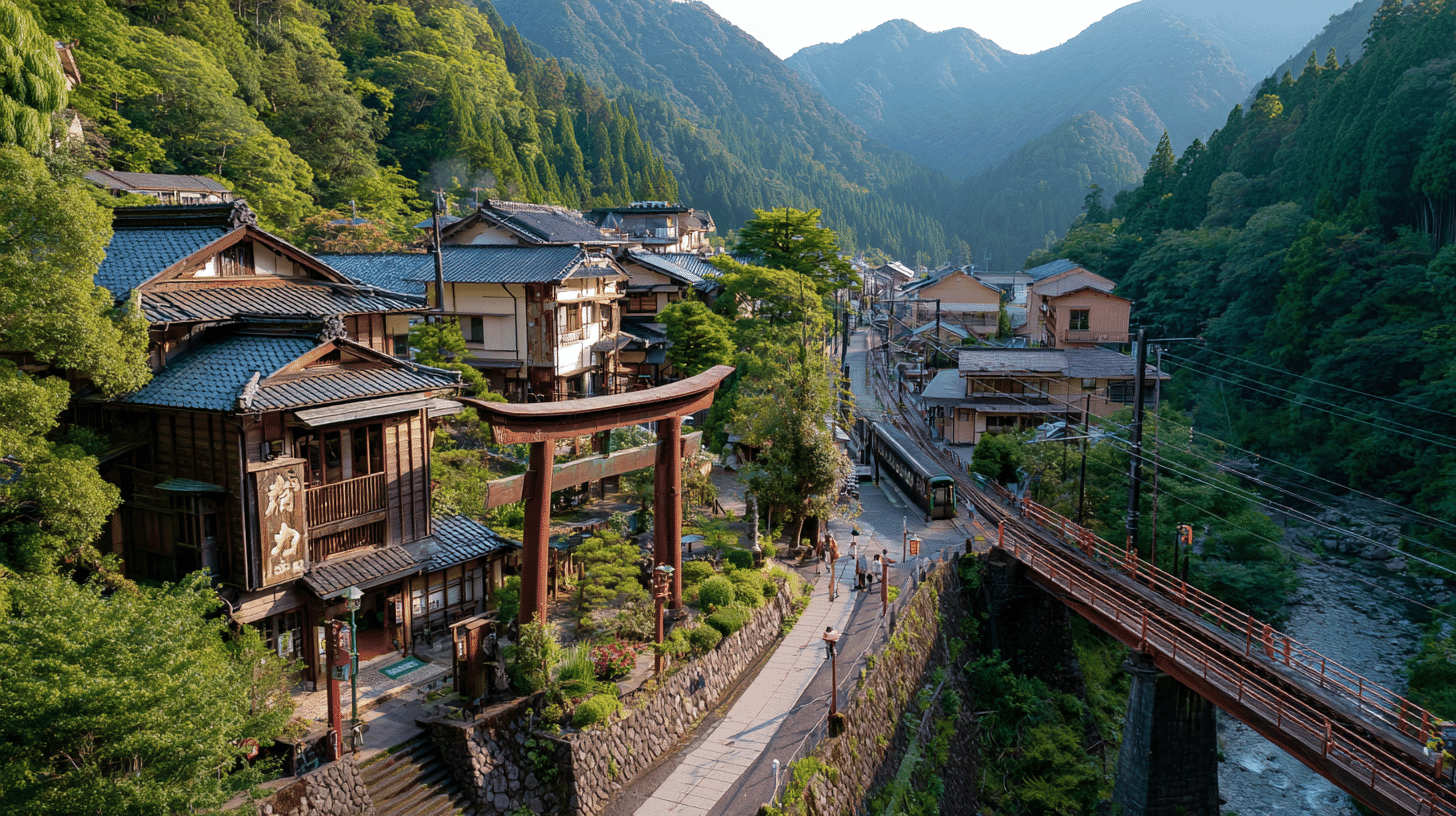
In 2025, Japan welcomed a record 42.68 million international visitors. The biggest growth, though, wasn't in Tokyo or Kyoto. Tottori Prefecture saw foreign overnight stays surge 151%; Niigata jumped 69%. With ¥9.5 trillion (roughly $63 billion) in tourism spending, Japan's countryside is having its moment, and inheriting a new set of problems along with it.
2025: The Year Japan Shattered Its Tourism Records
The year 2025 marked a watershed moment for Japan's inbound tourism. According to the Japan National Tourism Organization (JNTO), the country welcomed 42.68 million foreign visitors, surpassing the previous record of 36.87 million set in 2024 by 15.8%. The long-held government target of 40 million annual visitors was finally achieved and exceeded.
Tourism spending was equally impressive, reaching ¥9.45 trillion (approximately $63 billion), making inbound tourism Japan's second-largest "export" behind automobiles. Per-person spending averaged ¥229,000 ($1,530), supported by a favorable yen exchange rate.
By source market, South Korea led with 9.45 million visitors, followed by China (9.09 million), Taiwan (6.76 million), and the United States (3.3 million, past 3 million for the first time). Australia became the seventh market to surpass 1 million annual visitors. Overall, visitors from Europe, the Americas, and Oceania grew 23.4% year-over-year, outpacing Asian markets.
The Regional Shift: Visitors Are Going Beyond the Golden Route
Perhaps the most significant trend within these record numbers is the gradual dispersal of tourists toward regional areas.
April 2025 accommodation data showed that the share of foreign overnight stays in regional areas (outside major cities) rose from 29.0% to 30.2% year-over-year. Tokyo, Osaka, and Kyoto still accounted for roughly 58% of all foreign overnight stays, but the tide is slowly turning.
The standout performers were remarkable. Tottori Prefecture recorded a 151.5% increase in foreign overnight stays, the highest in the nation, driven by new direct flights from its Yonago Airport to Seoul and Hong Kong, plus the resumption of a ferry service connecting Sakaiminato with South Korea. Mie Prefecture (+75.3%) and Niigata Prefecture (+62.0%) also posted impressive gains.
By November 2025, even as Tokyo and Osaka experienced year-over-year declines in foreign overnight stays, regional areas continued to surge: Niigata (+68.9%), Mie (+45.2%), Miyagi (+37.3%), Fukushima (+35.0%), and Yamagata (+29.2%). The autumn foliage season amplified this trend, as independent travelers increasingly sought out destinations beyond the standard tourist circuits.
Why Are Visitors Choosing Regional Japan?
Several forces are pushing travelers outward at once.
Repeat visitors going deeper. As travelers return to Japan multiple times, they naturally look beyond Tokyo and Kyoto. The growing number of repeat visitors from nearby markets like South Korea and Taiwan accelerates this trend.
Social media discovery. Instagram, TikTok, and China's Xiaohongshu (RED) have become powerful engines for discovering off-the-beaten-path destinations. Local festivals, hidden hot springs, and regional cuisine go viral in ways guidebooks never achieved. The Tottori Sand Dunes, Mizuki Shigeru Road, and Tohoku's autumn colors are exactly the kind of photogenic content that travels well online.
Expanding regional air routes. New international flights and LCC routes to regional airports have made direct access possible. Yonago, Kagoshima, and other regional airports have added connections primarily to South Korean and Southeast Asian cities, bypassing the traditional Tokyo/Osaka gateways entirely.
Western travelers seeking authentic experiences. Visitors from Europe, the US, and Australia tend to stay longer and gravitate toward adventure tourism and gastronomy. Snow resorts like Hakuba and Niseko, the Kumano Kodo pilgrimage trails, and Shikoku's temple circuit all offer the kind of immersive, nature-based experiences that appeal to this growing market segment.
The Infrastructure Gap: Progress Made, Challenges Remaining
Regional dispersal is welcome, but local infrastructure has not kept pace.
Language barriers
Multilingual support remains patchy in many regional areas. Signage, restaurant menus, and transportation information in languages other than Japanese can be hard to find. The Japan Tourism Agency's multilingual interpretation program dispatches native-language writers to create proper English and Chinese descriptions for local tourism resources, but nationwide coverage remains a work in progress. AI chatbots and translation apps help bridge the gap, but digital literacy varies widely among local businesses.
Secondary transportation
The biggest bottleneck is getting from airports or bullet train stations to actual tourist sites. The Tohoku region, for example, is rich in natural attractions, but many are 60+ minutes from the nearest transportation hub, with limited bus service. Rental cars are often the only viable option, a significant barrier for visitors without international driving permits. Ride-sharing pilots and on-demand transit experiments are underway, but widespread implementation is still in its early stages.
Workforce shortages
The tourism labor crunch, worsened by pandemic-era departures from the industry, hits rural areas hardest. Lower wages make recruitment even more difficult outside major cities, pushing businesses to explore foreign worker recruitment, automated check-in systems, and multi-tasking service models. Some regions also lack sufficient accommodation capacity, spurring interest in renovated traditional houses (kominka) and farm-stay programs.
Digital payment and connectivity
Cashless payment and Wi-Fi connectivity, now standard in urban Japan, remain inconsistent in rural areas. Government subsidies for point-of-sale upgrades and wireless infrastructure exist, but complex application procedures deter many small businesses from participating.
Confronting Overtourism, Even in the Countryside
Regional dispersal is itself an antidote to urban overtourism, but popular rural destinations are encountering their own growing pains.
Biei, Hokkaido, has about 9,000 residents. In fiscal 2023 it received 2.38 million visitors, roughly 210 times its population, and the trespassing on private farmland and roadside parking that came with them. In January 2025, the landowner cut down around 40 birch trees that had become a photo spot famous on social media, citing shade damage to crops and the burden of managing visitors. Most of those visitors are day-trippers who sleep in Asahikawa, so little of the money stays in town: the scenery disappears and the costs remain.
Miyajima Island introduced a "visitor tax" in 2023, using the revenue for environmental conservation and tourist infrastructure. Kyoto is debating higher accommodation taxes, and the trend of asking visitors to pay their fair share is spreading nationwide.
The national government has committed serious resources to the issue. The FY2024 supplementary budget allocated ¥15.8 billion for overtourism countermeasures, and the FY2026 Japan Tourism Agency budget was set at a record ¥138.3 billion, 2.4 times the previous year. The international departure tax rose from ¥1,000 to ¥3,000 in July 2026, with the revenue earmarked for sustainable tourism initiatives. The government's strategy rests on three pillars: managing tourist concentration and misconduct, promoting regional dispersal, and building tourism plans in collaboration with local residents.
From "Volume" to "Value": The High-Quality Tourism Pivot
An important shift is underway in how tourists spend their money. The focus is moving from shopping toward accommodation, dining, and experiences. German visitors averaged ¥394,000 per trip, the highest of any market, with British and Australian travelers close behind at roughly ¥390,000. Capturing these long-staying, high-spending segments is a real opening for regional destinations.
Across Japan, 14 model tourism destinations are developing premium experiential content: guided exclusive tours, luxury accommodations, farm and fishing experiences, sake brewery visits, and traditional craft workshops. These "only here" experiences command higher spending and create deeper connections with local culture.
JTB's 2026 forecast projects a slight decline in total visitor numbers to 41.4 million, but anticipates an accelerating shift of high-spending travelers toward regional destinations. The future of Japan's tourism lies not in chasing larger numbers, but in elevating the quality of each visitor's experience, a "qualitative growth" strategy that may prove more sustainable for communities still finding their footing in the tourism economy.
What About Your Country's Regional Tourism?
Hearing foreign languages in a quiet onsen town or along a rice paddy path is no longer unusual in Japan.
How does this compare in your country? Do tourists flock mainly to major cities, or do they venture into rural and regional areas too? What unique attractions does your countryside offer, and what challenges does it face?
References
- https://yamatogokoro.jp/inbound_data/59128/
- https://yamatogokoro.jp/inbound_data/59295/
- https://yamatogokoro.jp/inbound_data/59160/
- https://yamatogokoro.jp/inbound_data/57394/
- https://www.travelvoice.jp/20250109-156983
- https://www.mlit.go.jp/kankocho/seisaku_seido/kihonkeikaku/jizoku_kankochi/jizokukano_taisei/overtourism.html
- https://yamatogokoro.jp/column/kaisetsu/56493/









Global Discussion
15 comments