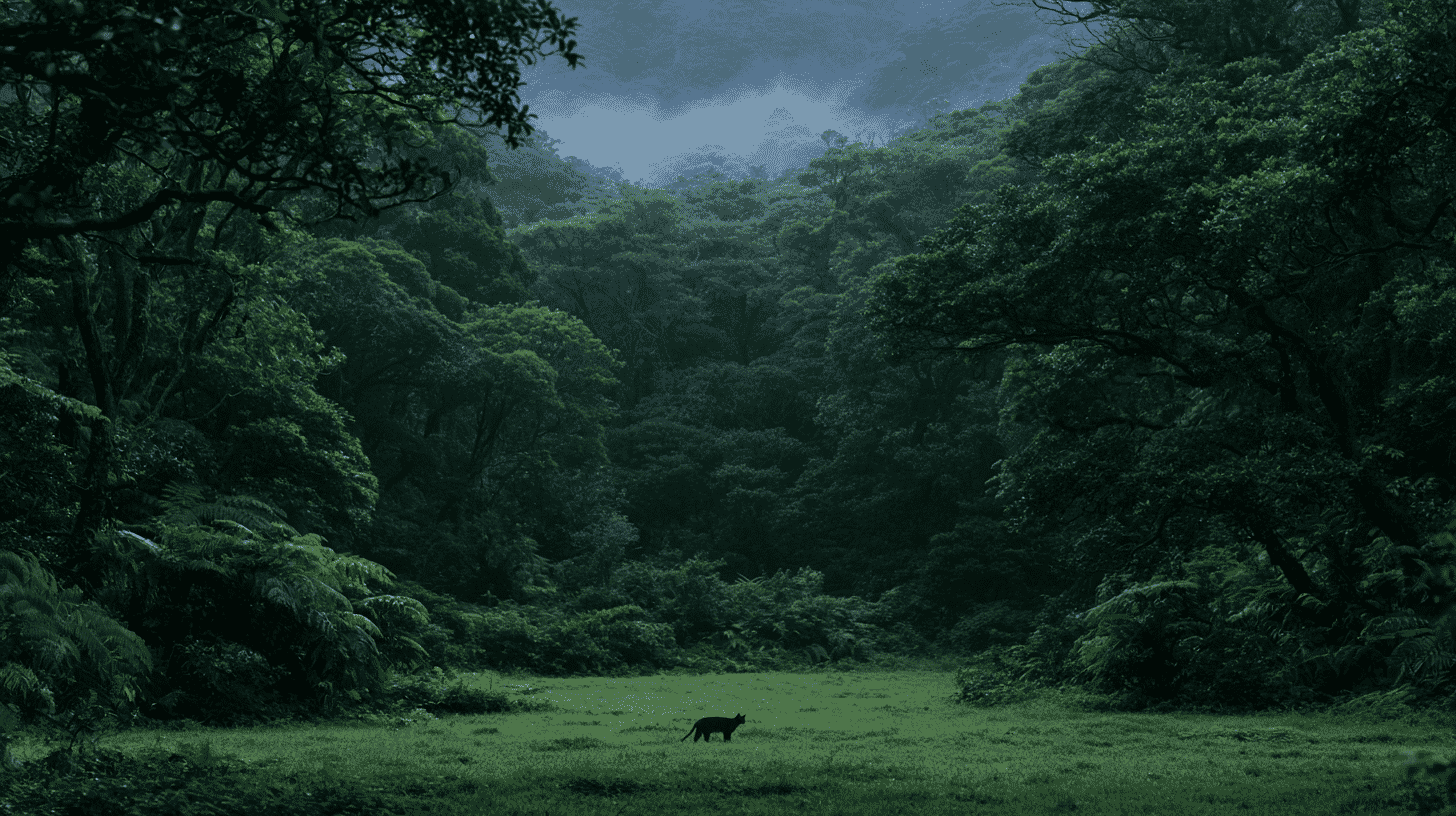
On August 7, 2026, an expert panel in Tokyo signed off on the first revision of Japan's invasive species list since it was created in 2015. Three days earlier the government had dropped the change at the centre of it: a plan to list cats under their biological species name, wording that would have covered every cat in the country. While Japan was drafting the change, New Zealand was moving the other way: in November 2025 it added feral cats to its national eradication programme.
Three Words, One Species
Japanese has three everyday words for what biologists treat as a single animal, Felis catus.
A noneko has left its owner behind, lives permanently in hills and forest, and survives by hunting wild animals. A noraneko is a street stray, moving between houses and alleys and living largely off food that people put out. An ieneko is the species itself: it covers both of the above, plus the cat asleep on your sofa. The official test is where the animal lives and what it eats, not what it looks like.
Since 2015, only noneko appeared on the list. Compiled by the Environment Ministry and the Ministry of Agriculture, Forestry and Fisheries in March 2015, it began with 429 species and carries no legal force. It tells the public which species to handle carefully and gives local governments a reference for control work. This August's revision adds roughly 170 more.
Under the draft that went out for public comment from April 2 to May 1, 2026, the cat entry would have changed from noneko to ieneko, filed under species where control work is encouraged. Indoor pets were explicitly excluded from any control measure; the text simply asked owners to keep their cats in and not abandon them.
The Expert Panel Had Argued the Opposite
The proposed change did not come out of nowhere. The Environment Ministry publishes summaries of the panel's meetings rather than verbatim transcripts, and they show the panel had been circling the question for more than a year.
At the fourth meeting, on February 19, 2025, Yuya Watari of the Forestry and Forest Products Research Institute argued that the list should use the biological name: in practice nobody can reliably tell a noneko from a noraneko, and listing only the former leaves out the cats causing most of the damage. Kazuto Kawakami, from the same institute, agreed, describing cases in the Ogasawara Islands where rare species were being killed and staff could not act because the cat in question might have been a stray.
At the fifth meeting, on October 23, 2025, Watari added a legal objection: noneko is a term borrowed from Japan's wildlife protection law, so capture requires a permit, an awkward fit for invasive species work.
The ministry's own secretariat recorded a different concern in the same minutes: officials often cannot tell whether a given animal is a stray or somebody's pet, which is precisely why cats had not been listed more aggressively in the first place.
How the Plan Was Pulled
Kyodo News reported the ieneko wording on June 28, 2026. The reaction was immediate and ran one way. Objections poured into the ministry from cat owners and welfare organisations, most of them versions of a single fear: that a species name on a government list would be read as permission to kill cats.
On August 4, the ministry signalled it would drop the change. Environment Minister Hirotaka Ishihara told reporters that day that the wording risked being understood as meaning a pet that got out could be put down, an effect well outside the list's purpose. A reversal at this stage, on a minister's instruction, was described in Japanese coverage as highly unusual.
Not everyone was satisfied. The Animal Action Fund, a Hyogo-based welfare foundation that runs free spay-and-neuter programmes with hundreds of municipalities, argues the reversal contradicts the ministry's own records. If experts say forest cats and strays cannot be told apart, and officials say strays and pets cannot be told apart, then keeping noneko on the list still leaves someone in the field making an impossible judgement. The foundation wants cats and dogs removed from the control list entirely, and said in early August it had gathered more than 70,000 signatures.
The Numbers from Amami Oshima
Amami Oshima, in Kagoshima Prefecture, is a World Heritage site and the main home of the Amami rabbit, which lives in the wild only here and on neighbouring Tokunoshima. In March 2018, the Environment Ministry, the prefecture and five municipalities adopted a ten-year cat management plan resting on two pillars: removing cats from the forest, and shutting off the supply of new ones.
All five municipalities had passed pet cat registration ordinances back in 2011. In the city of Amami, the neutering rate among registered pet cats climbed from 36.5 percent in 2011 to 97.8 percent in 2025, and microchipping from 9.2 percent to 86.5 percent. Trap-neuter-return work on street cats peaked at 614 animals in 2019 and had fallen to one by 2025.
The plan does permit euthanasia for captured forest cats that find no home after a set period. The city's published figures point elsewhere. Between 2018 and 2024, 727 cats were caught in the forest and 723 were rehomed. The recorded euthanasia count for every one of those years is zero; the remaining four animals died in care. In 2025, 55 were caught and 55 rehomed.
That zero column is not the government's achievement alone. Animal welfare groups say the shelter holds a cat for about a week, and that one volunteer organisation now takes roughly nine out of ten of the animals caught. The ministry says it has revised the transfer rules to widen the pool of approved adopters and lighten the load on them.
In June 2026 the agencies running the plan published a progress review. Catching in the forest and the recovery of native species were judged broadly on track, and the villages nearest the rare-species habitat had met their numerical targets. Two problems were named as unresolved: cats that have learned to avoid traps, and stray cats on farmland, whose numbers are not well understood.
Cats Are Not the Only Cause
The rabbit those cats were removed for has recovered. A 2003 survey put the total across Amami Oshima and neighbouring Tokunoshima at no more than about 5,000. The ministry's 2021 estimate, built on camera surveys, gives a median of 22,382 with a 95 percent credible interval of 11,549 to 39,162. The two figures come from different methods, so the comparison is not precise, but the increase itself is not in dispute. Mongoose eradication, cat removal and forest recovery are all credited. Groups opposed to the plan dispute the cat part, arguing the rabbit was already climbing at a similar rate between 2003 and 2017, before forest trapping began on Amami Oshima. Because the ministry credits several measures running at once, no single one can be isolated from the estimates that exist.
In 2025, 284 Amami rabbit carcasses were recovered across the two islands, 213 on Amami Oshima and 71 on Tokunoshima. Road deaths were again the largest category: 160 cases on Amami Oshima, which the ministry says is the most it has recorded there, and 29 on Tokunoshima, both counts including animals found alive that were later lost. Deaths attributed to dogs or cats came to 7 on Amami Oshima and 19 on Tokunoshima, and on Tokunoshima that is the ministry's highest figure to date.
The ministry reads its own figures cautiously and says so in the release. It puts the rise down partly to the recovering population and partly to the plain fact that a carcass on a road is easier to find than one in forest. On predation it is blunter: the counts come almost entirely from roadsides, so they show only a fraction of actual kills and cannot indicate whether predation is rising or falling. It adds that Tokunoshima has year after year shown a higher share of dog and cat deaths, which it treats as the more serious problem there.
New Zealand and Australia Went the Other Way
On November 21, 2025, New Zealand's conservation minister, Tama Potaka, announced that feral cats would join rats, possums and mustelids on the Predator Free 2050 target list. Of 3,398 submissions to a public consultation, the Department of Conservation says more than 90 percent backed including feral cats or improving cat management generally. Pet cats are not targets; the revised 2026 to 2030 strategy followed in March 2026.
Opposition followed. Alley Cat Rescue submitted a letter signed by 178 scientists, veterinarians and animal control specialists arguing that nationwide eradication is neither humane nor achievable, and that large-scale sterilisation would deliver more. New Zealand's SPCA made a point that would sound familiar on Amami: targeting feral cats alone will not work while the companion and stray population keeps replenishing them.
Australia has been at this longer. Its 2024 threat abatement plan estimates 1.4 to 5.6 million feral cats, which it says kill 1.5 billion native mammals, birds, reptiles and frogs plus 1.1 billion invertebrates a year, affecting more than 200 nationally threatened species. An earlier goal, set in 2015, to cull two million cats by 2020, drew a 2019 critique in Conservation Letters: there was no reliable population estimate when the number was chosen, and the target was never tied to any measured recovery of a threatened species. The same paper noted the strategy mentioned feral cats more than 70 times while barely addressing habitat loss. Neither country has yet produced the year-by-year capture and rehoming tallies that Amami puts out, so the comparison here runs only as far as policy.
Same Cat, Different Line
Every government drawing these lines draws them through one species. Japan drew its line at the forest edge and, this August, decided to leave it there. The cat has no idea which side it is on, and at the moment of capture, often, neither does the person holding the trap.
The reversal settled a word, not the problem underneath it. The list will still say noneko, and cats will still be caught in Amami's forests. What has moved the numbers there is less the wording than the unglamorous half of the plan: registration ordinances, subsidised neutering, and 97.8 percent of the island's registered pets desexed.
Pulling the word did not slow the work either. Tokunoshima's first cat management plan took effect on June 1, 2026, two months before the ministry stepped back from the species name. Its stated aims run from protecting the ecosystem to limiting toxoplasmosis and a tick-borne fever called SFTS, and to keeping the cats themselves safe and healthy.
Where you live, what happens to the cats outside? Are they wildlife to be managed, neighbours to be fed, or somebody's pet that simply has not come home yet?
References
- https://www.env.go.jp/press/press_05419.html
- https://www.env.go.jp/press/press_03024.html
- https://www.env.go.jp/nature/intro/2outline/iaslist/gairailist.html
- https://kyushu.env.go.jp/okinawa/awcc/Wild-dog-Wild-cat-cat-amami.html
- https://www.city.amami.lg.jp/wnhs/alienspecies/neko07.html
- https://kyushu.env.go.jp/okinawa/press_00148.html
- https://kyushu.env.go.jp/okinawa/press_00144.html
- https://kyushu.env.go.jp/okinawa/press_00145.html
- https://kyushu.env.go.jp/okinawa/awcc/pdf/20230601.pdf
- https://kyushu.env.go.jp/okinawa/awcc/rare-species.html
- https://prtimes.jp/main/html/rd/p/000000137.000033795.html
- https://www.niigata-nippo.co.jp/articles/-/884081
- https://www.doc.govt.nz/news/media-releases/2025-media-releases/feral-cats-to-be-added-to-predator-free-2050/
- https://www.eva.or.jp/noinunonekopt
- https://blog.doc.govt.nz/2025/12/10/what-you-need-to-know-now-feral-cats-are-on-the-predator-free-2050-list/
- https://www.prnewswire.com/news-releases/alley-cat-rescue-pushes-for-action-against-state-sponsored-killing-of-feral-cats-in-new-zealand-302653213.html
- https://community.scoop.co.nz/2026/03/predator-free-2050-strategy-adds-feral-cats-spca-says-management-must-be-humane/
- https://www.dcceew.gov.au/environment/invasive-species/feral-animals-australia/feral-cats
- https://conbio.onlinelibrary.wiley.com/doi/10.1111/conl.12633








Global Discussion
4 comments