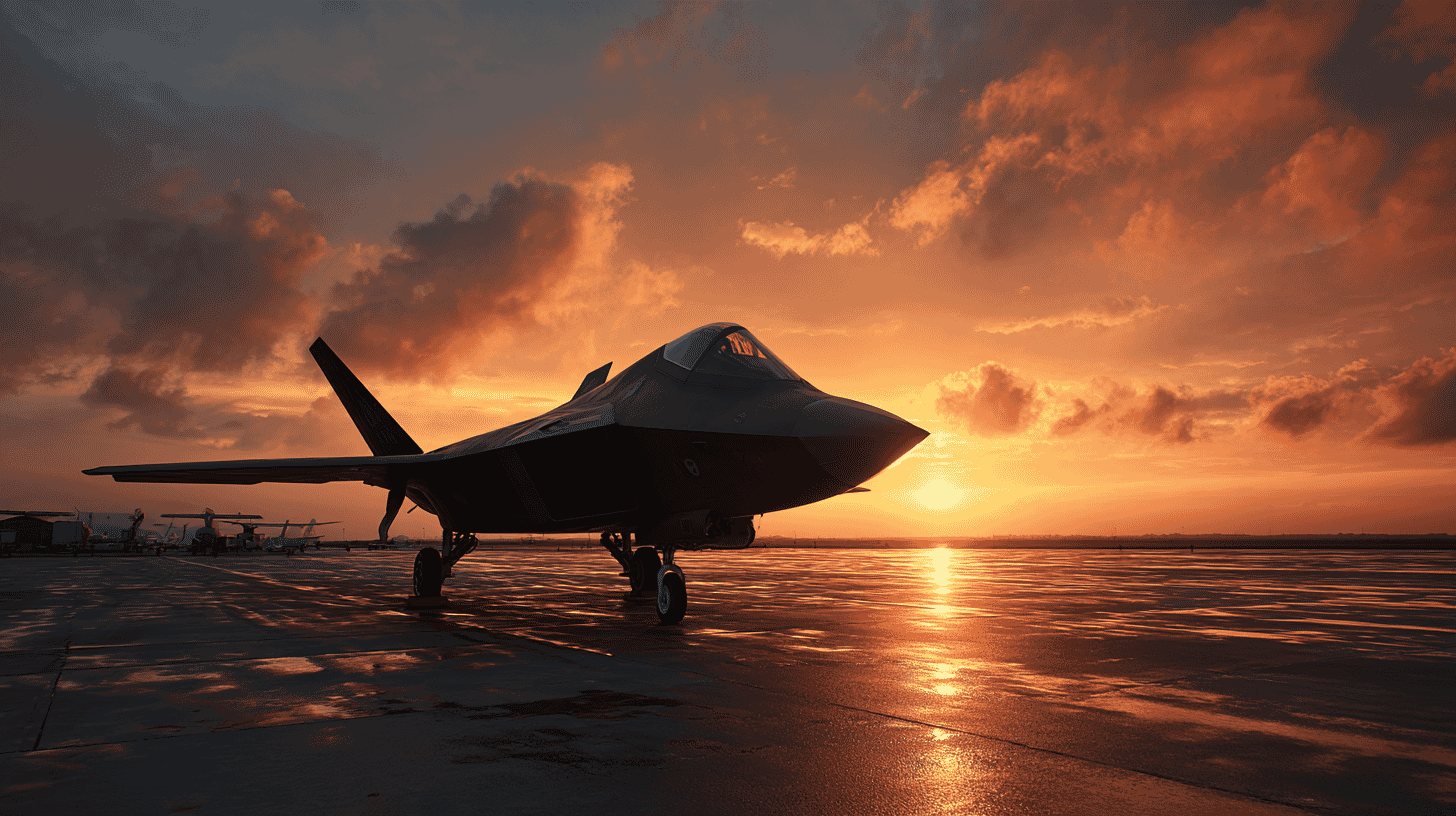
✈️ In June, Germany lost its partner for a next-generation fighter jet. Less than five months later, its chancellor was in Tokyo asking whether Japan could be the next one.
Friedrich Merz made his first visit to Japan as German chancellor on October 28, 2026. In talks with Prime Minister Sanae Takaichi, the two sides launched a high-level dialogue on artificial intelligence, issued declarations on economic security and technology, and agreed to make their supply of rare earths and other critical minerals harder to choke off. Merz also raised a weightier subject: Germany wants to explore building fighter jets with Japan. Japanese media read that as interest in GCAP, the sixth-generation fighter Japan is developing with Britain and Italy. Takaichi backed closer defense-industrial ties. On whether Germany should join the jet program, Tokyo has not taken a position.
Three Agreements in One Afternoon
According to The Japan Times, the leaders issued a joint statement, plus declarations covering economic security and advanced technology. The official texts had not been posted on Japan's foreign ministry website at the time of writing.
The declarations point to concern over economic coercion, the use of trade restrictions as a pressure tool, without naming China or the United States. The Japan Times read them as aimed, without saying so, at both Beijing and Washington.
With Chinese export curbs on critical minerals and chips in mind, Japan and Germany agreed to strengthen supply chains for strategic goods, and they set up the AI dialogue. On defense, Takaichi said the two governments would study frameworks to deepen cooperation between their armed forces and push defense-industrial projects where their strengths complement each other.
About 30 business executives traveled with Merz, and the Jiji news agency counted 33 memorandums of understanding signed between governments and companies, in fields including fusion energy.
A Fighter Program That Lost Its Partner
FCAS, the Future Combat Air System that France, Germany and Spain had pursued since 2017, was supposed to produce a new European fighter. For years it stalled over which companies would control which parts.
On February 18, 2026, Merz said on a podcast that Germany's armed forces do not currently need the nuclear-capable, carrier-capable jet France wants, and asked whether a manned fighter would still be needed in 20 years. On June 8, the Élysée Palace announced that France and Germany had accepted the fighter could not be completed. Work continues on the combat cloud, which ties crewed and uncrewed aircraft together over a digital network. Speaking at the ILA Berlin air show two days later, Merz described the outcome as the end of a long deadlock that also opened new possibilities.
On July 22, Lorenzo Mariani, CEO of Italian defense group Leonardo, told Reuters a new partner should join within about a year at most and that Germany would be a good fit. On October 8, British Prime Minister Andy Burnham said in Berlin that the UK was open to Germany joining. Japanese Defense Minister Shinjiro Koizumi said the next day that Japan would study the idea with Britain and Italy.
In an interview with Handelsblatt published October 18, Michael Schöllhorn, CEO of Airbus Defence and Space, said that if Germany joined, its industry would expect a proportionate share, and a fair role in technology development as well as in workload. He said Airbus is strong in flight controls and the center fuselage, and that a decision had to come by the end of the year.
In Tokyo, according to the text of his remarks reported by Germany's Tagesspiegel, Merz said Germany wants to "explore whether cooperation in fighter aircraft construction is possible," and that a formal mandate to examine it was ready. He did not mention GCAP by name.
Why Tokyo Is Not Rushing
Defense News calls GCAP Japan's most expensive defense project. The jet is meant to replace the Air Self-Defense Force's F-2 fighters, with a target of entering service in 2035, so delays would leave Japan with a gap.
In March, before Germany's interest became public, retired Air Self-Defense Force Lt. Gen. Eiichirou Fukazawa told Defense News that the government cares a great deal about sticking to the original timeline and would probably not welcome new players. He did not name Germany.
Cost is the other pressure. Defense News reported in January that Italy's share of GCAP development had risen from 6 billion euros to 18.6 billion euros in 2025 prices, roughly a threefold increase. A new partner could share that bill, though Airbus has already made clear it would expect real technology work in return.
Yoko Iwama, a professor at the National Graduate Institute for Policy Studies, described GCAP's European partnership to Defense News as an experiment, and as a way for Japan to reduce its reliance on the United States. She was not talking about Germany specifically. Japan's export rules are less of an obstacle than they were: on April 21, it scrapped the "five categories" that had limited its defense exports, allowing lethal weapons sales to the 17 countries that have defense equipment and technology transfer agreements with Japan. Germany signed one in 2017.
Rare Earths: A Road Japan Has Already Traveled
China has tightened its grip on rare earths, the metals used in magnets for electric motors, missiles and wind turbines. Since April 2025, exports of seven medium and heavy rare earths have required a license. A broader set of controls announced in October 2025 was suspended, but that suspension runs out on November 10, 2026. Washington and Beijing have extended their wider trade truce to January 10, 2027, yet as of late October no formal Chinese notice extending the rare earth suspension had been reported.
Both countries have been targeted directly. On January 6, 2026, China banned exports of all dual-use items to Japanese military users. On July 24, it put 14 European organizations on its export control list, among them the German arms maker Rheinmetall.
Japan was hit by a Chinese squeeze on rare earth shipments during a 2010 territorial dispute, and it spent the following years diversifying. According to Japan's Ministry of Finance, China supplied 89.8 percent of Japan's imported rare earth metals in 2010. By 2024 that share had dropped to 62.9 percent, with Vietnam and Thailand filling much of the gap. Japan also keeps national stockpiles of rare metals through the state agency JOGMEC.
Germany has no such cushion. In September, the German government told the Bundestag that no state stockpile of critical raw materials exists. The EU's Critical Raw Materials Act only sets a goal of capping reliance on any single outside country at 65 percent by 2030.
At a business summit in Tokyo, Merz said that without critical minerals there would be no batteries, advanced chips or high-performance electric motors. Japan's trade minister, Ryosei Akazawa, noted that German carmakers already rely on magnets shipped from Japan.
An Alliance to Own the Restaurant, and a Thorn Called EVs
Germany and Japan rank third and fourth in nominal GDP in the IMF's October outlook. Their trade is roughly balanced: in 2025, Germany exported 21 billion euros of goods to Japan and imported 22.1 billion euros, making Japan its second-largest trading partner in Asia after China.
At the business summit, Merz proposed a global political alliance for rules-based trade, whose members would respond together to rule-breaking or economic pressure. Borrowing an image from Canadian Prime Minister Mark Carney, he said that if middle powers act together, it no longer matters whether they are on the menu or at the table, because "then the restaurant belongs to us." Asked the same day about Merz's push for wider EU-Asia market access, Chinese foreign ministry spokesperson Guo Jiakun said China wanted Germany and the EU to stay "objective and rational."
There is friction, too. The EU is weighing support measures that favor European-made vehicles, a plan driven by France and Germany, and Japan has been left outside it. Akazawa told Merz directly that Japan is strongly concerned Japanese EVs could be shut out of the European market. At the joint press appearance, Takaichi said the leaders had confirmed the importance of considering both sides' interests reciprocally in industrial support measures. Jiji read the line as a pointed reference to the EV plan.
A shared fighter jet would bind the two countries' air forces and defense industries for decades, a bigger commitment than anything signed on October 28. Japan's current co-development project is already physical: the GCAP demonstrator is taking shape.
Would your country let a new partner join a fighter program halfway through, if it brought money but also wanted a big share of the work?
References
- https://www.jiji.com/jc/article?k=2026102800836&g=pol
- https://www.japantimes.co.jp/business/2026/10/28/takaichi-merz-meeting/
- https://www.tagesspiegel.de/politik/dann-gehort-uns-gemeinsam-das-restaurant-merz-schlagt-neue-allianz-fur-welthandel-vor--und-will-kampfjet-mit-japan-bauen-16209848.html
- https://topics.smt.docomo.ne.jp/article/reuters/politics/reuters-20261028107
- https://www.internazionale.it/ultime-notizie-reuters/2026/02/18/merz-questions-german-need-for-future-manned-fighter-jet-amid-fcas-trouble
- https://www.touteleurope.eu/l-ue-dans-le-monde/scaf-paris-et-berlin-renoncent-au-projet-d-avion-de-combat-franco-allemand/
- https://www.ariva.de/aktien/airbus-group-aktie/news/roundup-merz-sieht-in-kampfjet-aus-mit-frankreich-eine-12032977
- https://www.globalbankingandfinance.com/leonardo-ceo-deadline-new-country-join-gcap-next-year/
- https://www.aerotime.aero/articles/burnham-says-uk-is-open-to-germany-joining-gcap-fighter-effort-with-italy-japan
- https://kumanichi.com/articles/2048105
- https://www.defensenews.com/global/europe/2026/01/20/italy-faces-gcap-warplane-price-tag-topping-21-billion/
- https://www.defensenews.com/global/asia-pacific/2026/03/11/japan-shrugs-off-gcap-delays-fast-tracks-export-rules-for-future-warplane/
- https://breakingdefense.com/2026/04/japan-loosens-arms-exports-rules-in-major-shift/
- https://www.defensenews.com/2017/07/24/japan-germany-sign-deal-to-partner-amid-tensions-with-china/
- https://www.asagumo-news.com/post/26100905
- https://startupfortune.com/chinas-rare-earth-truce-runs-out-on-november-10-with-no-renewal-in-sight/
- https://m.thepaper.cn/newsDetail_forward_32326591
- https://www.news.cn/world/20260724/ee84ddf6e43445cbbcf33990f84aaf76/c.html
- https://www.mof.go.jp/public_relations/finance/2025010/202510g.pdf
- https://www.bundestag.de/presse/hib/kurzmeldungen-1210692
- https://single-market-economy.ec.europa.eu/sectors/raw-materials/areas-specific-interest/critical-raw-materials/critical-raw-materials-act_en
- https://www.japantimes.co.jp/business/2026/10/14/economy/japan-economy-6th/
- https://www.auswaertiges-amt.de/de/service/laender/japan-node/bilateral-213038
- https://www.devdiscourse.com/article/international/3998532-china-calls-on-germany-eu-to-be-rational-on-trade-supply-chain-issues
- https://www.enecho.meti.go.jp/about/special/johoteikyo/kokusaisigensenryaku_03.html







Global Discussion
4 comments