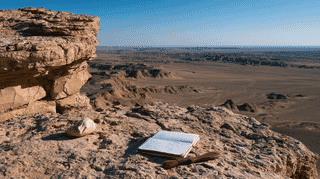
Zavacephale, now on show in Japan, pushed the pachycephalosaur dome record back at least 14 million years. It's billed as a head-butting dinosaur, but whether its kind fought that way has been argued since at least 1998.
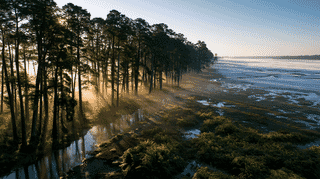
Fossils said the Late Cretaceous Arctic was warm enough for dinosaurs, but climate models could not reproduce it. A Japanese team let Earth's axial tilt roam its full range and points to geography as the amplifier.
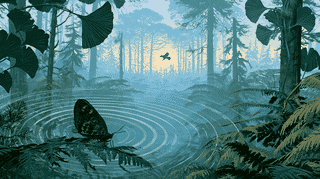
A PNAS study rebuilt the songs of 9 extinct species from 20 fossils in Inner Mongolia. The 5 to 7 kHz result lands in the same band as Japan's 4.5 kHz bell cricket, listened to for 1,000 years.
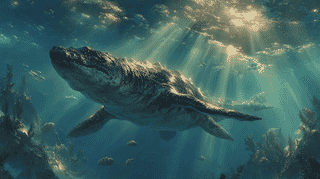
A mosasaur fossil collected in Kaizuka, Osaka and stored for 35 years has been reanalyzed. A premaxilla bone was confirmed for the first time in Japan, and the specimen may be a new species of Prognathodon, the heavy-jawed group nicknamed the T. rex of the seas.
In a 2004 book, a Japanese paleontologist described his country's dinosaurs in modest terms. Two decades on, Kamuysaurus and Yamatosaurus put Japan on the global dinosaur map.