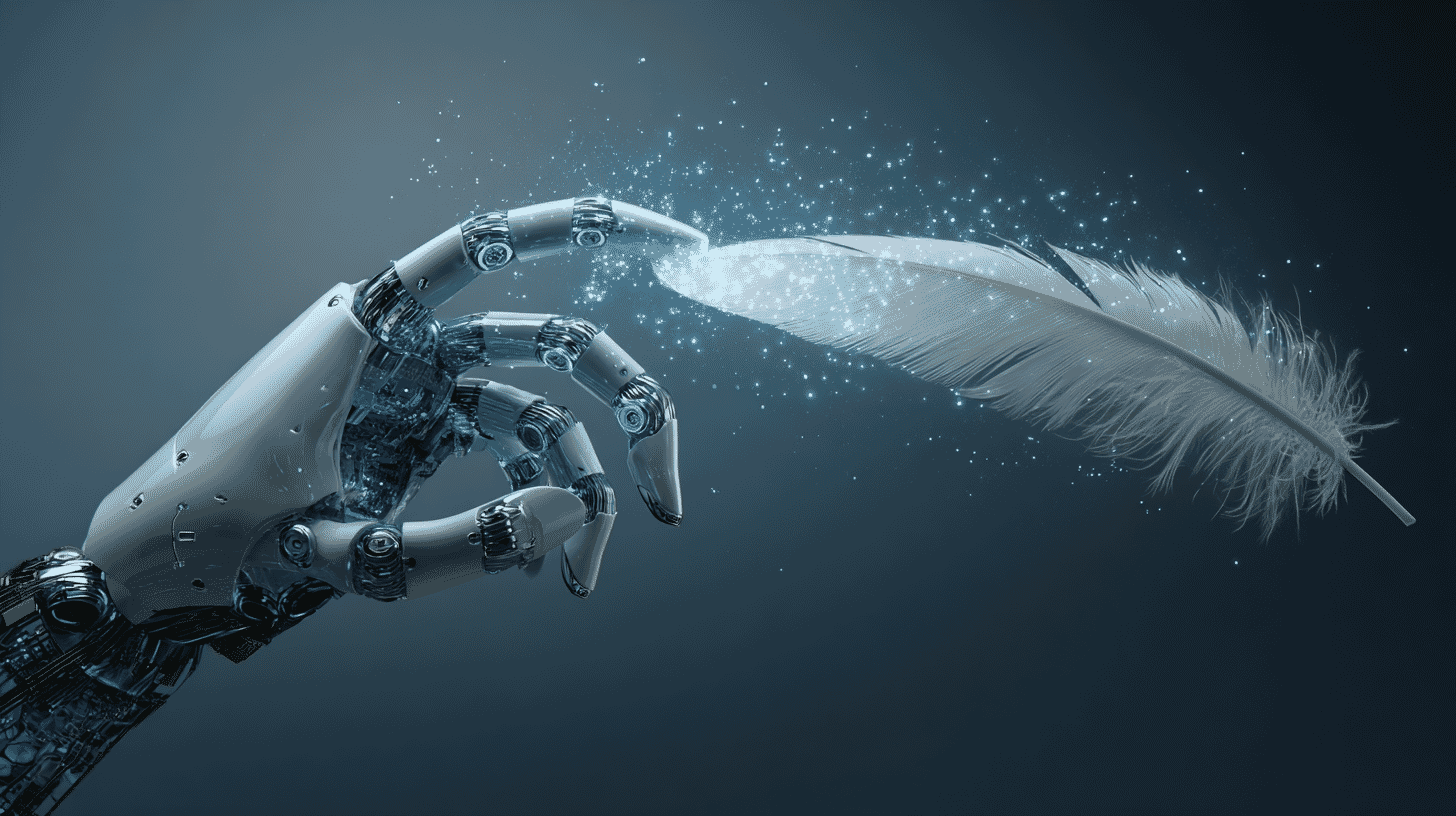
🤖 A robot's fingertips can now feel the touch of a feather. At CES 2026, Bosch demonstrated a robot hand that detects the exact location and pressure of contact from something as light as a feather brushing against it. This technology gives robots a human-like sense of touch—solving one of the biggest challenges in humanoid robot development. Here's how this breakthrough could reshape the future of robotics.
Revolutionary Technology Unveiled at the World's Largest Consumer Electronics Show
From January 6 to 9, 2026, German industrial giant Robert Bosch showcased its high-sensitivity sensor technology for robotics at CES 2026 in Las Vegas, Nevada.
At the Bosch booth, the company demonstrated a robot hand equipped with the high-precision barometric pressure sensor "BMP585" and an IMU (Inertial Measurement Unit). The system integrates four pressure sensors and an IMU into the robot's fingers, all sealed with silicone. This configuration enables detection of even the slightest contact—like a feather lightly brushing the surface—accurately identifying both the location and intensity of touch.
The Powerful Combination of Pressure Sensors and IMU
"We believe tactile sensing will be key to humanoid robot development," Bosch explained at the event. Human hands are remarkably sophisticated sensory organs that instantly assess an object's hardness, softness, and size, then adjust grip strength and handling technique accordingly.
According to Bosch, the combination of pressure sensors and IMU addresses a strong demand in robotics by enabling both tactile sensing and orientation detection simultaneously. This setup also complements camera-based visual recognition, allowing robots to continue accurate operations even when camera lenses are obscured.
Key BMP585 Specifications:
- Relative accuracy: ±0.06 hPa
- Absolute accuracy: ±0.5 hPa (typical)
- Detects altitude changes of just a few centimeters
- Liquid-proof gel cover enables underwater operation
- Current consumption: 1.3μA at 1Hz data rate
The New-Generation MEMS Sensor Platform "BMI5"
Bosch also announced its next-generation inertial sensor platform "BMI5" at CES 2026. This platform includes three product lines—BMI560, BMI563, and BMI570—designed for diverse applications including XR headsets, robotics, and wearable devices.
BMI5 Platform Features:
- Ultra-low noise and high-precision performance
- Exceptional vibration robustness
- Doubled measurement range compared to previous generation
- Latency under 0.5ms
- Built-in edge-AI classification engine
- On-sensor context analysis capability
The BMI563 excels at handling vibrations and rapid movements, making it ideal for robots requiring precise navigation or VR controllers tracking subtle hand gestures. Demonstrations showed humanoid robots finding the correct path even when camera lenses were blocked by objects.
MEMS Sensor Market to Reach $19.2 Billion by 2030
According to market research firm Yole Group, the MEMS sensor market will exceed $19.2 billion by 2030, with a compound annual growth rate (CAGR) of 4% from 2024 to 2030. Bosch maintains its position as market leader and plans to expand production capacity at its wafer fabrication facility in Reutlingen, Germany, through the end of 2025.
Samples of the BMI5 series are already available for direct customers, with high-volume production scheduled to begin in Q3 2026.
Accelerating Humanoid Robot Development Competition
CES 2026 saw a dramatic increase in humanoid robot exhibitions compared to the previous year. Companies showcased products aimed at commercialization, including Boston Dynamics' electric Atlas, LG's CLOiD, and SWITCHBOT's home robots. Behind this trend lies the evolution of sensor technology.
For robots to coexist with humans and perform delicate tasks, tactile sensing is essential—not just visual recognition. Bosch's sensor technology holds the key to solving this challenge.
Impact on Japan's Robotics Industry
While Japan has led the world in industrial robotics, competition in humanoid robot tactile technology is intensifying with overseas companies. Japanese firms like MinebeaMitsumi and SONY are also developing tactile sensors, and future technological trends warrant close attention.
2026 has been called the year of "Physical AI," with accelerating development of technologies enabling robots to act autonomously in the physical world. Bosch's sensor technology appears poised to play a central role in this evolution.
In Japan, there's significant interest in applying robot tactile technology to manufacturing and eldercare. However, concerns about job displacement remain persistent. How does your country view robot tactile technology? Is there progress in applying it to eldercare or manufacturing? We'd love to hear your perspective.
References
Reactions in Japan
Watched the Bosch demo. If it can respond to a feather touch, that's basically human fingertip level. This could massively expand automation possibilities for factory inspection work.
If tactile sensing has evolved this far, maybe care robots will change too. But you can't measure human warmth with sensors... Balancing technology and heart remains the challenge.
1.3μA current consumption for the BMP585 is insane. Means battery lasts even when always-on. Could work for wearables, but robotics applications are more interesting.
Another area dominated by foreign companies. I wish Japanese sensor makers would step up more. At this rate, we'll lose the robotics market too.
Visited the Bosch booth at CES! They let me try it and it really responded to touches as light as a feather ✨ Such a futuristic feeling!
Every time I see tech like this, I worry about losing my job. If robots do inspection and packing, what are humans supposed to do?
The BMI5 platform with edge AI is exciting. Sensors that don't depend on the cloud will be a key differentiator. Japanese companies should invest here.
Combining pressure sensors with IMU is a common setup in papers, but the commercialization speed is different. Bosch's mass production capabilities are just strong.
If surgical robots had this tactile sensing, they could perform more delicate operations. Wonder if it'll be integrated into da Vinci systems.
If Bosch leads a $19.2 billion market, where are the Japanese makers? Hope Murata and TDK step up.
Could be useful for agricultural robots. Harvesting fruit requires delicate force control, so I want a robot that can pick without bruising.
The Gundam 'nerves in the fingertips' is becoming real lol. Next up, Newtype-compatible sensors?
MEMS sensors are definitely core to Physical AI. But adoption could be slow depending on cost. How much will mass production bring prices down?
My grandchild keeps talking about robots. What used to be science fiction is becoming real. Glad I've lived long enough to see this.
Watched CES coverage and Bosch's sensor demo had the biggest impact. But I'm worried about the low visibility of Japanese companies.
I work at a robotics startup in Silicon Valley. Bosch's sensor integration approach is clever. We've been struggling with tactile sensor development, and this solution is worth considering.
In India's manufacturing sector, robotization is slow due to low labor costs. However, interest in high-precision sensors like these is growing from a quality control perspective.
As a German, I'm proud that Bosch leads the industrial sensor market. However, price competition with Chinese companies will be a future challenge.
I work at a care facility in France. Tactile robots could revolutionize elderly care, but I oppose fully replacing human caregivers. They should remain in a supportive role.
I manufacture robot components in Shenzhen. Bosch's tech is excellent, but in 2-3 years Chinese companies will offer equivalent products at half the price.
The UK faces severe labor shortages, especially in warehousing and logistics. Robots with tactile sensors that can automate picking could help offset post-Brexit workforce gaps.
I do quality control at a premium food company in Italy. Handling delicate foods requires tactile sensing. Curious if this sensor tech could automate pizza and pasta production.
I work for a Samsung affiliate in Korea. It's frustrating that Japanese and German companies dominate the sensor market. Korea should invest in developing our own MEMS technology.
I work at an auto plant in Mexico. This advanced tech is interesting, but it'll be 10 years before it reaches our factory. The cost barrier is high.
I research drone tech in Australian agriculture. If this tactile tech works for fruit-harvesting robots, it could save labor-strapped farms, especially in remote areas.
I'm more concerned about geopolitical aspects than the technology itself. With US-China tensions, where will European tech flow? Sensor technology has military applications.
I'm involved in smart city projects in the UAE. Tactile sensors for service robots will be important in hospitality, especially for human-facing services.
I research AI at a Brazilian university. Bosch's approach of having both hardware and software is instructive for robotics researchers in developing countries.
(Japanese living in the US) It's disappointing that Japanese companies are falling behind in this field. But given Sony and Denso's capabilities, there's still room for a comeback.
In Sweden's welfare state model, automating elderly care is cautiously debated. Even if technically possible, ethical and social acceptance is a separate issue.