Japan's Forum for the Future We Choose has published its first-ever Population Problem White Paper. A nationwide survey reveals 70% of people over 50 feel a sense of crisis about population decline, while 2025 births fell to a record low of 705,809 for the tenth consecutive year. We explore Japan's dual strategy of adapting to population decline while trying to reverse the birthrate trend, with comparisons to South Korea, China, and Europe.
Four Japanese companies formed J-HRTI, a consortium to accelerate humanoid robot deployment in factories. With Japan's first private data collection center opening in July 2026, the initiative takes a unique approach focused on industrial data and real-world implementation amid fierce US-China competition.
Japan's food service industry hit its 50,000-worker cap under the Specified Skilled Worker visa, and new applications have been suspended since April 13, 2026. The skills test itself is halted too. We look at the gap between labor shortages and immigration caps, compare with South Korea and Singapore, and map what's left for foreign workers.
The Bank of Japan overhauled its output gap and potential growth rate estimation on March 26, 2026, while launching labor market indicators and new Core CPI data. Learn how these changes lay the groundwork for further rate hikes.
Japan's sickness benefits topped $4 billion in FY2023, up 60% in five years, driven by surging mental health claims. Explore Japan's structural workplace issues, insurance impacts, and how reforms compare globally.
Japan's Ministry of Economy, Trade and Industry (METI) has formulated a roadmap for deploying AI-powered autonomous robots in security, waste management, and other labor-short sectors by 2030. While Japan commands ~70% of the industrial robot market, it lags behind the US and China in service robotics. The government now targets 30%+ global market share and $130 billion in the AI robot market by 2040. Here's what this national strategy means for Japan and the world.
In 2026, Japanese anime films are increasingly publishing full staff credits on their official websites. Major titles like Gundam: Hathaway and Gintama are leading this movement, earning praise from both industry professionals and fans. Why the web? Here's what's driving this new trend and how people are reacting.
A 58-year-old mother who cared for her severely disabled daughter alone for 29 years was arrested after an attempted murder-suicide in Chiba, Japan. With approximately 40 caregiver-related killings reported annually, this article examines landmark cases and asks the world: is this a crime society should bear?
Japan's permanent residency fee goes from 10,000 yen to 200,000 under the draft ordinance published July 3, 2026, applying to applications from October 1. From April 2027, permanent residency can be revoked for deliberate non-payment of taxes or social insurance. Foreign workers hit a record 2,571,037 in October 2025, but growth slowed to 11.7%.
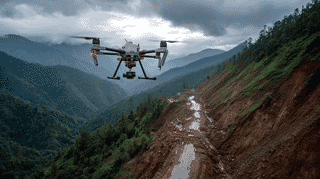
Aizawa Concrete's F3DP is a gasoline-powered drone with a robotic arm and nozzle that extrudes concrete in flight. It is aimed at printing formwork for floating offshore wind platforms by the end of 2028. A machine born from Japan's construction math: 4.77 million workers, 36.6% of them over 55.
KADOKAWA is opening Studio One Base, a 4,600㎡ anime production hub housing 400 staff and five group studios inside Ikebukuro's Sunshine City in fall 2026. Part of a vision to turn Ikebukuro into a world-class anime city, the move comes as Japan's anime market hits a record ¥3.84 trillion ($24 billion). Here's what it means for fans and the global anime industry.
Japan's government has set a cap of 1.23 million foreign workers by fiscal 2028, replacing its widely criticized Technical Intern Training Program with the new "Ikusei Shūrō" (Development and Employment) system. The reform introduces job-switching freedom, but raises concerns about brain drain from rural areas and Japanese language education challenges. We analyze this historic policy shift alongside comparisons with South Korea's EPS, Singapore's levy system, and Germany's integration model.
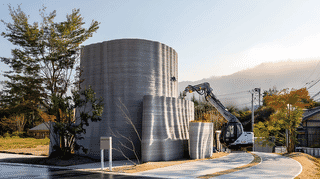
Japan's first two-story 3D-printed house "Stealth House" has been completed in Miyagi Prefecture, built by startups KIZUKI and ONOCOM with 20+ collaborating companies. As Japan's construction industry faces a severe labor shortage with 200,000+ fewer workers since 1997, multiple firms including Serendix and Lib Work are accelerating 3D concrete printing technology. We compare with U.S. giant ICON, explore Japan's strict building code compliance, and examine cost advantages.
On March 4, 2026, Finland-born food delivery service Wolt ended all operations in Japan after six years. Despite being loved for its god-tier customer support and elegant Nordic design, Wolt couldn't break through the Uber Eats/Demae-can duopoly that controls 90% of the market. We analyze why Wolt lost, what delivery workers face next, and what foreign tech companies need to succeed in Japan.
An exclusive report reveals that employees at Tesla's Japan division were paying order fees out of their own pockets to meet sales targets, a practice known as "Jibaku Eigyo" (self-destructive sales). Senior executives, including the Japan CEO, have forfeited part of their compensation. We explore why this uniquely Japanese toxic sales culture persists even at a Silicon Valley giant.
Auto mechanics in Japan now out-earn general office clerks, a reversal driven by severe labor shortages. Recruit Works Institute data across 145 occupations shows mechanics averaging ¥4.80 million against ¥4.67 million for clerks, with blue-collar pay rising far faster than desk work. Japan's belief that a degree plus a desk job equals higher income is under strain. We compare the shift with the US and Germany.
Japan's anime market has reached a record $25 billion globally. While aggressive M&A deals by Sony, KADOKAWA, and others have fueled explosive overseas growth, questions remain about low animator wages, creative risk-taking, and whether the industry's real creators are seeing any of the profits. A deep dive into the boom's winners and losers.
Multiple Spring 2026 anime have been delayed, yet Japanese fans are surprisingly optimistic. "Though I Am an Inept Villainess" now premieres in July, perfectly matching the story's timeline, while fans of "The Reincarnated Great Saint Hides Her Status" welcome the chance for higher quality. We explore the industry-wide labor shortage behind the delay trend.
JR East launches Japan's first cargo-only Shinkansen in March 2026. A former Yamagata Shinkansen E3 Series train has been stripped of all 394 seats and rebuilt to carry up to 17.4 tons of freight at 186 mph. Learn how the "Hako-Byun" service tackles Japan's driver shortage, cuts CO2 emissions, and creates a high-speed logistics link between rural producers and Tokyo.
Japan's hotel industry faces a severe labor shortage, with about 60% of hotels reporting a lack of full-time staff. From AI chatbots and facial recognition check-in to cleaning robots and dynamic pricing, Japanese hotels are turning to technology as a lifeline. Explore real-world cases including the famous Henn na Hotel, which runs 144 rooms with just 7 staff, and the latest generative AI initiatives backed by Japan's tourism agency.