📺 Two Spring 2026 anime just got delayed, and Japanese fans are... happy about it? In an industry plagued by overwork and staff shortages, one show's delay accidentally aligned with its story's timeline, turning bad news into what fans are calling "destiny." Here's why anime delays are becoming more common, and why the reaction this time is different.
Two Anticipated Titles Pushed Back Within Days
As the Spring 2026 anime season approaches, two notable titles have announced broadcast delays in quick succession, sparking widespread discussion among fans and industry observers.
On January 30, "The Reincarnated Great Saint Hides Her Status" (produced by Felix Film, based on the novel by Toya) was pushed back from April to October 2026, a full six-month delay. The official statement cited the goal of "delivering a work that fans can enjoy even more." The series follows Fia, a girl training to become a knight who discovers she was a powerful saint in her past life. Threatened by the Demon Lord's lieutenant with death if she is ever reborn as a saint, she tries to conceal her powers, with predictably chaotic results.
Then on February 5, "Though I Am an Inept Villainess: Tale of the Butterfly-Rat Body Swap in the Maiden Court" (produced by Doga Kobo, based on the novel by Satsuki Nakamura) was delayed from April to July 2026. The studio attributed the postponement to "delays in the production schedule." Set in a royal court, the story follows Reirin, a frail but beloved noble girl, who has her body swapped with the despised "villainess" Keigetsu on a fateful night and must navigate palace intrigue while trapped in another person's life.
Why Fans Are Cheering the Delays
What's remarkable about these announcements is the overwhelmingly positive reaction from Japanese fans, a sharp contrast to the frustration delays usually provoke.
For "The Reincarnated Great Saint," fans expressed understanding and encouragement. Comments on X (formerly Twitter) included sentiments like "I'm disappointed but I'll wait" and "I trust that the extra time will make it an even better show." The prevailing attitude was clear: a polished product is worth the wait.
But the response to the "Inept Villainess" delay was even more striking. Here's why: the story's opening scenes are set in early July, and the pivotal body-swap event takes place on the night of Kikosetsu, a traditional festival connected to Tanabata, Japan's Star Festival, celebrated on July 7. This means the delayed July premiere now perfectly matches the story's internal timeline.
Fans were delighted by the coincidence. Reactions ranged from "The July start was destiny all along" to "This actually makes me MORE excited." A scheduling setback had accidentally become the ideal launch window for the show's narrative.
A Recurring Pattern: What's Behind the Delays?
While fan optimism is heartwarming, the growing frequency of anime delays reflects a serious structural crisis in Japan's animation industry. During the Fall 2025 season alone, six anime titles were delayed, a figure that sent ripples through the industry. The Spring 2026 delays continue this troubling trend.
According to a 2025 report by Teikoku Databank (a major Japanese credit research firm), anime studio closures and dissolutions have risen for three consecutive years. Roughly 60% of primary production studios reported worsening financial performance in fiscal 2024. Despite the anime market surpassing $20 billion (over 3 trillion yen) and hitting all-time highs, production studios find themselves in what researchers call "profitless prosperity": busier than ever, but barely breaking even.
Several factors drive this paradox:
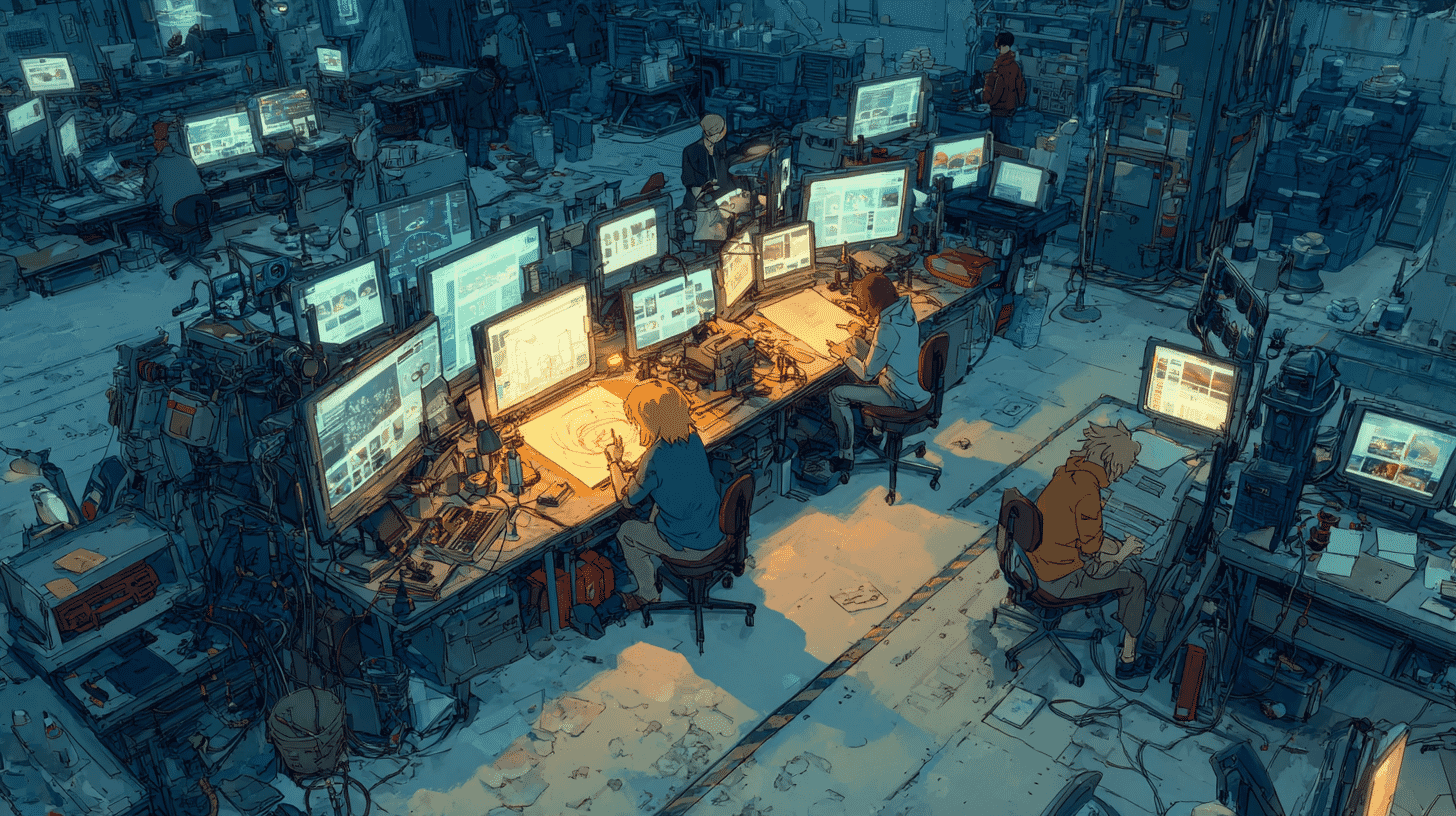
Severe labor shortages. With over 300 TV anime produced annually in Japan, there simply aren't enough skilled animators to go around. The "in-between animation" work that once served as a training ground for newcomers has been increasingly outsourced overseas, stunting the development pipeline for new talent. The burden falls on a shrinking pool of veteran animators and animation directors who must correct or redraw substandard work.
Rising production costs. The weak yen has driven up the cost of overseas outsourcing, while the seisaku iinkai (production committee) financing model, in which multiple investors share risk, structurally limits how much revenue flows back to the studios actually creating the animation. Small and mid-sized studios without lucrative IP rights are hit hardest.
Chronic labor issues. An estimated 50 to 70 percent of animators work as freelancers, with many earning below livable wages. UN human rights experts have raised concerns about labour conditions in the industry. That discourages new entrants and accelerates talent drain.
The Positive Side of Pressing Pause
In this context, the decision to delay rather than deliver a subpar product can be seen as progress. In years past, studios under pressure have pushed forward with insufficient staff, resulting in notorious "animation quality collapses," poorly drawn episodes that become memes rather than milestones.
Japanese fans have grown increasingly aware of these production realities. The sentiment that "I'd rather wait for something great than watch something rushed" has become mainstream, and the supportive reactions to this season's delays reflect that shift.
There's a well-known Japanese proverb: 急がば回れ (isogaba maware), literally "if you're in a hurry, take the roundabout path." It means that taking your time often leads to better results than rushing. The fans' willingness to accept delays as an investment in quality embodies this philosophy.
Of course, delays becoming routine isn't healthy for the industry. Fundamental reforms remain urgent: better animator compensation, sustainable training programs, and fair production budgets. The Japanese government has begun investing in creator development since 2025, and industry organizations like NAFCA (Japan Animation Film Culture Federation) are working toward systemic change.
The Spring 2026 delay wave is a symptom of growing pains in the world's largest animation industry. But in the fans' warm encouragement lies a hopeful message: quality matters, and the wait will be worth it.
[Update, July 2026] Though I Am an Inept Villainess began airing on July 12, 2026, on TV Tokyo and affiliates (Sundays at 11:45 p.m.), with an opening theme by milet. The season that fans hoped for, matching the novel's own timeline, is now the one on screen. The Reincarnated Great Saint Hides Her Status remains on course for its October 2026 premiere.
In your country, how do people react when an anticipated show or movie gets delayed? Do you welcome delays if it means better quality, or do you prefer on-time delivery no matter what?









Global Discussion
14 comments