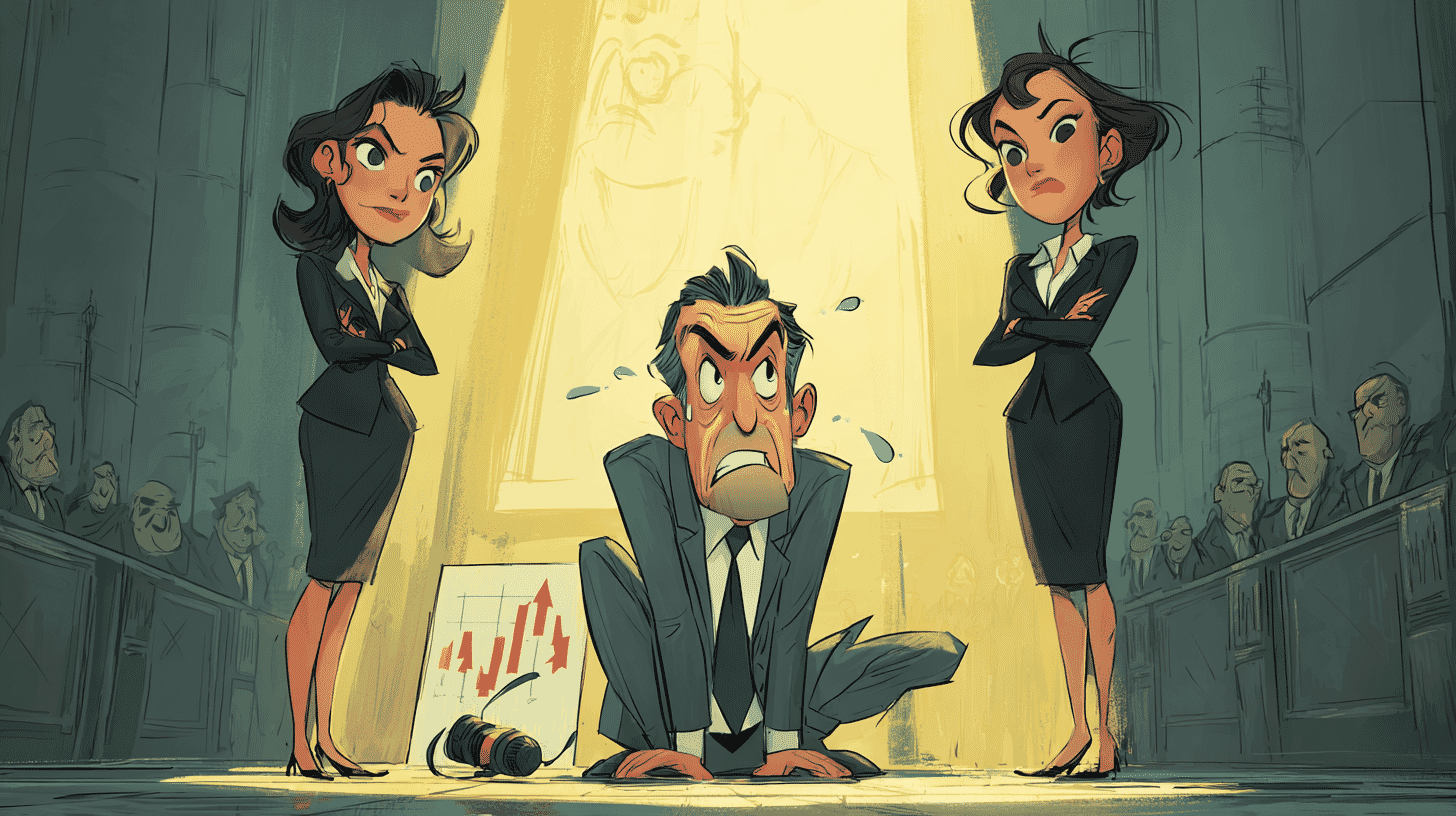
A Japanese cabinet minister casually suggested on national TV that the central bank should raise interest rates, and got a talking-to from both the Prime Minister and the Finance Minister the very next day. In a country where "central bank independence" is practically sacred, Economy Minister Akazawa learned the hard way that some things are better left unsaid, at least in public.
The Comment That Started It All
On April 12, 2026, Japan's Economy Minister Ryosei Akazawa appeared on an NHK political discussion show. The topic: how to tackle Japan's stubborn inflation, which has been fueled by surging oil prices and a weak yen hovering around ¥159 to the dollar (roughly $0.0063 per yen, or to put it another way, everything imported just got a lot more expensive for Japanese consumers).
During the show, economist Hideo Kumano of Daiichi Life Asset Management Research Institute proposed that the Bank of Japan (BOJ) could strengthen the yen by 10-15% through rate hikes, which would help bring down food and energy prices across the board.
Akazawa's response? He noted that the BOJ's inflation target was nearly achieved and that real interest rates remained quite low, then added that pursuing rate hikes along those lines was "one possible option."
In plain English: a government minister just told the central bank what it should do with monetary policy. On live television. That's a no-no.
The Double Scolding
The consequences came swiftly. The very next day, April 13, at a meeting of the Council on Economic and Fiscal Policy, both Prime Minister Sanae Takaichi and Finance Minister Satsuki Katayama personally told Akazawa to knock it off.
Katayama spelled it out at her press conference on April 14: "The Economy Minister does not oversee monetary policy. Specific monetary policy measures should be left to the BOJ, that's how the law is structured. Those kinds of comments are not something one usually makes."
When reporters then asked Katayama herself about whether rate hikes could help fight inflation, she smoothly deflected: "As the minister in charge, I am even less in a position to comment on monetary policy." In other words: See? This is how it's done.
Why This Matters: Japan's Central Bank Independence
The Bank of Japan's operational independence is enshrined in the revised BOJ Act of 1998. The government cannot directly order the BOJ to raise or lower interest rates. This separation exists for good reason, when politicians start dictating monetary policy, the results are usually disastrous (just ask countries that have tried it).
When a sitting cabinet minister publicly calls rate hikes "an option," markets interpret that as a signal. Traders immediately wondered: does Akazawa's comment reflect a broader government view that's more tolerant of BOJ tightening? The timing made it even more sensitive, with the next BOJ policy meeting scheduled for April 27-28.
The Bigger Picture: Oil Crisis, Weak Yen, and Rising Yields
Akazawa's comment didn't come out of nowhere. Japan is facing a painful triple squeeze.
Oil prices remain elevated due to Middle Eastern tensions. Shipping traffic through the Strait of Hormuz has plummeted amid fears of disruption, and Akazawa himself admitted that a return to $60-70 per barrel was unlikely anytime soon.
The yen is stuck near ¥159 to the dollar, making imported goods, especially food and energy, dramatically more expensive. For a country that imports the vast majority of its energy and a significant portion of its food, this is a kitchen-table issue.
Bond yields are surging. Japan's 10-year government bond yield briefly touched 2.49% on April 13, the highest level since 1997. That matters because it raises the cost of servicing Japan's enormous national debt, one of the largest in the developed world relative to GDP.
In this environment, Akazawa's logic actually made economic sense: a stronger yen via rate hikes would directly reduce import costs. The problem wasn't what he said, it was who said it and where.
Plot Twist: Former BOJ Governor Agrees (Sort Of)
In a delicious bit of timing, former BOJ Governor Haruhiko Kuroda, the man who pioneered Japan's "bazooka" monetary easing from 2013 to 2023, made headlines on the same day with remarkably hawkish comments.
In an interview with Kyodo News, Kuroda stated flatly that there was no need for fiscal stimulus, warning it would only accelerate inflation. He described Japan's economy as running at "full speed," with wages rising 5% year-over-year and employment at what he called "super-full employment."
Even more striking, Kuroda suggested the BOJ could raise rates roughly twice per year in 2026 and 2027, and that if the oil crisis worsened significantly, accelerated rate hikes might be necessary.
The architect of Japan's most aggressive monetary easing in history is now calling for faster tightening. If that isn't a sign of how much things have changed, nothing is.
What's Next: The April 27-28 BOJ Meeting
The BOJ's current policy rate sits at 0.75%. Markets are pricing in at least one more hike this year, with many expecting the rate to reach 1.0% by year-end.
For global financial markets, the implications are significant. The interest rate gap between Japan and the United States has fueled a massive "yen carry trade", investors borrowing cheaply in yen to invest in higher-yielding dollar assets. If the BOJ raises rates, that gap narrows, potentially triggering a carry trade unwind. This is exactly what happened in August 2024, when a BOJ rate hike contributed to a brief but violent global stock market sell-off.
Finance Minister Katayama heads to Washington on April 15 for G7 and G20 finance ministers' meetings, where Middle Eastern geopolitics and market stability will be at the top of the agenda.
What Happened Next: April Hold, Then a June Hike to 1.00%
At the April 27-28 meeting, the BOJ held its policy rate at 0.75% for a third consecutive time, staying cautious amid Middle East uncertainty and political pushback. The next hike came at the June 15-16 meeting, when the rate rose to 1.00% (a 0.25-point increase). With Governor Ueda hospitalized, Deputy Governor Himino chaired the session, and the decision passed 7-1. The lone dissent was read as deference to the government's expansionary fiscal stance, underscoring that the distance between the cabinet and the central bank, the very thing Akazawa's slip exposed, remains a sensitive subject.
In your country, do politicians comment on central bank decisions? And if they do, does anyone actually tell them to stop?







Global Discussion
15 comments