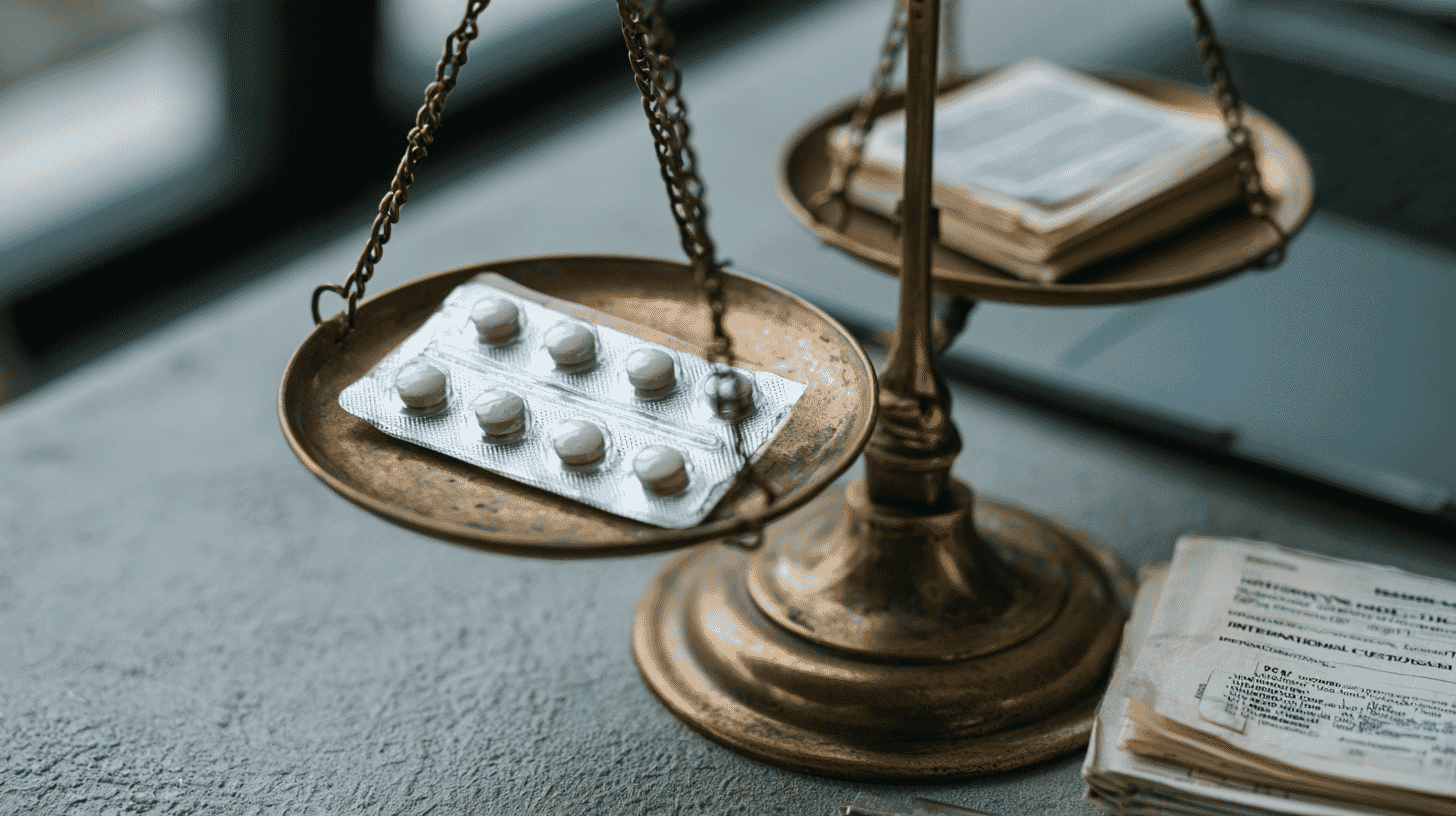
💊 Nine drugmakers signed pricing agreements with the Trump administration on August 31. Two of them were Japanese, which had never happened before.
The reason that matters isn't national pride. It's that Japan's own drug prices sit inside the formula Washington now uses to set American ones.
What Astellas and Kyowa Kirin actually signed
Astellas Pharma and Kyowa Kirin each announced on September 1, Japan time, that they had reached voluntary agreements with the U.S. government. No Japanese company was among the seventeen that signed in the earlier rounds. Neither is a household name in the West. At home they are large: Astellas cleared ¥2 trillion in revenue for the first time in the year to March 2026.
The core commitments are the same for both. Each will supply state Medicaid programs, the public insurance covering low-income Americans, at a "most-favored-nation" price. MFN is shorthand for one idea: Americans should not pay more for a medicine than the lowest price a comparable rich country pays. Each company also agreed that when it launches something new in the United States, it will price it against what other developed markets pay rather than setting an American number in isolation.
From there the two deals diverge. Astellas is donating 25 kilograms of tacrolimus active ingredient, the standard immunosuppressant for organ transplant recipients, to a new U.S. stockpile of critical pharmaceutical ingredients. Kyowa Kirin said it separately reached agreement with the Commerce Department to defer Section 232 tariffs, and pointed to the $530 million biomanufacturing plant it is building in Sanford, North Carolina, which as of its August announcement was expected to be running in 2027.
What neither company disclosed is which drugs get repriced, or by how much. Kyowa Kirin stated plainly that the detailed terms stay confidential. So have most of the other signatories.
The deadline behind the handshake
A presidential proclamation signed in April 2026 pulled patented medicines and the raw ingredients behind them under Section 232, the national-security tariff authority, at rates reaching 100 percent. Seventeen large manufacturers hit that wall on July 31. Astellas and Kyowa Kirin sat in the next tranche, dated September 29, 2026. There was one way around it, and both took it: sign an MFN deal, get an onshoring plan approved, and the rate falls to nothing until January 20, 2029.
Put that way, the arithmetic stops being subtle. For a specialty pharma company importing patented product into the world's largest drug market, a 100 percent tariff is not a margin problem, it's a business-model problem. Medicaid, for most of these portfolios, is a modest slice of revenue by comparison.
The White House framed the round differently. Its fact sheet emphasized that the nine had promised at least $19.6 billion of new manufacturing spending inside the United States, that the running total of signatories had reached twenty-six firms accounting for 89 percent of America's branded-drug sales, and that the Council of Economic Advisers projects $600 billion in savings over the next decade. Analysts are cooler about that last figure, since the deals reach only Medicaid and cash purchases through the government's TrumpRx site, launched in February 2026. Private insurance, where most of the money sits, stays untouched unless Congress legislates.
Japan is inside the formula
The Medicaid leg of these agreements runs through a program called GENEROUS, launched by the U.S. Medicare and Medicaid agency in January 2026. Under it, manufacturers pay rebates that bring what a state pays down to a benchmark: the second-lowest net price among eight reference countries, adjusted for GDP per capita. Those eight are Canada, Denmark, France, Germany, Italy, Switzerland, the United Kingdom, and Japan.
Japan sits at the floor of that basket. A RAND analysis of 2022 data found U.S. manufacturer prices averaged 278 percent of prices in other developed countries. Country by country, Japanese prices came to 29 percent of U.S. levels across all drugs and 22 percent for brand-name originator drugs. Japan is not alone down there. France came in at the same 22 percent, and RAND's own summary names the two together as the cheapest in the comparison group, with Canada, Germany and Britain consistently higher. These are manufacturer list prices, taken before the rebates American insurers negotiate, which narrow the brand-name gap without closing it.
That pairing matters, because the GENEROUS benchmark is not the lowest price in the basket but the second-lowest. If France and Japan are the two cheapest, the number an American state ends up paying is one of theirs. A low Japanese price no longer stays in Japan.
Two systems that decide price in opposite directions
In Japan, price is administrative. The health ministry, advised by a standing council of payers, providers and academics, fixes an official price for every reimbursed medicine, applied identically nationwide under universal insurance. Since 2021 those prices have been revised in off-year rounds on top of the regular biennial ones, which in practice means most drugs get cheaper most years. The 2025 round covered 9,320 products, 53 percent of the total, and cut spending by ¥246.6 billion, about $1.6 billion at the early-September rate of ¥156 to the dollar.
The industry's complaint about that machinery now comes with numbers attached. In August, the Federation of Pharmaceutical Manufacturers' Associations of Japan told the pricing council that between 2020 and the first half of 2026, Japan's producer price index rose 31.8 percent across all goods while pharmaceutical prices fell 17.4 percent. Its chairman, Kenji Yasukawa, who is also chairman of Astellas, argued that the 2027 revision should begin from a general uplift for inflation rather than from the presumption of a cut.
The United States built the opposite system. Manufacturers historically set launch prices themselves, with rebates negotiated privately between drugmakers and the middlemen who administer insurance benefits. Medicare only won limited negotiating power in 2022. That pricing freedom is exactly what MFN is now unwinding, by importing other countries' administered prices through the back door.
Now the argument moves to Tokyo
A July survey by the Japan Pharmaceutical Manufacturers Association of its sixteen board-member companies found 37.5 percent reporting that MFN was already affecting them: higher hurdles for licensing products in from abroad, development scaled back, launch timing reconsidered. PhRMA's Japan arm surveyed fifteen member companies and reported that ten had been asked by global headquarters to revisit their Japanese prices, and ten had been told a Japanese filing or launch might be deferred.
The fear has a name here. "Drug loss" describes the situation where a medicine approved in the United States or Europe is simply never filed for approval in Japan, because the market is small, the price is low, and the paperwork is particular. Japanese patients then wait for something that already exists elsewhere.
Not everyone in the room accepts the causal chain. At the same council meeting, a Japan Medical Association board member questioned the leap from MFN straight to drug lag and drug loss. A representative of the health insurance societies read the industry's position as a request for increases and nothing else, and argued the answer is to apply the existing rules with more discrimination rather than less.
That argument runs to the end of the year. The 2027 off-year revision, the fourth since the system began in 2021, is being negotiated now, with inflation and American MFN policy as the two contested items. Cabinet policy guidelines adopted on July 21, 2026 ask that the revision balance pharmaceutical innovation, stable supply, and the premium burden on working-age people. Which is a polite way of saying the government has not decided.
Decades ago Japan made a trade: hold prices down, keep coverage universal. What nobody planned for was the day another country would pick that low price up and use it as a lever.
How does your country decide what a medicine costs, and would you accept paying more if it meant new drugs arrived sooner?
References
- https://www.whitehouse.gov/fact-sheets/2026/08/fact-sheet-president-donald-j-trump-announces-deal-with-nine-additional-pharmaceutical-manufacturers-to-lower-drug-prices-for-americans/
- https://answers.and-pro.jp/pharmanews/33124/
- https://answers.and-pro.jp/pharmanews/33129/
- https://biotechbriefings.gibsondunn.com/mfn-goes-mid-market-nine-more-drugmakers-sign-medicaid-pricing-deals-as-the-september-29-tariff-deadline-approaches/
- https://www.globenewswire.com/news-release/2026/08/31/3353688/0/en/kyowa-kirin-announces-agreement-with-u-s-administration-to-reduce-treatment-costs-for-americans.html
- https://www.prnewswire.com/news-releases/astellas-enters-voluntary-agreement-with-us-government-supporting-affordable-access-to-medicines-302865379.html
- https://www.kff.org/medicaid/a-look-at-the-generous-model-and-factors-that-could-impact-medicaid-drug-costs/
- https://pmc.ncbi.nlm.nih.gov/articles/PMC11147645/
- https://www.managedhealthcareexecutive.com/view/u-s-drug-prices-are-278-higher-than-other-developed-countries-says-rand-study
- https://www.cms.gov/priorities/innovation/innovation-models/generous







Global Discussion
4 comments