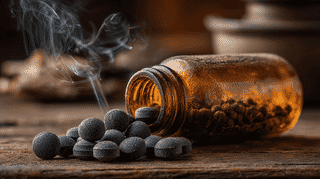
Seirogan now has its own subway train in Osaka. Its smoky smell comes from wood creosote, not the coal-tar kind; its 1902 name meant 'conquer Russia' until 1949; and any maker may use the name.
Invented at the US National Cancer Institute, photoimmunotherapy is so far approved only in Japan. Results from 17 Aomori patients and a later Phase 3 trial show what early approval gains and leaves unanswered.
About 30% of people with ADHD get limited benefit from methylphenidate. A Fukui mouse study found adding a D2 drug helped mice missing the protein NSF, but the same combo made normal mice more impulsive.
Cryo-electron microscopes flash-freeze proteins and build 3D models from millions of molecular images. What they see, what they do and what they cost, as a Kyoto university teaches undergraduates to use the data.
The 2026 Lasker Basic Medical Research Award went to Masashi Yanagisawa and Emmanuel Mignot for orexin. It explained narcolepsy, but the industry built sleeping pills first. The narcolepsy drug arrived 28 years later.
Astellas and Kyowa Kirin are the first Japanese drugmakers to sign most-favored-nation pricing deals with Washington. A September 29 tariff deadline explains the timing, and Japanese prices sit inside the U.S. formula.
Japan has begun selling Telomelysin, a rewired cold virus that multiplies only inside cancer cells and goes into esophageal tumors by endoscope. Three doses list at 9.3 million yen; the trial behind it had 37 patients.