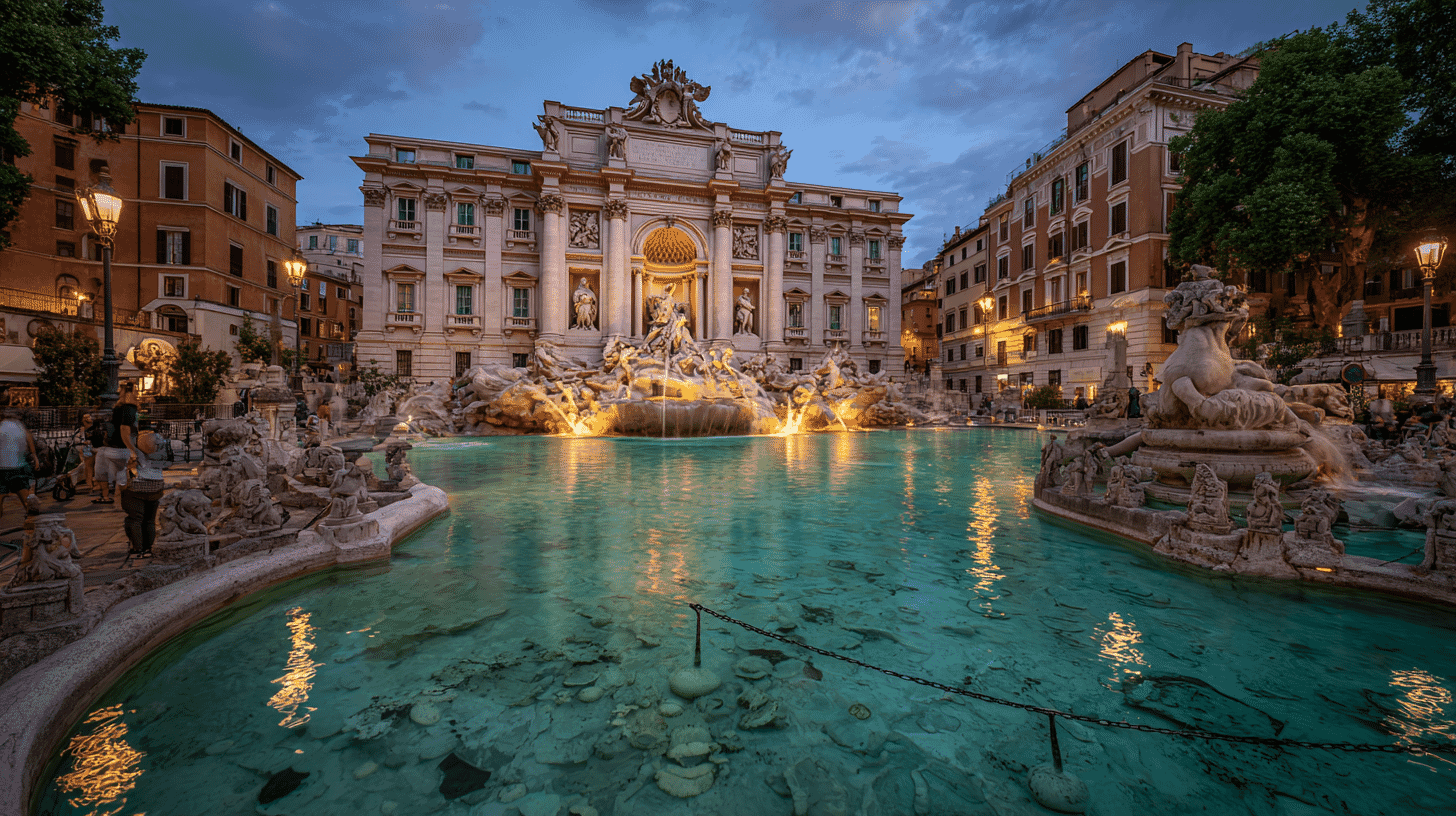
Tossing a coin into Rome's Trevi Fountain now costs more than just a wish. As of February 2, 2026, visitors must pay a €2 (~$2.35) entry fee to get close to the world's most famous fountain. With 9 million visitors a year and daily peaks of 70,000, Rome is joining a growing global movement to put a price tag on overtourism. Here's what's happening, and why Japan is watching closely.
The Trevi Fountain Goes Behind a Paywall
Rome's Trevi Fountain, the 18th-century Baroque masterpiece immortalized in Federico Fellini's La Dolce Vita, officially began charging an entry fee on February 2, 2026. The fee of €2 (approximately $2.35) applies to non-residents who want to descend the steps and get close to the basin, the spot where millions of tourists toss coins and snap selfies each year.
The fountain attracts over 9 million visitors annually, with an average of 30,000 per day and peaks reaching 70,000 during the busiest periods. Before the fee was introduced, the small piazza surrounding the fountain was often packed shoulder to shoulder, with visitors clutching gelato, jostling for photos, and occasionally even jumping into the water.
Rome residents with valid ID, children under six, people with disabilities and their companions, licensed tour guides, and holders of the Roma MIC museum card are all exempt from the fee.
How the New System Works
Tickets are open-dated, meaning there's no need to pick a specific time slot in advance. They can be purchased online through the official website, at the on-site ticket office, at tourist information centers, or at authorized sales points across the city. Both credit cards and cash are accepted at physical locations.
The ticketed area is open from 9 AM to 10 PM most days, though on Mondays and Fridays it opens later (11 AM or even 2 PM on alternate Mondays) due to coin collection and cleaning operations. After 10 PM, the barriers are removed and access is free for everyone, a deliberate nod to the fountain's romantic nighttime atmosphere.
Along with the fee, Rome has also formalized a list of prohibited behaviors in the ticketed zone: eating and drinking, smoking, sitting on the fountain's edge, throwing anything other than traditional coins, climbing the monument, bathing, washing clothes, and bringing animals into the water.
The Money Trail: Where Do the Euros Go?
City officials estimate the entry fee could generate approximately €6.5 million ($7.6 million) per year. This revenue will fund the fountain's ongoing maintenance, pay for the staffing of the new ticketing operation, and, in a notable move, expand free museum access for Rome residents. The city has announced that local citizens will gain free entry to additional municipal museums as a direct result of tourism revenue.
Meanwhile, the coins tossed into the fountain, which amount to roughly €1.5 million ($1.75 million) per year, will continue to be donated to the Catholic charity Caritas, which funds social programs for the poor. This long-standing tradition remains untouched by the new fee structure.
Early Reactions: "Tell Me It's Not Worth Two Euros!"
The response from tourists on opening day was largely positive. A Polish visitor exclaimed that the fountain was "worth thousands if not millions," calling €2 a bargain. A tourist from Morocco noted the improved experience: comfortable access, space for photos, and no crushing crowds. A British visitor appreciated getting "a decent picture without being bombarded by lots of other people."
Not everyone was convinced, however. Some Spanish tourists refused to pay and tossed their coins from outside the barriers, several missing the water entirely. An Albanian visitor felt Italians shouldn't have to pay at all (they don't, residents are exempt), while an Argentine tourist argued the fountain "should be free" for everyone.
Rome's tourism chief Alessandro Onorato was characteristically blunt, stating that if the Trevi Fountain were in New York City, "they would charge at least $100."
A Global Trend: The Price of Being Popular
The Trevi Fountain's new fee is part of a rapidly expanding international trend. Across Italy and Europe, and increasingly in Asia, popular destinations are experimenting with financial tools to manage tourist flows.
Venice, Italy: In 2024, Venice became one of the first cities in the world to charge day-trippers an entry fee. Visitors who don't stay overnight must pay €5 ($5.85) during designated peak periods. The system is aimed at making the lagoon city more livable for its shrinking resident population.
The Pantheon, Rome: Rome's ancient temple-turned-church introduced a €5 ($5.85) entry fee for tourists, breaking with centuries of free access. Like the Trevi fee, proceeds support preservation and staffing.
The Louvre, Paris: France announced a 45% price hike for the Louvre, raising tickets to €32 ($37) for most non-European visitors, one of the most aggressive pricing moves by any major museum.
New Zealand: The country tripled its International Visitor Conservation and Tourism Levy (IVL) to NZ$100 (roughly $60), making it one of the highest national tourism taxes in the world.
Bhutan: The Himalayan kingdom charges a daily Sustainable Development Fee of $100 per visitor per day, positioning itself as the gold standard for high-value, low-volume tourism.
Japan's Overtourism Battle: A Familiar Story
Japan is watching these developments with intense interest, and for good reason. The country welcomed a record 42.68 million international visitors in 2025, spending ¥9.5 trillion (approximately $63 billion). While this represents an economic windfall, it has also fueled overtourism crises in popular spots.
Kyoto, where foreign visitors now reportedly make up 80% of crowds at some landmarks, has become a symbol of the struggle. Residents complain about overcrowded buses, noise in residential areas, and the displacement of local culture by tourism-focused businesses. In Kamakura, the famous "Slam Dunk" railroad crossing has drawn such massive crowds of international fans that residents have faced noise, litter, and even threats.
Japan's government has responded with a comprehensive "Overtourism Prevention Package" and allocated ¥100 billion (~$660 million) in 2026 for related measures, an 8.3-fold increase from the previous year. Strategies include traffic regulation at congested sites, dispersal of tourists to regional areas, multilingual signage, and exploration of accommodation taxes.
Mount Fuji introduced a ¥2,000 (~$13) climbing fee and a daily cap of 4,000 hikers in 2024. The iconic "Convenience Store Fuji" photo spot in Fujikawaguchiko installed a black screen to block the view after dangerous behavior by tourists became unmanageable.
The Bigger Question: Can You Put a Price on Cultural Heritage?
The Trevi Fountain's €2 fee raises a philosophical question that resonates far beyond Rome: should iconic public spaces be free for everyone, or does preservation require financial gatekeeping?
Supporters argue that modest fees improve the visitor experience, fund conservation, and create a psychological barrier against careless behavior. The data from Rome's 2024-2025 crowd control trial supports this, when barriers and queuing systems were introduced, the number of people willing to wait for close-up access dropped significantly, reducing damage and disorder.
Critics counter that monetizing public cultural heritage creates a two-tiered system where wealthier tourists get the full experience while budget travelers are excluded. There's also the slippery slope concern: if the Trevi Fountain charges €2 today, what stops it from charging €10 or €20 tomorrow?
For now, Rome appears to have struck a balance that most visitors find reasonable. The true test will come during the summer peak, when tens of thousands of daily visitors collide with Roman heat and limited piazza space.
What About Your Country?
In Japan, the conversation about pricing and access to cultural sites is intensifying as the country prepares for even more visitors in the years ahead. The government's goal of 60 million annual visitors by 2030 will require creative solutions, and Rome's Trevi experiment will be closely studied as a model.
What do you think? Should famous landmarks and public spaces charge entry fees to fight overtourism? Has your country introduced similar measures?
References
- https://www.travelvoice.jp/20260205-159204
- https://www.npr.org/2026/02/03/g-s1-108471/trevi-fountain-fee-takes-effect
- https://www.cnn.com/2026/02/02/travel/trevi-fountain-rome-fee-overtourism
- https://www.rte.ie/news/newslens/2026/0202/1556370-trevi-fountain-charge/
- https://www.mlit.go.jp/kankocho/seisaku_seido/kihonkeikaku/jizoku_kankochi/jizokukano_taisei/overtourism.html








Global Discussion
15 comments