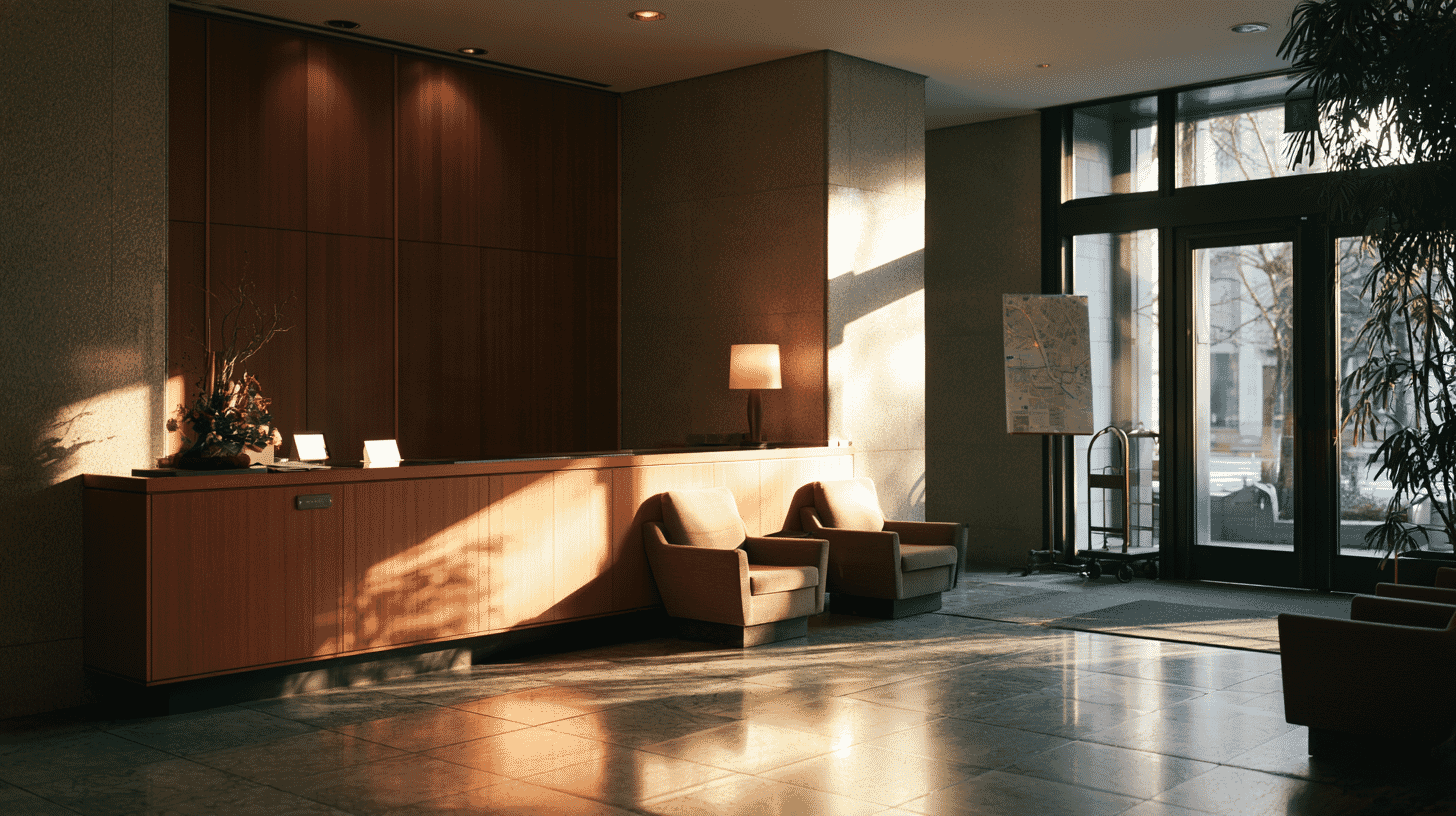
🏨 A ranking of Japanese hotels built from foreign visitors' online reviews has put a 653-room city hotel, not a luxury brand, at No. 1. Plaza Osaka sits in Juso, a neighborhood near Umeda in Osaka, and it topped last year's list too.
How the ranking was built
The list comes from Honichi Lab, an inbound-tourism news site run by the Tokyo company mov, and was published on September 29, 2026. It covers 470 properties (the top ten in each prefecture from the site's earlier regional rankings) and their public Google Maps reviews posted between May 1 and September 15, 2026. That came to 37,329 reviews, 19,382 of them in languages other than Japanese. Reviews with only stars or only emojis were left out.
The score is a single multiplication: popularity points = number of foreign-language reviews × their average rating.
In that formula, volume does most of the work. A big hotel with a steady flow of guests can pile up reviews far faster than a small inn, however good the inn is. The ranking also measures who writes Google reviews, not who sleeps in the beds. Plaza Osaka's own press release notes that its share of foreign-language reviews is not the share of foreign guests.
mov sells a review-management service to businesses, and the free summary of the report closes with a pitch for it. The numbers may well be right, but this is the company's own study, doubling as promotion, not an independent audit.
Who made the top ten
The 2026 national top ten:
- Plaza Osaka (Osaka)
- MIMARU Tokyo Kinshicho (Tokyo)
- Tokyu Stay Okinawa Naha (Okinawa)
- MIMARU Tokyo Ikebukuro (Tokyo)
- APA Hotel & Resort Osaka Namba Ekimae Tower (Osaka)
- THE TOKI Fujikawaguchiko (Yamanashi)
- Conrad Tokyo (Tokyo)
- Hotel and Spa Gift TAKAYAMA (Gifu)
- MIMARU Tokyo Ueno East (Tokyo)
- Hotel Gracery Shinjuku (Tokyo)
Five of the ten are in Tokyo. Only one, Conrad Tokyo, carries a global luxury brand (Conrad is one of Hilton's luxury lines). Three are MIMARU apartment hotels, where rooms for 4 to 10 guests come with a dining table, a kitchen and cookware. Apart from Plaza Osaka, the rest are city chain hotels plus two properties in the tourist towns of Fujikawaguchiko and Takayama.
For price context, Tokyo Shoko Research tracked 12 listed hotel operators for April to June 2026. Their average room rate was ¥18,003 (about $114). Business hotels, the compact, no-frills rooms Japan is known for, averaged ¥14,803 (about $94), and city hotels ¥25,085 (about $159). Occupancy stood at 82.7%.
Foreign-language reviews made up 51.9% of all reviews in the study: English 41.8%, traditional Chinese 28.5% and Korean 15.3%. Across these 470 properties, foreign-language reviews also averaged higher, 4.47 stars against 4.15 for reviews in Japanese. A different property tops each of the English, traditional Chinese and Korean lists, though the names sit behind the paid report.
Why a hotel in Juso keeps winning
Plaza Osaka also came first in the 2025 edition, published on August 26, 2025 and covering reviews from February 19 to August 18, 2025. It had 406 foreign-language reviews, a 4.7 average and a lead of about 500 points over second place. It was No. 1 again in the Osaka edition published in April 2026 (reviews from January 1 to March 31, 2026). The rest of the field churned: only two of the 2025 top ten, Plaza Osaka and Hotel Gracery Shinjuku, made the 2026 top ten.
This year it collected 421 foreign-language reviews averaging 4.88, for 2,054 points. Foreign languages account for 86.5% of all its Google reviews, well above the 51.9% average across the study.
The hotel is in Osaka's Yodogawa ward, about five minutes' walk from Hankyu Juso Station. Honichi Lab's 2025 analysis split reviews into six categories (location, service, rooms, food, price and facilities), and Plaza Osaka scored above 90% positive in five of them. Many reviews praised its multilingual staff and kimono photo sessions. In an interview with Honichi Lab, a company director said staff aim for the casual, close contact you would get at a ryokan, a traditional Japanese inn, backed by dedicated foreign staff. The interview also mentions work on halal food.
This year's hotel press release cites praise for service in English and Spanish, clean rooms and breakfast. The hotel also plans to open a large shared bath and sauna around summer 2027 (as of October 2026).
The ultra-rich are looking for something else
In April 2026 we looked at why ultra-wealthy foreigners skip rural ryokan and book Marriott. A financial analyst cited in that piece argued that this group wants predictable global standards, and that layers of personal attention on holiday can start to feel like work.
The review ranking points the other way. Its winner leans into ryokan-style closeness, and three of the top ten are apartments with kitchens. A Bulgari guest and a family of five sharing an apartment in Ikebukuro are not grading the same thing.
How to use a ranking like this when you book
Treat the top ten as a list of busy, well-liked hotels, not a quality certificate. On Google Maps, filter reviews to your own language and the last few months.
Groups of four or more may do better in an apartment hotel than in two separate rooms, but check what is included. MIMARU, for example, serves no breakfast. Check-in starts at 3 p.m., check-out is by 11 a.m., and the chain accepts luggage shipped ahead of arrival, which helps if you are moving between cities by train.
Budget for local accommodation tax. In Osaka, rates changed on September 1, 2025. There is no tax under ¥5,000 per person per night (about $32), and above that you pay ¥200, ¥400 or ¥500 (roughly $1.30 to $3.20) depending on the room rate. Kyoto's tiered system, in force since March 1, 2026, tops out at ¥10,000 (about $63) per person per night for rooms of ¥100,000 or more.
With listed chains averaging more than 80% occupancy, waiting for a last-minute deal is a gamble. Book early for peak seasons.
Where you live, what counts most when you pick a hotel: the star rating, the number of reviews, or one long review from someone who travels like you?
References
- https://honichi.com/news/2026/09/29/202609_inboundranking_hotel_japan/
- https://prtimes.jp/main/html/rd/p/000001409.000024246.html
- https://prtimes.jp/main/html/rd/p/000000012.000135416.html
- https://honichi.com/news/2025/08/26/202508_inboundranking_hotel_japan/
- https://honichi.com/news/2025/12/18/plaza_osaka/
- https://www.tsr-net.co.jp/data/detail/1203253_1527.html
- https://www.mimaruhotels.com/ja/
- https://osaka-info.jp/information/to-tourist/news-lodging-tax/index.html
- https://tophotel.news/hilton-signs-trio-of-luxury-hotels-in-japan/
- https://www.city.kyoto.lg.jp/gyozai/cmsfiles/contents/0000236/236952/A4822.pdf







Global Discussion
4 comments