On May 1, Japan's METI met infrastructure operators from the power and gas sectors, and Economy Minister Akazawa asked electricity companies to run emergency system inspections and report within a month. The order covers 24 critical-infrastructure operators in the power sector. The trigger was Anthropic's Claude Mythos Preview, announced April 7, which surfaced a 27-year-old bug chain in OpenBSD's TCP SACK code among others. The UK's AISI reached a more measured verdict. How Japan's penalty-free approach compares with CISA's OT principles and the EU's NIS2.
Two months into the de facto closure of the Strait of Hormuz, Japan took its first Russian crude cargo since the blockade began. Taiyo Oil bought Sakhalin-2 barrels on a spot contract at the request of Japan's energy agency, and the tanker reached Imabari on May 4. How the "Sakhalin exception" to the G7 and EU price cap works, how Germany, South Korea and India have played the same shock differently, and what it all reveals about Japan's structural exposure.
On May 2, Japanese PM Sanae Takaichi met Vietnam's new PM Le Minh Hung in Hanoi. Amid Middle East instability, Japan agreed to underwrite crude purchases for the Nghi Son refinery through NEXI, the first project under the Power Asia framework, and to work with Hanoi on rare earths and other critical minerals. In a speech at Vietnam National University, Takaichi set out three pillars for an evolved Free and Open Indo-Pacific: supply chains, shared rules, and security. How it differs from US friendshoring and the EU's Global Gateway.
Emergency transports for teen overdose in Tokyo have roughly tripled in five years, driven by over-the-counter medicines rather than illegal drugs. Japan's revised pharmaceutical law took effect on May 1, 2026, turning sales rules into binding obligations, but the isolation underneath remains unaddressed. Compared with the US fentanyl crisis and UK harm reduction.
SBI Holdings booked record crypto-segment revenue of 89.6 billion yen for the year to March 2026, though segment pre-tax profit stayed flat at 21.2 billion. Inside the JPYSC yen stablecoin, the crypto-collateral lending license, and the bitbank bid, set against the US GENIUS Act, EU MiCA and Hong Kong's bank-led model.
On May 1, 2026, Epic Games Store and Fortnite finally returned to iPhone in Japan, ending nearly six years of exile. The launch follows Japan's Mobile Software Competition Act, but Epic accuses Apple of leaving 'barriers everywhere'—a 9-step install flow, a 5% Core Technology Commission, and transaction-monitoring rules that scared off third-party developers. Here's what it means for one of the world's largest mobile gaming markets, the global Epic vs Apple battle, and the future of iOS sideloading.
On June 6, 2026, seven-member group XG became the first Japanese act to perform at Capital's Summertime Ball and the first Japanese group ever to play Wembley Stadium. They delivered three songs to 80,000 people, including a one-off cover of UK garage classic 'Flowers.' The set, the 29-year gap since Eikichi Yazawa, and how XG built up to this.
Fujitsu is doubling down on its sovereign AI strategy with the FUJITSU-MONAKA CPU series, choosing Rapidus as a manufacturing partner and 'coexisting' with NVIDIA's GPUs rather than competing. We compare Japan's hybrid approach to China's fully autonomous Loongson (LoongArch) and Europe's Arm-based SiPearl, revealing how Japan's pragmatic balance defines a third path in global chip sovereignty.
Japan's Financial Services Agency has, for the first time, formally identified JPYC as a registered Funds Transfer Business in an official document. We unpack the architecture of Japan's stablecoin regulation, contrast it with the US GENIUS Act and EU MiCA, clarify the legal distinction from PayPay-style e-money, and examine what it means for global payment infrastructure.
Japan's Digital Agency open-sourced 'Gennai', its in-house government generative AI environment, under commercial-use licenses. With a 180,000-employee rollout planned for FY2026, we compare Japan's build-then-open approach with the US GSA's USAi platform, the UK's Humphrey suite, and the EU AI Act framework.
Fujii Kaze's official Coachella 2026 Week 2 performance of 'Prema' is now on YouTube. On the same day, he announced Asian dates for his 'Prema World Tour' (Kaohsiung, Bangkok, Seoul), plus a 2027 summer run through Germany, UK, France, and six North American cities. After calling Week 1 'messy' and bouncing back in Week 2, here's where he goes next.
Japan's Ministry of the Environment reports total waste of 38.11 million tons for FY2024 (down 2.2% YoY) with a recycling rate of just 19.3%. Why is Japan, famous for its cleanliness, so far behind Germany (67%) and South Korea (60%)? A look inside the world's most incineration-dependent waste system.
At the G7 finance ministers' expanded meeting on April 17, 2026 in Washington, members aligned on strengthening critical mineral supply chains. Japan committed $20M each to the Asian and Inter-American Development Banks, marking a pivot to the resource-country funding phase. From the Japan-EU BRT proposal to the Kananaskis CMAP, C$6.4B (~US$4.6B) in unlocked projects, and now MDB funding, progress is real. But China still processes 90% of rare earths. A sober assessment of whether 'slow but steady' is actually fast enough.
Japan's National Intelligence Council Bill marks the country's biggest postwar intelligence reform. But similar PM-led intelligence bodies overseas have produced both spectacular successes (foiling the 2006 transatlantic bombing plot) and deep abuses: Korea's KCIA election interference, NSA mass surveillance, GCHQ's legal loopholes, BND monitoring German politicians for the NSA. What lessons should Tokyo draw?
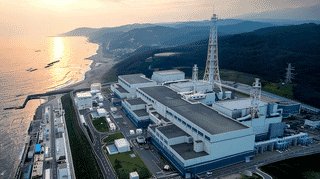
On April 16, 2026, TEPCO's Kashiwazaki-Kariwa Unit 6 resumed commercial operation for the first time in 14 years, the first post-Fukushima restart for the utility responsible for the 2011 disaster. With Middle East tensions squeezing LNG supply, electricity prices climbing, and 2050 carbon neutrality targets looming, Japan's energy policy has reached an inflection point. A deep dive into the restart's context, comparisons with Germany, France, and South Korea, the 'enclave mega-solar' scandal denting renewables, and how ordinary Japanese people are actually reacting.
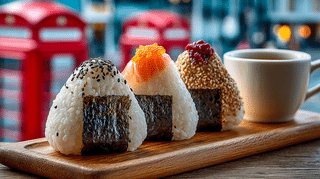
JR East, Japan's largest railway group, opened onigiri shop TOKYO ONIGIRI in London's Leicester Square in December 2025. Behind this unusual move, a railway company entering overseas food retail, lies the government's GOHAN Project strategy to boost Japanese rice exports. From Onigiri Summit 2026 to convenience store packaging innovations, we explore how the humble rice ball could become Japan's next global food hit after sushi and ramen.
EssilorLuxottica has raised its Nikon stake to 19.61%, nearing the 20% regulatory cap. We analyze the strategic implications for smart glasses technology, Japan's national security screening process, and why foreign investors—from Buffett to European giants—are pouring money into Japan Inc.
Nine months after the Japan-EU BRT proposal, the rare earth landscape has transformed: 55-nation pricing agreements, an EU center modeled on Japan's JOGMEC, and $1.3B US funding. But can the West truly break China's grip?
Japan's steel industry accounts for about 40% of the country's industrial CO2 emissions. The government now aims to create a green steel market exceeding 3 million tons annually by the early 2030s, combining hydrogen reduction, electric arc furnaces, and CCUS. Here's how Japan plans to standardize carbon footprint metrics and respond to the EU's CBAM.
UK activist fund Palliser Capital has become a top-25 shareholder of Ajinomoto and is demanding a 30%+ price increase for its ABF semiconductor insulation material. We explore how a food company holds near-100% global market share in chip packaging and what the activist wave means for Japanese corporations.