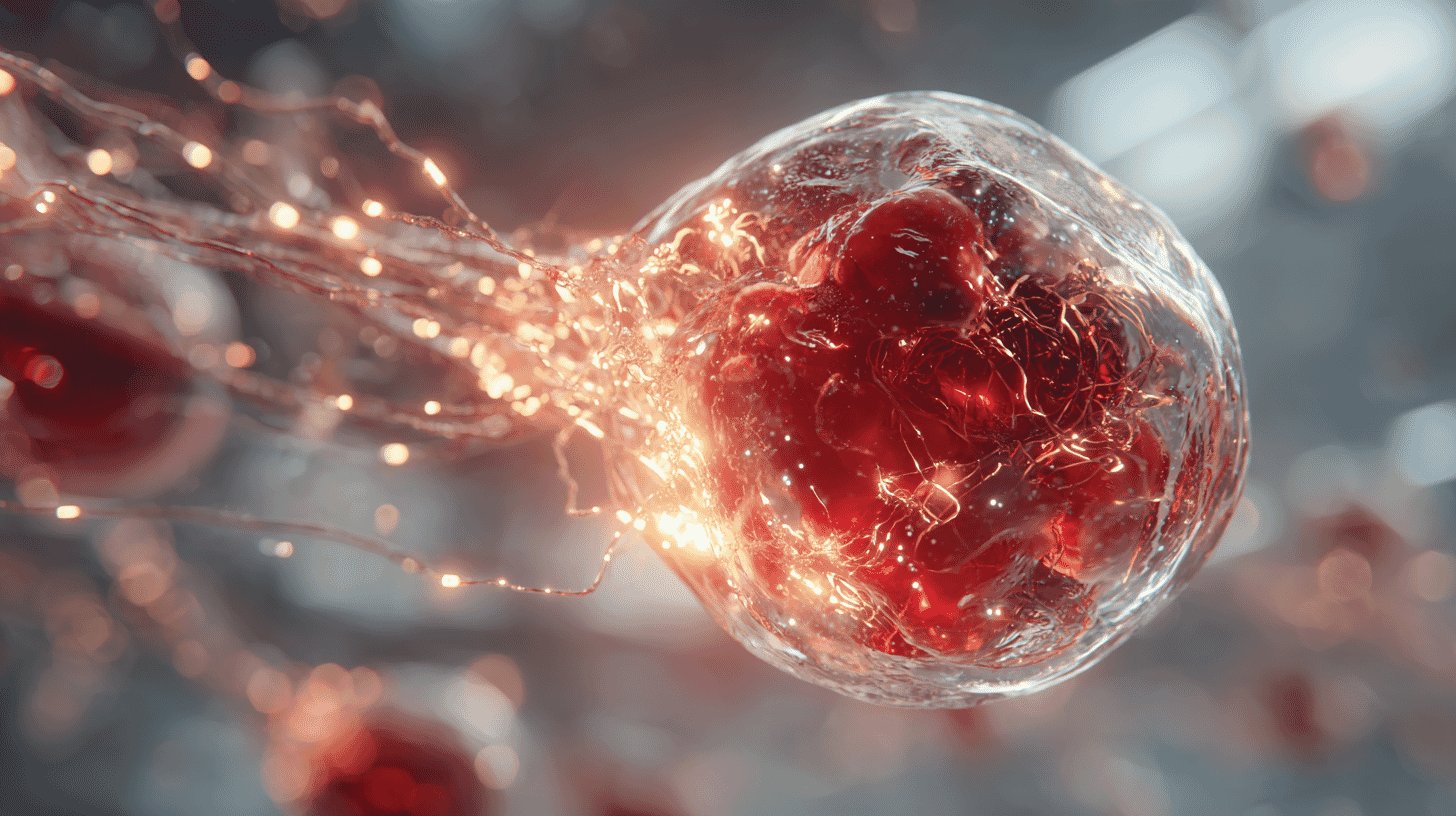
What if your blood type didn't matter during a transfusion? In Japan, researchers are producing "universal blood" from stem cells that could work for any patient, regardless of type. Twenty years after Shinya Yamanaka's Nobel Prize-winning discovery, the concept of "iPS Cell 2.0" is rewriting the rules of regenerative medicine.
Yamanaka on National TV: The State of iPS Cells in 2026
On April 5, 2026, Nobel laureate Professor Shinya Yamanaka appeared live on NTV's investigative news program Bankisha! (真相報道バンキシャ!), exactly 20 years after he first created iPS cells in a Kyoto University laboratory.
The program covered the full scope of iPS cell progress: cancer treatment applications, therapies for Parkinson's disease and heart failure, and the "my iPS" initiative to manufacture personalized stem cells for individual patients. But two topics drew the most attention, a next-generation concept called "iPS Cell 2.0" and groundbreaking research into manufacturing blood from iPS cells.
iPS Cells 101: A Quick Refresher
iPS cells (induced pluripotent stem cells) are ordinary cells, from skin or blood, that have been reprogrammed to behave like embryonic stem cells, capable of becoming virtually any cell type in the body. Professor Yamanaka first achieved this in mice in 2006, then in human cells in 2007, earning him the 2012 Nobel Prize in Physiology or Medicine.
Unlike embryonic stem cells (ES cells), which require harvesting from fertilized eggs, iPS cells can be made from a patient's own body. This sidesteps the ethical concerns surrounding embryo use and dramatically reduces the risk of immune rejection. The promise: grow replacement tissues and organs from your own cells.
The Limits of "iPS 1.0": What's Holding Things Back?
After two decades of progress, iPS cells are already in clinical use. But critical bottlenecks remain: what researchers now call "version 1.0" limitations.
Low reprogramming efficiency: Only about 0.01–0.1% of cells successfully convert into iPS cells using standard methods. That means processing 1,000 cells yields one usable iPS cell at best.
Unreliable differentiation: When researchers coax iPS cells into becoming a specific cell type (heart muscle, neurons, etc.), the result is often a messy mixture containing unwanted cells. Achieving therapy-grade purity is extremely difficult.
Immune rejection: Transplanting tissues made from someone else's iPS cells triggers the recipient's immune system, requiring immunosuppressive drugs with serious side effects.
Prohibitive cost: Creating iPS cells from a patient's own body ("autologous" approach) can cost over $600,000 per person, making personalized therapy financially unrealistic at scale.
Cancer risk: One of the genes used to create iPS cells, c-Myc, is also a known oncogene. If undifferentiated cells remain in the final product, they could potentially form tumors.
iPS Cell 2.0: The Next Generation
The term "iPS Cell 2.0" emerged from two parallel sources.
First, Professor Jun Takahashi, director of CiRA (Center for iPS Cell Research and Application) at Kyoto University, declared in a January 2024 interview: "I want to create iPS Cell 2.0." He positioned current technology as "version 1.0" and set an ambitious benchmark, achieving 90% or higher content of desired cell types after differentiation. Current methods fall far short of this standard.
Second, Yamanaka himself co-authored a 2024 paper in BioEssays titled "iPS cell therapy 2.0: Preparing for next-generation regenerative medicine," outlining the complete technological roadmap for the next decade.
Here's what iPS 2.0 aims to achieve:
Precision cell sorting: Professor Hirohide Saito at CiRA developed an RNA-based selection system that identifies correctly differentiated cells by detecting specific intracellular proteins. This allows researchers to filter out defective cells before they ever reach a patient.
"Universal donor" cells via gene editing: Using CRISPR-Cas9, CiRA researchers have knocked out specific HLA genes (HLA-A, HLA-B, and CIITA) while retaining HLA-C and HLA-E. The result: cells invisible to killer T cells, helper T cells, and NK cells alike. CiRA Foundation began distributing clinical-grade gene-edited iPS cell stock in June 2023. A 2019 study estimated that just 12 gene-edited cell lines could cover over 90% of the global population, compared to the 140+ unedited lines previously needed for Japan alone.
Automated manufacturing: The Yanai My iPS Manufacturing Facility, which opened in Osaka in March 2025 (funded by Uniqlo founder Tadashi Yanai at roughly $3.3 million per year), uses 14 automated German-made culture devices to produce personalized iPS cells from a patient's blood sample in about one month. Capacity: 1,000 patients per year at approximately $6,700 per person, down from tens of millions of yen using manual methods.
Manufacturing Blood from iPS Cells: Why Blood Type May Not Matter
The segment that generated the strongest audience reaction addressed a question that affects every hospital in the world: what if we could manufacture blood instead of relying on donors?
Japan faces a unique urgency. Its rapidly aging population is shrinking the pool of eligible blood donors, with projections estimating a shortfall of 650,000 donors by 2025. The country's blood supply problem is not theoretical, it's happening now.
Leading this research are CiRA Professor Koji Eto and Kyoto-based startup Megakaryon Corporation.
iPLAT1: World's first iPSC platelet transfusion
In 2022, Professor Eto's team conducted iPLAT1, the first-ever clinical trial transfusing platelets derived from iPS cells into a human patient. The subject had aplastic anemia and had developed antibodies against donor platelets, making conventional transfusions ineffective.
The team reprogrammed the patient's own blood cells into iPS cells, created immortalized megakaryocyte progenitor cell lines, and used a proprietary turbulent-flow bioreactor called VerMES to produce over 100 billion platelets. Three escalating doses were transfused with no serious adverse events.
MEG-002: Mass-produced donor platelets
Megakaryon Corporation took a different approach, using donor-derived iPS cells from CiRA Foundation's stock. In June 2022, 60 billion iPS-derived platelets were successfully transfused into the first patient with no adverse events. The company is planning the next phase of trials for approximately 2027.
The universal platelet breakthrough
Here's the key innovation. Platelets carry HLA class I antigens on their surface, molecules that must match between donor and recipient to avoid rejection. CiRA researchers knocked out the B2M (β2-microglobulin) gene, stripping platelets of HLA class I antigens entirely. These "universal platelets" showed no reaction to anti-HLA antibodies or NK cell attacks in testing.
Combined with the gene-editing approach described above, this means iPSC-derived platelets could theoretically be transfused into any patient, regardless of blood type or HLA profile. No matching required.
Red blood cells: Still a major challenge
Red blood cell production from iPS cells faces a much steeper hill. A single transfusion requires roughly 2 trillion red blood cells, hundreds of times more than a platelet dose. Additionally, iPSC-derived red blood cells tend to produce fetal hemoglobin rather than the adult form, and the enucleation process (where cells expel their nucleus to become mature red blood cells) remains inefficient.
The UK's RESTORE trial, the most advanced clinical program for laboratory-grown red blood cells, uses CD34+ hematopoietic stem cells rather than iPS cells, highlighting how far iPSC-RBC technology still needs to develop.
February 2026: Japan Approves the World's First iPS Cell Medicines
The likely backdrop for Yamanaka's TV appearance was Japan's landmark achievement two months earlier. On February 19, 2026, Japan's Ministry of Health approved the world's first two iPSC-derived medicines, a milestone 20 years in the making.
ReHeart: Developed by Cuorips Inc. (an Osaka University spinoff), this is a sheet of iPS-derived heart muscle cells that is placed directly onto a failing heart. In a study of 8 patients with severe heart failure, 4 showed significant improvement in exercise capacity at one year.
Amchepry (raguneprocel): Developed by Sumitomo Pharma and Racthera, this therapy transplants iPS-derived dopamine-producing neural precursor cells into the brains of Parkinson's disease patients. In a pilot trial of 6 patients, PET imaging showed a 63.5% increase in dopamine synthesis in the high-dose group at 24 months.
Both products received conditional, time-limited approval (7 years), a regulatory pathway unique to Japan that allows marketing based on safety data and "presumed" efficacy from small trials, while requiring statistical proof within the approval period. Sales are expected to begin in fall 2026, with ReHeart estimated to cost approximately ¥10–15 million ($67,000–$100,000) per treatment.
The approvals drew global attention. Science magazine published a feature calling it evidence that stem cell medicine has "come of age." However, critics noted that only 6–8 patients were studied, and Nature raised concerns about the limited clinical trial data.
The Bigger Picture: iPS 2.0 Is a System Upgrade
iPS Cell 2.0 is not merely a technical tweak to existing methods, it's a comprehensive rethinking of how iPSC medicine is designed, manufactured, and delivered.
The combination of precision differentiation (targeting 90%+ correct cell content), CRISPR-engineered universal immune compatibility, lessons learned from CAR-T therapy's commercial scaling, and automated manufacturing infrastructure represents a shift from "experimental procedures available at a handful of elite hospitals" to "standardized treatments accessible to millions."
The blood application makes this especially vivid. Universal platelets requiring no blood-type matching could fundamentally restructure transfusion medicine worldwide, particularly in aging societies facing chronic donor shortages.
The global iPS cell market was valued at $1.93 billion in 2024 and is projected to reach $5.12 billion by 2034. Over 116 clinical trials are underway across more than 10 countries. iPS cells are no longer a dream, they're in the middle of a commercialization race.
How advanced is regenerative medicine in your country? If blood manufactured from iPS cells became widely available, how would it change your country's donation culture? We'd love to hear your perspective.
References
- https://newswitch.jp/p/40012
- https://newswitch.jp/p/39200
- https://newswitch.jp/p/45342
- https://ashpublications.org/blood/article/140/22/2398/486651/iPLAT1-the-first-in-human-clinical-trial-of-iPSC
- https://www.biospace.com/article/releases/megakaryon-corporation-initiates-first-in-human-clinical-trial-of-allogenic-human-ipsc-derived-hla-homozygous-platelets-meg-002-/
- https://www.cira-foundation.or.jp/j/provision-of-ips-cells/genome-edited/
- https://bioinformant.com/ipsc-therapies-make-history-japan-authorizes-worlds-first-two-ipsc-based-cell-therapies/
- https://www.science.org/content/article/stem-cell-therapies-come-age-two-conditional-approvals-japan







Global Discussion
14 comments