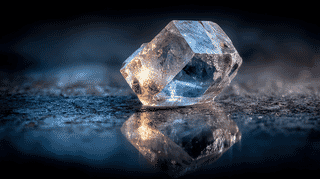
An Osaka-led Japan-US team tells left- and right-handed amino acids apart one molecule at a time. Soai's Nobel shows a tilt can grow from chance, and asteroids Ryugu and Bennu show none, so detectors must read both.
Cryo-electron microscopes flash-freeze proteins and build 3D models from millions of molecular images. What they see, what they do and what they cost, as a Kyoto university teaches undergraduates to use the data.
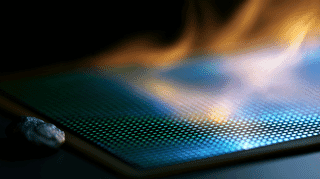
Chihaya Adachi, a 2026 Citation Laureate, was first author of a 2001 paper on iridium-based OLEDs, then created TADF, which needs no rare metal. Yet iridium, mined at about 7 tonnes a year, is still in OLED screens.
A 1977 paper by two Japanese ENT doctors, from airflow readings on 15 men, said to blow one nostril at a time. It won the 2026 Ig Nobel medicine prize 49 years later, at a ceremony that had left the US for Zurich.
The 2026 Lasker Basic Medical Research Award went to Masashi Yanagisawa and Emmanuel Mignot for orexin. It explained narcolepsy, but the industry built sleeping pills first. The narcolepsy drug arrived 28 years later.
The Super-Kamiokande collaboration has caught the first-ever evidence of the diffuse supernova neutrino background, the combined glow of every massive star that has died since the universe began. Here is what it could reveal, and the spoonful of gadolinium that made it possible.
Damaged neurons were thought to be beyond repair. A University of Tokyo team led by Noboru Mizushima just challenged that in mice: switch the cell's cleanup system, autophagy, back on, and the protein junk clears, motor skills and memory return. A new angle on neurodegeneration from a disciple of Nobel laureate Yoshinori Ohsumi.
In 2004, Japanese cosmologist Katsuhiko Sato said 96% of the universe was a mystery. Twenty years and billions of galaxies later, it still is, and DESI's latest data suggests the mystery just got deeper. Here's why that's not a failure.
Seven months after metal-organic frameworks (MOFs) won the 2025 Nobel Prize in Chemistry, where does the technology actually stand? A status check on Atoco's air-to-water devices, scaled-up carbon capture by Svante and Kobe Steel, China's lead in MOF research output, and why an Atomis executive says a Nobel does not lower the hurdles.
The SI second hasn't changed since 1967. By 2030 it likely will. From Earth's rotation to atomic vibrations to optical transitions: this is the history of how we've defined the second, and a field guide to the candidate atoms and national labs racing to define it next.
Susumu Kitagawa of Kyoto University, joint winner of the 2025 Nobel Prize in Chemistry, has long advocated turning air itself into a resource through metal-organic frameworks (MOFs). His porous crystals can sort and capture CO2, water vapor and other molecules, putting Japan in direct conversation with players like Switzerland's Climeworks in the rapidly evolving direct-air-capture industry. Here is how a basic-science breakthrough from Kyoto could rewrite the economics of decarbonization.
Nobel laureate Shinya Yamanaka explained iPS Cell 2.0 on NTV's Bankisha. From next-gen stem cell tech overcoming current limitations to universal blood platelets that bypass blood-type matching, plus Japan's historic first-ever iPSC drug approvals in 2026 — a comprehensive look at where iPS cells stand 20 years after their discovery.
Japanese startup Orizuru Therapeutics has begun clinical trials transplanting iPS cell-derived islet cells into diabetes patients. The first-ever transplant surgery succeeded in February 2025, with company-sponsored trials planned in Japan and the US. Over a decade after Professor Yamanaka's Nobel Prize, Japan's regenerative medicine enters the practical stage.
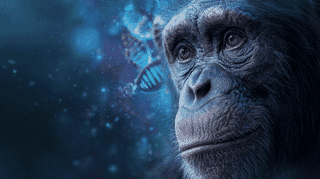
Researchers at Kyoto and Hiroshima Universities created iPS cells from bonobos, chimpanzees, and gibbons, then achieved the world's first differentiation into limb bud mesoderm cells. Inside Japan's Whole-Zoo iPS Cell Project and its work on primate evolution, conservation, and zoo veterinary medicine.