On October 2, 2026, a Sapporo hospital gave the first commercial dose of Akuugo to a man paralyzed in a traffic accident. Why it took over two years, and what the trial evidence shows.
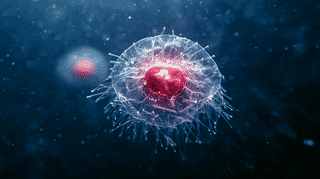
A 10 mm jellyfish rewound itself ten times in two years. A genome paper on about 1,000 genes cast it as nature's Yamanaka reprogramming; a US researcher attacked that premise with Japanese data it never cited.
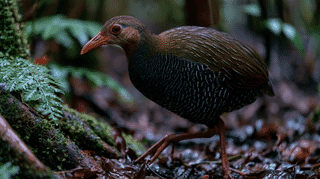
Japan's NIES has made iPS cells from four endangered birds. The flightless Okinawa rail has lost one of the two genes birds use to spot a virus. Inside the minus-160°C cell bank and the brain organoids grown from it.
The first commercial transplant of AMCHEPRY, the world's first approved iPS cell-derived medicine, is set for October in Kyoto. Why proving it takes 35 patients and six years, and why the US and EU have no equivalent product.
Keio University reports up to four years of follow-up on four patients given iPS-derived cells for spinal cord injury: no tumors, no serious harm. What it means, and how Japan's path compares to the US and Europe.
Researchers at Showa and Kansai Medical Universities grew mesothelial-like cells from human iPS cells to repair the peritoneum, the membrane that wears out and ends peritoneal dialysis. A look at the mouse proof-of-concept and why Japan's PD rate is so unusually low.
Japan's iPS cell therapy already treated fresh spinal injuries. Now a Keio University team is preparing a trial for the far harder chronic phase, where more than 100,000 patients have long been told regeneration simply isn't possible.
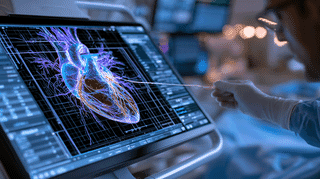
A Japanese biotech threaded a catheter into a failing heart and delivered iPS-derived muscle without opening the chest. Inside the world's first trial of its kind.
For 15 years, donor cells vanished when grown across species. A Tokyo-Stanford team found why: the host embryo's first immune cells were eating them alive. The path to lab-grown organs, explained.
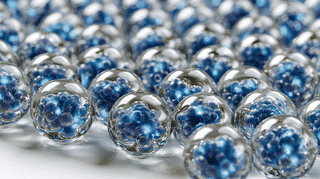
Researchers at the University of Tokyo and Chiba University have developed ETE, a method that mass-produces hundreds of thousands of uniform cell-loaded capsules using only a bench-top vortex mixer and temperature control. A look at why it lowers the barrier for drug discovery and regenerative medicine, and how it compares with America's organoid industry.
A meniscus regeneration technology developed at Japan's Institute of Science Tokyo has been approved as Seibiscus, the country's first regenerative medicine product for meniscus injury. We explain how it uses a patient's own stem cells to repair the knee, what the Phase III trial showed, and how it compares with regenerative medicine ventures in South Korea and the US.
Kyoto University spinout Toregem Biopharma will begin Phase 2 trials of TRG035, the world's first tooth-regeneration drug, in summer 2026, dosing 24 children with congenital tooth agenesis. A pre-Series C round of ¥850 million brings cumulative funding, grants included, past ¥4.6 billion. A look at how Japan's university-biotech funding stack works, and why a super-aged society may produce this kind of innovation first.
On May 20, 2026, Japan added three ultra-expensive regenerative medicines to public insurance coverage: Amshepri (world's first iPS cell-derived drug, for Parkinson's), Akugo (stem cells for traumatic brain injury), and Zolgensma Intrathecal (gene therapy for SMA patients aged 2+). Prices range from 55 million yen ($352K) to 167 million yen ($1.06M). We explain why these drugs cost so much, how Japan's high-cost medical expense system shields patients, and whether prices might fall over time.