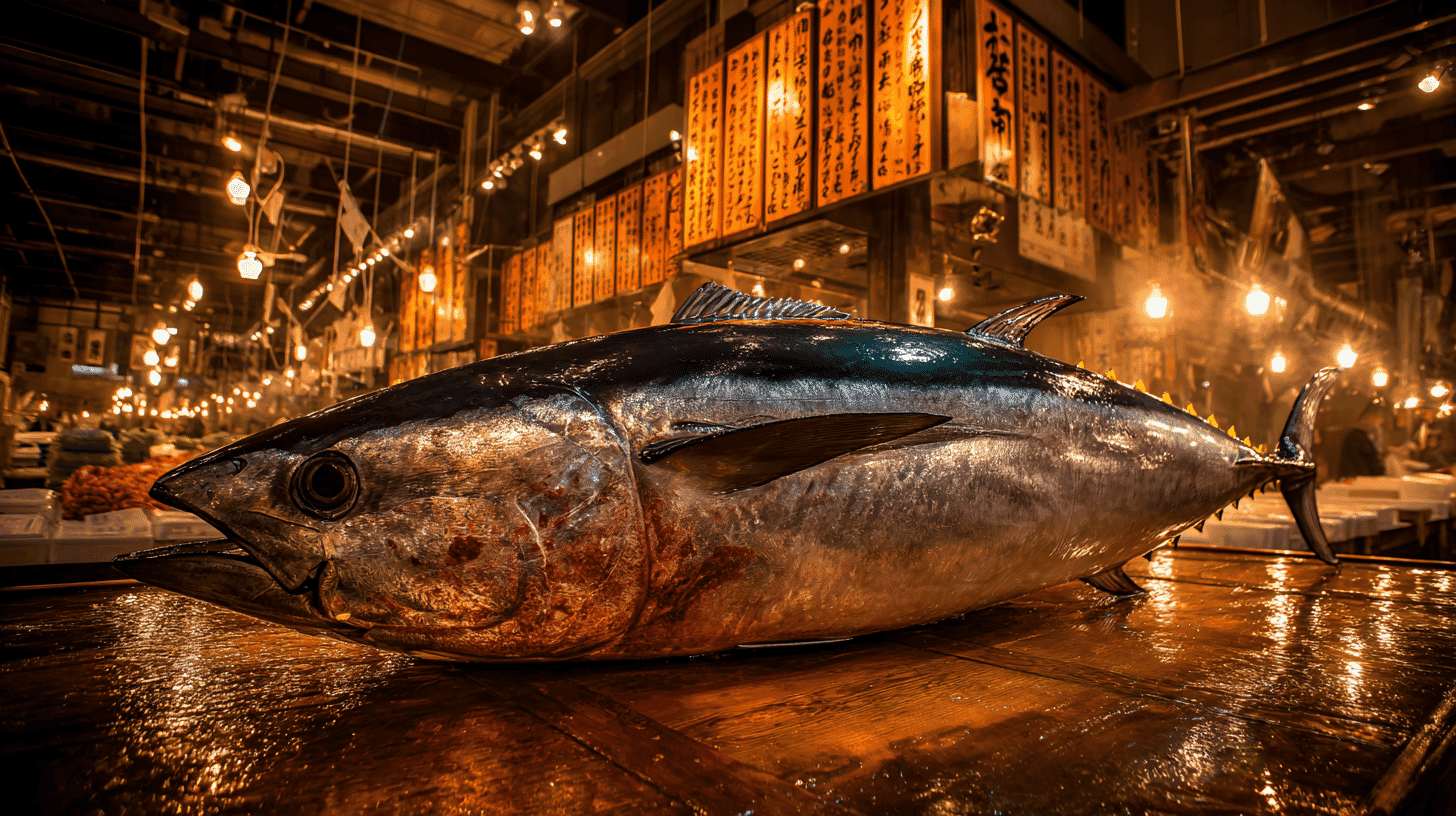
Before dawn on January 5, 2026, Tokyo's Toyosu Market held its New Year tuna auction. The bell rang at 5:10 a.m., and the floor tightened.
The day's top fish, the "ichiban maguro," was a Pacific bluefin from Oma in Aomori Prefecture. At 243 kilograms and 2.1 million yen per kilogram, it went for 510.3 million yen before tax, roughly $3.2 million. That beat the 333.6 million yen paid in 2019 by half again, and it is the highest price in Tokyo's records, which go back to 1999. The buyer was Kiyomura, operator of the Sushi Zanmai chain, taking the ichiban maguro for the first time since 2020.
What Ichiban Maguro Means
The title does not go to the first fish on the block. It goes to the single tuna that draws the highest bid at the year's opening auction.
Japan has long prized hatsumono, the first of anything in season, and seafood sold at the New Year auction is treated as a talisman. Bidding well above market rates, goshugi souba, is the custom, a wish for good business and full nets. Tuna, the "diamond of the sea," gets the cameras.
Oma fish have taken the top price fifteen years running. The Tsugaru Strait, where the Kuroshio, Tsushima and Oyashio currents meet, is thick with plankton, and the bluefin that feed there put on fat.
How the Bidding Reached $3.2 Million
Quality came down to fat content and the color of the lean meat. Buyers read a tuna by its tail cross-section: the marbling visible there predicts the quality of the otoro, so the professionals walk the floor with flashlights before the bell. Kiyomura's staff said this fish had good fat and strikingly clean red meat.
Quality alone does not explain the number, though. New Year auctions carry a ceremonial premium far above normal prices, and the television, newspaper and social media coverage that follows hands the winning bidder a marketing windfall.
This year a rivalry sharpened it. From 2021 through 2025 the ichiban maguro went to the wholesaler Yamayuki bidding for the ONODERA GROUP, and a sixth straight win was on the line. Yamayuki stopped at 2 million yen per kilogram, or 486 million yen for the fish. Kiyomura immediately went to 2.1 million and took it.
Kiyomura president Kiyoshi Kimura told reporters he wanted the economy to pick up, and that expensive as it was, he had worked and worked and worked and worked and worked to win the bid.
What the Fisherman Takes Home
The tuna was landed by Toyoichi Ito of the Dai-11 Chohomaru, out of Oma. He said the figure was so far from ordinary prices that hearing it felt like being told a dream, and that it left him stunned.
Industry sources put the fisherman's share at roughly 80% of the hammer price, before market fees of about 12% and taxes. Applying top-bracket income and residence tax rates, the take-home works out to somewhere near 40% of the bid, on the order of 200 million yen, about $1.3 million.
[Update, July 2026] On April 9, Ito's name was carved into the monument at Cape Oma, the northernmost point of Honshu, which has recorded every ichiban maguro fisherman since 1997. Among Oma's fishermen it counts as the highest honor going.
A $3.2 Million Fish at $2.50 a Piece
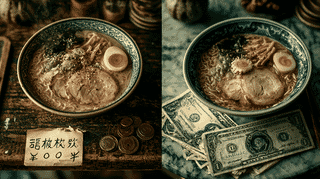
That afternoon the tuna was cut up in a public demonstration at Sushi Zanmai's Tsukiji flagship, then served across the chain. Prices did not move: 398 yen for lean, 498 for medium fatty, 598 for fatty, before tax. A 243-kilogram fish works out to roughly 12,000 pieces of sushi.
Kimura said he wanted as many people as possible to eat the lucky fish and feel better for it.
The Second Tuna Went for 7.83 Million Yen
The runner-up was also an Oma fish, 174 kilograms at 45,000 yen per kilo, or 7.83 million yen, about $50,000. Set against 510 million it looks like a bargain, and market insiders say the difference in taste is close to nothing. The ichiban price is ceremony, not a ranking of flavor.
Where the Stock Stands
Overfishing drove Pacific bluefin down far enough that the IUCN listed it as Vulnerable in 2014. International catch limits worked, and the species was moved to Least Concern in 2021.
The 2024 stock assessment confirmed that the rebuilding target, 20% of unfished spawning biomass, had been reached thirteen years ahead of schedule. Quotas rose accordingly from 2025: up 50% for large fish over 30 kilograms and 10% for small fish under that line.
The loosening continued. On August 18, 2026, a joint working group of the Western and Central Pacific Fisheries Commission and the Inter-American Tropical Tuna Commission agreed on a framework from 2027 that raises the western and central Pacific quota for large fish by 25%, from 11,869 to 14,836 tonnes, while cutting the small-fish quota by 6%, from 5,125 to 4,823 tonnes. The logic is to take more of the recovered large fish while protecting the small ones that will spawn later. Agreement did not come easily: talks in Nagasaki in July collapsed over Mexican objections before a resumed session in August settled the framework (as of September 2026).
Plenty of people see 510 million yen and think it is simply too much. Behind the number sit a culture that makes much of seasonal firsts, a certain deference toward the fishermen, and a wish placed on the new year.
Does your country have New Year food traditions or market ceremonies of its own? If some ingredient there fetches a lucky-charm price, tell us about it.
References
- https://www.nikkei.com/article/DGXZQOUB0503J0V00C26A1000000/
- https://www.nippon.com/ja/guide-to-japan/gu900316/
- https://www.seafoodsource.com/news/supply-trade/top-tuna-at-toyosu-sells-for-usd-3-2-million-in-record-breaking-first-auction-of-2026
- https://www.aba-net.com/news/news-179666.html
- https://www.wwf.or.jp/activities/activity/5851.html





Global Discussion
15 comments