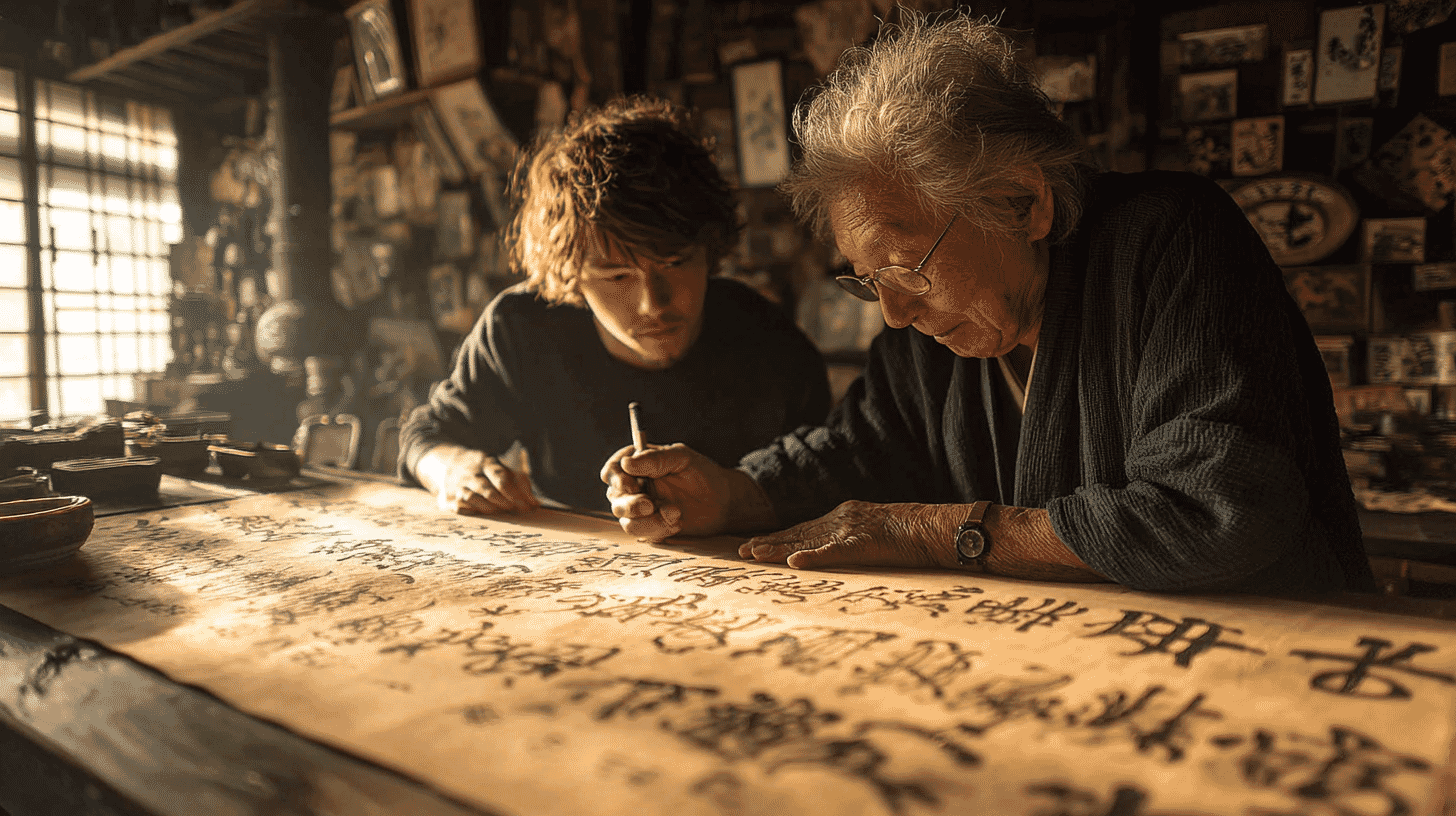
As Japan grapples with an aging population and falling birth rates, more people are building family trees, or "kakeizu" (家系図), to trace their ancestral roots.
According to the Ministry of Health, Labour and Welfare, reburial permits, the closest official proxy for "hakajimai" (墓じまい), the practice of closing a family grave and relocating the remains, rose from roughly 83,000 in fiscal 2014 to 176,105 in fiscal 2024, more than doubling in a decade. The fiscal 2024 figure was published on October 21, 2025; the fiscal 2025 count is due in autumn 2026. Local reporting puts Sapporo's municipal cemeteries alone at a record 587 closures.
While this might suggest a decline in ancestor veneration, something unexpected is happening. As physical graves become harder to maintain, Japanese people are increasingly turning to family trees as a way to preserve their ancestral connections.
Why the Sudden Interest in Family Trees?
Several factors are driving Japan's genealogy boom.
The Ticking Clock on Historical Records
Japan established its modern family registry system (koseki) in 1886 during the Meiji era. These Meiji 19 registries are the oldest family records currently available, and when traced successfully, they can reveal ancestors dating back to the late Edo period (1850s-1860s).
There is a deadline attached. The preservation period was extended to 150 years in 2010; before that it was 80 years, and before 1961, 50. The 150 years is counted from the year after a registry is closed or superseded, so the earliest Meiji 19 registries start reaching their disposal date around 2036.
Worse, some municipalities already destroyed registers from the Meiji and early Showa eras under the old 80-year rule. The 2010 revision applied the longer period to everything not yet disposed of, but what was already gone stayed gone.
Muneki Watanabe, an administrative scrivener who conducts genealogy seminars in Sapporo, warns: "The Meiji 19 registries were created 150 years ago. These records are now approaching their disposal deadline."
The Nuclear Family and Weakening Family Bonds
Japan's shift toward nuclear families has left many people unable to recall even their grandparents' full names. Can you name your cousins' children? The extended family networks that were once commonplace have become increasingly fragmented.
Watanabe observes: "While family units continue to become more fragmented, I believe attachment to family trees is actually growing." In an era of disconnection, family trees offer a way to rediscover one's roots and sense of belonging.
Anxiety About Losing Ancestral Connections
For those considering grave closure, there's often an underlying fear of severing ties with ancestors. One seminar participant expressed this concern: "I'm worried that closing the grave will cut me off from my ancestors. Maybe I should try making a family tree."
Even when physical graves cannot be maintained, preserving family history through a family tree may represent a new form of ancestor veneration for modern Japanese.
How to Create a Family Tree in Japan
There are three main approaches to creating a family tree.
DIY: Obtaining Family Registries Yourself
Since March 2024, Japan's new wide-area registry system allows individuals to obtain direct-line ancestor registries at any municipal office nationwide. Costs are approximately ¥450 for current registries and ¥750 for closed registries, with a typical one-lineage investigation (paternal or maternal) costing around ¥7,000.
Professional Services
Administrative scrivener offices and specialized genealogy companies typically charge ¥30,000 to ¥100,000 per lineage for registry-based research. Comprehensive investigations including gravestone surveys, temple death registers, and local historical records can exceed ¥1,000,000.
Some companies have contributed to NHK's popular documentary series "Family History," demonstrating how professional research can uncover unexpected stories about one's ancestors.
Digital Tools
Smartphone apps like "Suisui Kakeizu" (Smooth Family Tree) allow users to create family trees for free. Excel templates are also widely available, making genealogy accessible to younger generations.
Beyond Registry Records
When registries have been destroyed or when tracing further back in history, alternative methods become valuable.
Family temples often keep "kakocho" (death registers) with entries reaching into the Edo period. Gravestones carry posthumous names and death dates. Local archives and libraries hold regional histories and biographical records, and family crests and surname origins can point to where ancestors lived and what they did.
Japan's Unique Position in Global Genealogy
Japan is considered one of the easiest countries in the world for genealogical research, thanks to its Meiji-era registry system. Many countries lack such comprehensive government records.
In the United States, services like Ancestry.com and 23andMe combine billions of historical records with DNA testing. As a nation of immigrants, America has unusually strong demand for ancestral research, and genealogy is a real industry there. One caveat: 23andMe filed for Chapter 11 bankruptcy in March 2025, and in July of that year its consumer genomics business was acquired by TTAM Research Institute, a nonprofit founded by co-founder Anne Wojcicki. Debate over the handling of the genetic database continues, so check a service's retention and deletion policies before submitting a sample.
Japan's family registry system is globally unique in providing verifiable, government-maintained records for tracing ancestors. This system offers Japanese people a valuable opportunity to discover their roots while these records still exist.
Whose Descendant Are You?
Before the Meiji-era registries face destruction, consider investigating your own roots. Speaking with grandparents and parents while they're still with us can reveal family stories that no official record could capture.
We'd love to hear from you: Does your country have a tradition of family trees? How do people in your culture trace their ancestral roots? If there are different ways of preserving family history where you're from, please share them with us!



Global Discussion
16 comments