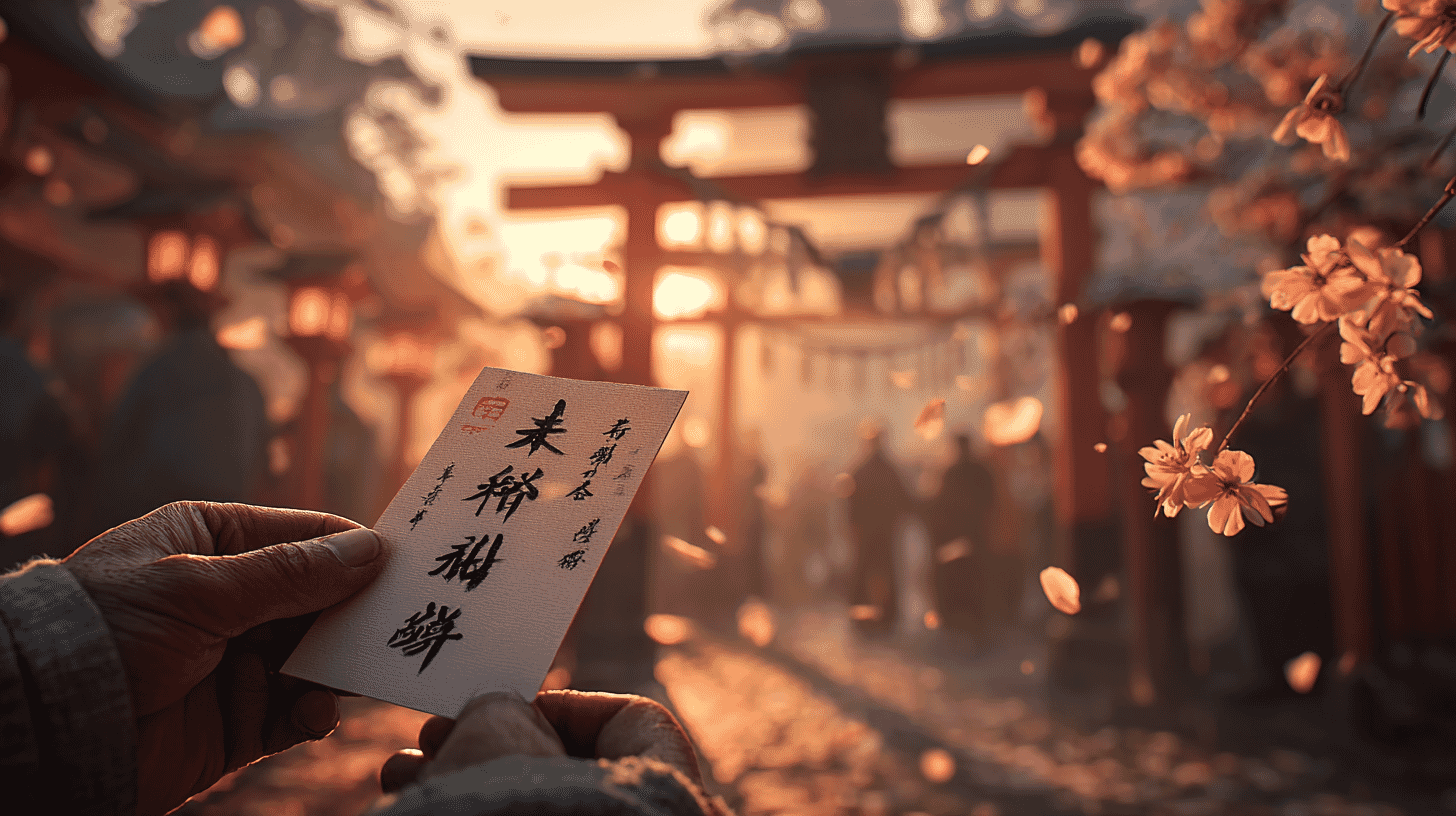
When visiting Japanese shrines and temples, one of the most popular activities for both locals and tourists alike is drawing an "omikuji", a paper fortune slip. Especially during Hatsumode (the first shrine visit of the New Year), long lines form as people eagerly await their fortune for the coming year. But what happens if you draw "kyo" (bad luck)? Should you try again?
What Is Omikuji?
Omikuji (御神籤 or 御御籤 in kanji) is considered a sacred act of receiving messages from the gods or Buddha. The tradition dates back to the Heian period (794-1185), with its origins attributed to Ganzan Daishi Ryogen (912-985), a monk of the Tendai Buddhist sect who received 100 verses from Kannon Bosatsu (the Bodhisattva of Mercy).
During the Edo period (1603-1868), these "Ganzan Daishi Hyakusen" fortunes became wildly popular among common people, establishing the format we know today. After the Meiji government's separation of Shinto and Buddhism in 1868, shrines began using waka poetry on their fortunes while temples continued using Chinese verse.
Roughly 60-70% of the omikuji drawn in Japan today are said to be printed by a single company, Joshidosha in Yamaguchi Prefecture. Miyamoto Shigetane, then head priest of Nishoyamada Shrine, founded a national women's organisation and began producing omikuji to fund its magazine, Joshido, launched in 1906. The company also devised the red omikuji vending machines still seen at shrines today.
The Hierarchy of Fortune
The typical ranking of omikuji results from best to worst is:
Dai-kichi (Great Blessing) → Kichi (Blessing) → Chu-kichi (Middle Blessing) → Sho-kichi (Small Blessing) → Sue-kichi (Future Blessing) → Kyo (Bad Luck) → Dai-kyo (Great Bad Luck)
However, this varies by shrine and temple. Some swap the positions of "kichi" and "chu-kichi," while others include rare results like "han-kichi" (half blessing) or "sue-sho-kichi" (future small blessing). Fushimi Inari Taisha in Kyoto famously has 17 different fortune categories!
Why Redrawing Is Considered Disrespectful
According to Shinto scholar Ken Mitsuhashi, redrawing your fortune simply because you got a bad result is "disrespectful to the gods." The reasoning lies in understanding what omikuji truly represents.
In Japanese culture, there's a concept called "kotodama", the belief that words contain spiritual power or souls. Omikuji is not merely fortune-telling; it's a message from the divine intended specifically for you at that moment. To dismiss or ignore this message by drawing again is seen as doubting the gods' wisdom.
Drawing multiple times on the same day, at the same place, for the same question is considered poor etiquette, an act of seeking only results that suit your preferences rather than accepting divine guidance.
The True Meaning of "Kyo" (Bad Fortune)
Here's something that might surprise you: drawing "kyo" isn't necessarily bad news! Many shrines and temples interpret "kyo" as meaning your luck is at its lowest point, which means it can only go up from here. It's a message of potential and "room for growth."
Tokyo's famous Senso-ji Temple, which has maintained Edo-period traditions, is known for its relatively high probability of drawing kyo. This isn't meant to discourage visitors but to convey the message: "Be careful and mindful in how you proceed."
Some interpretations even look at the kanji character for "kyo" (凶) as representing something still contained in a box, not yet bloomed or revealed. From this perspective, it symbolizes untapped potential waiting to emerge.
Proper Omikuji Etiquette
- Purify yourself at the temizuya (water pavilion) by washing your hands and rinsing your mouth
- Pray at the main hall first, clearly focusing on what you wish to ask or your intentions for the year
- Draw with your left hand, traditionally called "the receiving hand"
- Don't fixate on the result, read the entire fortune carefully
- Focus on the message in the waka poem or explanatory text, not just the good/bad classification
To Tie or Take Home?
The practice of tying omikuji to trees or designated racks at shrines began in the Edo period, stemming from the phrase "to tie one's fate" (en wo musubu). When drawing kyo, some people tie the fortune at the shrine with the wish of "leaving the bad luck behind and allowing good fortune to bloom."
However, since omikuji represents a message from the gods, taking it home to reread occasionally is also perfectly acceptable. Many Japanese people keep their omikuji in their wallets or purses throughout the year. Neither choice is wrong, it's entirely up to you.
Note: If you choose to tie your fortune, please use the designated "omikuji-kake" racks rather than tree branches, as tying can damage the trees.
When Redrawing Is Acceptable
While Shinto scholars advise against redrawing, practices vary by shrine. Many consider it acceptable to:
- Draw again on a different day
- Draw again after the new year begins
- Draw at a different shrine
- Draw for a different question
The key principle is that omikuji reflects your fortune and circumstances at that specific moment. As time passes and situations change, receiving new guidance becomes appropriate.
Shrines Without Bad Fortunes
For those who absolutely want to avoid kyo, some shrines don't include bad fortunes in their omikuji. Atsuta Jingu in Nagoya and Yasukuni Shrine in Tokyo are the examples usually cited, though neither states this officially and the claim rests on visitor reports. Many shrines also set lower percentages for kyo out of consideration for visitors' feelings.
The Deeper Philosophy
What makes omikuji unique compared to Western fortune-telling is its integration with Shinto and Buddhist philosophy. There's a concept called "kikkyo kairin" (吉凶悔吝) from the I Ching, which teaches that "good fortune leads to bad, and bad fortune leads to good", a reminder that complacency after good luck brings misfortune, while reflection after bad luck can transform it into blessing.
In Japan, people take these messages home and use them as guidance for the year ahead. Does your country have a way of receiving words from the divine, or something close to it? Fortune cookies and tarot cards count too.




Global Discussion
0 comments