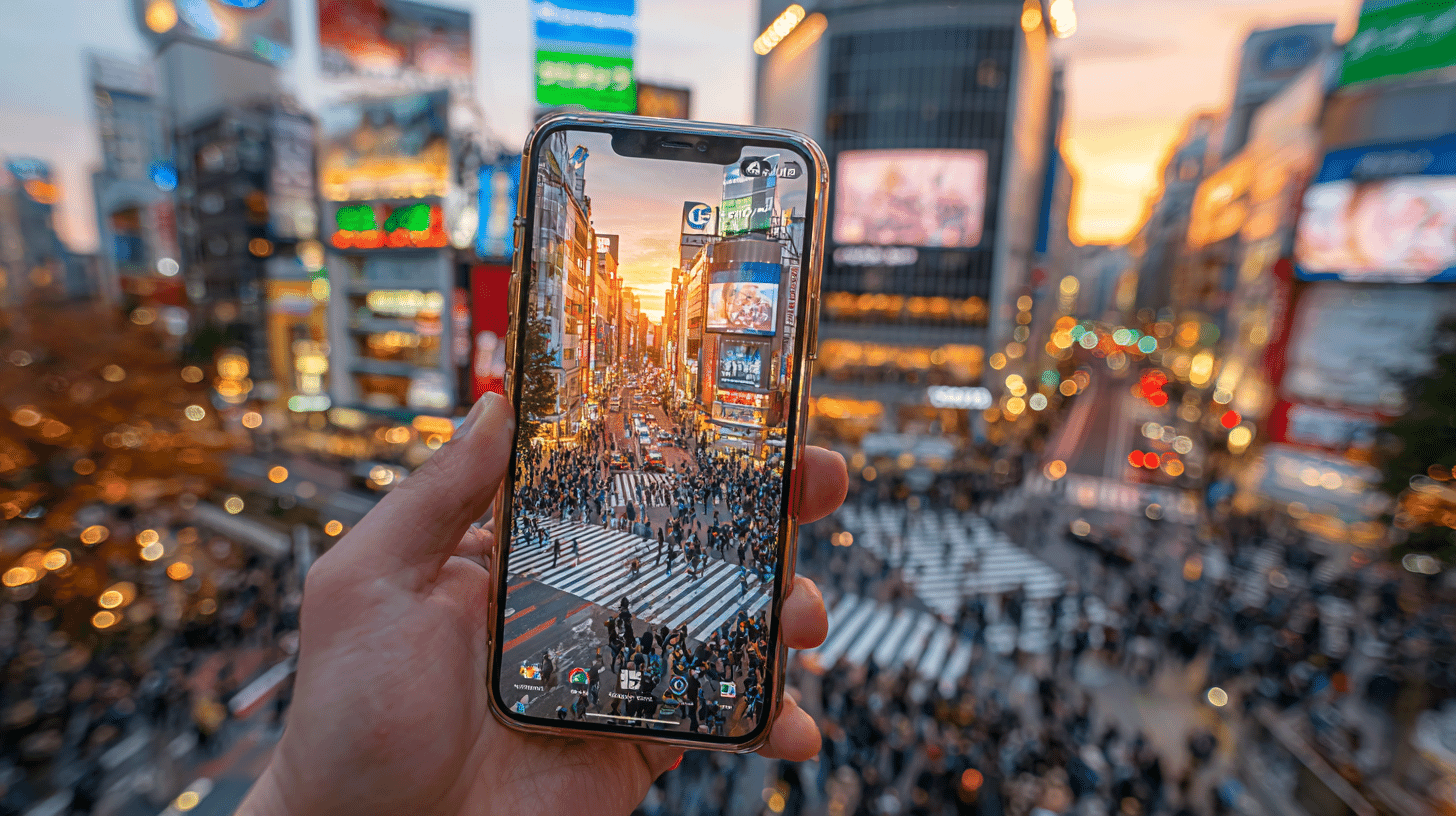
Digital Transformation Accelerates: Smartphone Bookings Reach Record High
JTB Tourism Research & Consulting's latest "Smartphone Usage and Travel Consumption Survey (2025)" reveals that 70% of Japanese travelers now book travel products via smartphone, marking the highest rate since the survey began in 2013. This milestone underscores the rapid digital transformation sweeping through Japan's travel industry.
The survey, conducted in November 2025, polled 10,000 respondents aged 18-69 across Tokyo, Nagoya, and Osaka metropolitan areas. Among the 1,030 respondents who had traveled domestically within the past year and used smartphones, the data reveals significant shifts in traveler behavior patterns.
Generative AI Emerges as Primary Information Source, Tripling Year-Over-Year
The most striking finding is the explosive growth of generative AI usage. The percentage of people using generative AI for travel information searches surged from 9.7% in 2024 to 28.8% in 2025—a nearly 20-percentage-point jump representing roughly triple growth. This shift signals a fundamental transformation in how Japanese travelers gather trip-planning information.
Traditional communication functions like messaging, email, and news apps saw declining usage rates across the board. Instead, video and image-sharing platforms, streaming TV, and movies gained ground. Interestingly, map apps and video-based search methods—highlighted as emerging trends in last year's survey—experienced slight declines, suggesting generative AI is dominating the information landscape.
AI Travel Services Expand, Usage Rate Approaches 60%
Overall AI service usage reached 58.7%, up approximately 10 percentage points from the previous year. The top desired AI services for travel destinations include "restaurant and gourmet information searches" (29.6%), "language translation" (25.1%), and "itinerary and route suggestions" (24.7%).
Demographic analysis reveals interesting patterns. Women in their 60s and 30s-40s show particularly high interest in gourmet information searches, indicating that AI adoption spans beyond just younger generations.
For unmanned services, preferences lean toward efficiency-enhancing features: "automated checkout" (32.0%), "tablet ordering" (26.9%), and "automated immigration" (19.0%) outpaced value-added services. This reflects the growing "time-performance" (タイパ) orientation among Japanese consumers, who increasingly prioritize time efficiency.
Social Media Landscape Shifts: Instagram Overtakes X
The top smartphone-accessed social platforms remain "LINE," "YouTube," "Instagram," and "X" (formerly Twitter). Notably, Instagram climbed from fourth to third place, surpassing X. Female users particularly drove X's declining usage rates, reshaping the social media power dynamics.
Among Gen Z users, "BeReal."—while only 1.7% overall—has captured over 10% of women under 29. This authentic, unfiltered social platform's growth trajectory may signal evolving preferences in how people share travel experiences.
E-Sports Participation Hits Record High, Notable Growth Among Men in Their 40s
E-sports play and viewing experience reached a record 18.0%, with men under 29 leading at 45.6%, followed by men in their 30s (36.9%) and 40s (33.0%).
Year-over-year comparisons reveal particularly significant growth in viewing among men in their 40s. Researchers attribute this to increased exposure through children's educational environments, as e-sports clubs and specialized schools have proliferated in Japan.
Interest in on-site e-sports experiences also rose, with 61.6% of men under 29, 51.3% of men in their 30s, and 48.2% of men in their 40s expressing interest. This suggests emerging potential for e-sports-centered tourism content.
Cashless Society Takes Hold, While Workation Trends Fade
When asked about lifestyle changes over the past three years, "cashless payments" topped the list by a wide margin, confirming the deep penetration of digital payment methods. "Online shopping" also showed strong growth, indicating normalized e-commerce behavior.
Pandemic-era work patterns showed mixed results. While "online meetings and conferences" persisted, "telework from travel destinations," "coworking space usage," and "remote work" all declined. This suggests the workation boom may have been temporary rather than transformative.
High-Speed Internet Demand: Surprisingly Strong Among Older Travelers
Contrary to expectations, demand for stable, high-speed internet at travel destinations proved stronger among older generations than younger ones, and among women more than men. By demographic, those in their 60s expressed the highest demand for improved connectivity.
Top locations for desired internet improvements were "trains and stations" (54.1%), "accommodation facilities" (50.8%), and "shopping malls and commercial facilities" (38.4%). Reliable connectivity during travel and at destinations has become a critical quality factor.
From "Searching" to "Consulting": A Paradigm Shift
The survey results illuminate a fundamental shift in information-gathering behavior. The rapid adoption of generative AI marks a transition from traditional "searching" to "consulting" with AI systems.
This transformation represents a pivotal moment for the travel industry. With information gathering increasingly completed within AI platforms rather than company websites, some sites have seen dramatic visitor declines. However, this also presents opportunities to suggest options travelers might not have previously imagined.
JTB Tourism Research notes that the key challenge ahead is "identifying opportunities to input appropriate information to target audiences and expand latent demand."
Conclusion: How Digital is Travel in Your Country?
In Japan, smartphone travel bookings have reached 70%, with generative AI adoption accelerating rapidly. A new planning style is emerging—consulting with AI rather than traditional search engines.
Unmanned services prioritize "reducing inconvenience" over added value, emphasizing efficiency. New travel needs are emerging, from e-sports experiences to high-speed internet infrastructure.
How digitalized is travel in your country? Has smartphone booking become mainstream? Is generative AI being used for trip planning? We'd love to hear about the situation where you live.

Reactions in Japan
Since I started using generative AI for trip planning, my destination options have expanded. With search engines, I could only find what I already knew about, but AI suggests unexpected hidden gems.
It's convenient to book everything on my phone, but for complex tours, I still prefer using a computer. When there's a lot of information, the small screen gets tiring.
From 9.7% to 28.8% - nearly tripling in just one year is amazing. But I worry about information accuracy. Especially with travel, outdated or wrong info can be problematic, so I end up checking official sites anyway.
Is it surprising that older people want high-speed WiFi more? Our generation uses smartphones for maps and research too, so internet connectivity really matters.
I use BeReal! I like being able to save travel memories without filters. I feel like people tired of Instagram aesthetics are moving to it. Real, unfiltered travel records feel refreshing.
70% smartphone bookings is a major turning point for the industry. But many elderly customers still prefer phone calls or in-person consultations. We need systems that handle both digital and analog approaches.
After watching my son's e-sports club tournament, I got interested myself. The increase in viewers in their 40s is probably parents like me.
Using AI for restaurant searches is so convenient! Just saying conditions like 'spicy food,' 'Instagram-worthy,' 'budget 3000 yen' gives me options. Can't go back to browsing Tabelog one by one.
The workation decline makes sense. In the end, working from home or office with proper setup is more efficient, and when traveling, I want to enjoy it properly. It was half-hearted.
Makes sense that 54% want WiFi on trains. I adjust travel plans and research local info during transit, so onboard internet is crucial.
Cashless is really convenient. With kids, I have so much luggage already, so not carrying a wallet helps. But I struggle at rural tourist spots that only take cash.
I get why X usage is declining, especially among women. For travel info, Instagram has more images making it easier to visualize, and the vibe is better.
Relying too much on AI is questionable. I believed wrong information and found places had different hours or were closed. I learned I must verify things myself.
Automated checkout and tablet ordering are convenient, but I miss conversations with locals. Meeting people is part of what makes travel special.
Email and messaging declining while video content rises shows we're becoming more passive information receivers. It's no longer an era of actively seeking information.
WiFi at accommodations really matters! I'm happy more hot spring inns have good internet now. I research tomorrow's sightseeing plans in my room at night.
Declining corporate site visitors is a serious issue. We need strategies to get our information included in generative AI responses. SEO alone won't cut it anymore.
Growing e-sports viewership is exciting for the industry. Parents getting interested through their kids is significant. I see potential as tourism content too.
Tablet ordering is convenient, but not being able to ask staff for recommendations is a downside. Especially for local specialties—information only locals know is valuable.
Online meetings persisting while workation declined shows we ultimately want to separate work and vacation. I don't want to bring my laptop on family trips.
Smartphone booking is mainstream in the US too, but 70% seems high. We still use computers and phones about 50-50. Japan might be ahead of us.
Singapore has similar trends. Generative AI usage is growing, but there are still reliability concerns. Especially for travel where you're actually spending money, we're cautious.
E-sports is still a niche hobby in the UK. Parents in their 40s watching is an interesting phenomenon. It's good that they're experiencing new culture through their children.
In Brazil, hotels with high-speed WiFi are still limited. It's interesting that people in their 60s in Japan want high-speed internet. Their digital literacy must be high.
In France, we still have a culture that values human interaction. Hearing that automated checkout and tablet ordering are popular makes me think Japan prioritizes efficiency.
Korea is in a similar situation. Instagram overtaking X makes sense. Visual-focused information gathering is mainstream. Photo-worthiness is important when choosing travel destinations.
In Poland, workation is actually increasing. Since remote work has become established, many people are taking advantage of being able to work from anywhere.
In the UAE, cashless is already the norm. There's almost no opportunity to use cash. It's good news that it's finally spreading in Japan.
In Italy, asking locals is best for restaurant and tourist spot information. AI suggestions are convenient, but they can't match human warmth.
Smartphone bookings are increasing in Australia too, but many still use travel agencies for complex itineraries. Especially seniors prefer face-to-face service.
In Mexico, unfiltered SNS like BeReal hasn't spread yet. Everyone wants Instagram-worthy photos. Maybe it's a culture of showing ideals rather than real daily life.
In Sweden, cashless is even more advanced, with many stores not accepting cash. Japan's 70% cashless seems still developing.
AI usage is growing in India too, but it's mainly in English. I'm envious that AI works so well in Japanese. Multilingual support is a big challenge.
Germans value efficiency, but there are concerns about job loss from too much automation. Balancing convenience and social impact is difficult.
In Canada, WiFi on trains is still only in urban areas. I understand that 54% in Japan want it. The desire to use travel time effectively is the same.
In China, smartphone payments and online booking have been normal for 10 years. It's surprising Japan just reached 70%. Maybe the speed of technology adoption is different.
In Russia, generative AI use is still limited. There are government regulations and big privacy concerns. Japan's rapid adoption is interesting.
In Spain with siesta culture, we value leisure over efficiency. Many people value taking time rather than saving it through automation.
In Egypt, tourism is important, so we're watching traveler behavior changes. If AI plans trips, the role of tour guides might change too.
In Vietnam, young people do everything on smartphones, but older people still mainly use cash and analog. The digital divide between generations is a big issue.