The "Pasta of Desperation" Becomes Japan's Beloved Classic: The Curious Case of Peperoncino

When Italy's Midnight Snack Became Japan's Restaurant Favorite

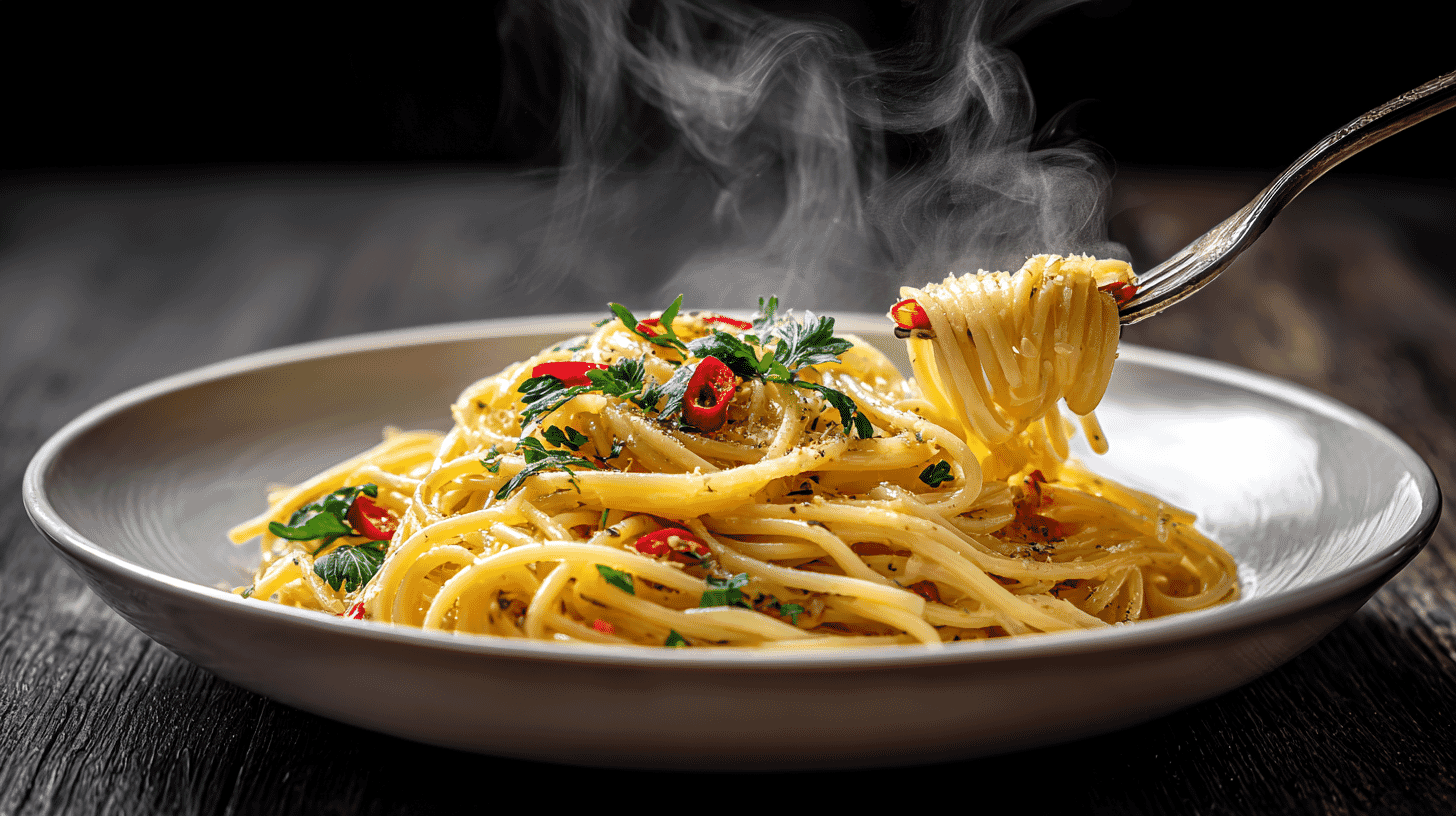
Garlic, olive oil, chili flakes, and pasta. Just four ingredients make up Peperoncino—known in Italy as "Aglio e Olio" (garlic and oil). Italians have bestowed upon this humble dish some rather melancholic nicknames: "poor man's pasta," "pasta della disperazione" (pasta of desperation), and "spaghetti di mezzanotte" (midnight spaghetti).

Picture this: You open your fridge and find nothing. Payday is still a week away. But hunger strikes. This is when an Italian reaches for these pantry staples and whips up this pasta. It's not something you'd order at a restaurant—it's what you eat alone at home, preferably at 2 AM after a night out. That's Peperoncino's position in Italy.

Yet in Japan, the story couldn't be more different. Walk into any Italian restaurant, and Peperoncino is guaranteed to be on the menu, often ranking among the most popular pasta choices. How did this complete reversal happen?

Why the "Desperation" Label?

The reasons Italy calls this the "pasta of desperation" are straightforward.

First, the cost is essentially zero. Garlic, chili, and olive oil are basics that every Italian household keeps stocked. Pasta is a staple. This dish is literally the "last resort" when you can't go shopping.

Second, preparation time is absurdly short. Hungry at midnight? Craving something after drinks? Fifteen minutes, and you're eating. Hence the alternate name "midnight pasta."

But the biggest reason is the Italian perspective that it's "too simple" for restaurants. Why would anyone pay money to eat something they could make at home in five minutes? In fact, authentic Italian restaurants often don't even list Peperoncino on their menus. If they do, ordering it might earn you some puzzled looks from the staff.

Why Japan Fell in Love: The Beauty of Simplicity

So what made Peperoncino so popular in Japan?

1. "Simple Means Difficult" — The Craftsman's Philosophy

Japanese culture embraces the "aesthetics of subtraction." Tea ceremony, calligraphy, traditional cuisine—all value stripping away the unnecessary to reveal essence. Peperoncino, with its minimal ingredients, demands precision: the exact moment to remove garlic from heat, the perfect emulsification, the right amount of salt. This "simple therefore difficult" quality resonated deeply with Japanese sensibilities.

Japanese cooking shows and food manga often feature the line: "If you can make perfect Peperoncino, you're a real chef."

2. Demand for "Lighter" Pasta

Given Japanese dietary habits and portion preferences, cream-heavy or meat-laden pasta can feel overwhelming. Peperoncino's oil-based, refreshing nature suits Japanese appetites perfectly.

3. The Culture of Creative Adaptation

Japan has embraced Peperoncino as a base for endless variations:

  • Seafood Peperoncino (clams, shrimp, squid)
  • Leafy greens Peperoncino (spinach, komatsuna)
  • Mushroom Peperoncino
  • Japanese-fusion versions with bacon or mentaiko (spicy cod roe)

Italian purists might call this heresy, but these adaptations helped Peperoncino become part of Japan's food culture.

4. The Obsession with "Emulsification"

Among Japanese Peperoncino enthusiasts, "emulsification" is almost sacred. This technique combines pasta water with olive oil to create a cloudy, silky sauce that clings beautifully to the noodles.

In Japan, there's even a belief that "non-emulsified Peperoncino is a failure." YouTube is flooded with videos explaining "how to achieve perfect emulsification." Interestingly, this level of obsession with emulsification doesn't really exist in Italy—it's a uniquely Japanese evolution.

Peperoncino Around the World

How does the rest of the world treat this humble dish?

United States: Fairly well-known, but often just called "garlic pasta." Compared to tomato or cream sauces, it's considered plain. Sometimes ordered as a "diet option."

France: Known due to proximity to Italy, but the French preference for butter and cream means many find an oil-and-chili pasta somewhat "lacking."

South Korea: Growing popularity thanks to Japanese influence on Korean Italian restaurants. However, reflecting Korean love for spice, extra-hot versions with added gochugaru (Korean chili flakes) are trending.

United Kingdom: Pasta culture isn't as deeply rooted, and Peperoncino is seen as "a bit boring." You won't find it at the pub.

Germany: The practical German mindset sometimes interprets "few ingredients" as "cutting corners." Ordering it at a restaurant might prompt a "Are you sure?" from your server.

Perhaps "Hope" Rather Than "Desperation"?

After all this, calling Peperoncino a "desperation" pasta seems unfair.

Yes, in Italy, it might be "what you make when there's nothing else." But in Japan, it's a dish that tests a chef's skill, a weekend pleasure for home cooks to perfect.

The wisdom of maximizing simple ingredients, the humility of finding satisfaction in less, and above all, the universal human desire to eat something delicious—Peperoncino embodies all these values.

Perhaps it deserves to be called the "pasta of hope" instead.


What About Your Country?

In Japan, Italy's "pasta of desperation" transformed into a "beloved menu staple."

How is Peperoncino treated in your country? Do you see it in restaurants? Is it strictly home cooking? Or maybe you're thinking "What's that?"

We'd love to hear about Peperoncino culture where you live!

References

Reactions in Japan

I knew Peperoncino was called the pasta of desperation, but I can see how in Italy it's like 'things are so bad you're making this...' But for Japanese people, simple dishes are deep and respectable. We actually revere it.

I agree 0
I disagree 0

Japan's obsession with emulsification in Peperoncino is intense. In Italy, they don't care that much, but Japanese people say it's a failure if it's not properly emulsified. It's Japanese perfectionism for better or worse.

I agree 0
I disagree 0

Peperoncino is literally my savior when I'm broke. I always have garlic, chili, and olive oil, so I can eat something good even before payday. It functions as desperation pasta in Japan too lol

I agree 0
I disagree 0

Honestly, I understand why Italians look down on Peperoncino. But in Japan, it's valued as 'simple therefore difficult' and tests a chef's skill. Cultural differences are fascinating.

I agree 0
I disagree 0

Italian restaurants in Japan charging 1200 yen for Peperoncino must look like a scam to Italians... ingredients cost less than 100 yen. But it's delicious so we pay anyway.

I agree 0
I disagree 0

When I studied abroad in Italy and told my host family I'd make Peperoncino, they gave me a 'that's midnight snack food' look. Over there it really is something you eat alone at night.

I agree 0
I disagree 0

Peperoncino is popular at my izakaya too. Often ordered as a finishing dish. Japanese people want something simple after drinking, so we're actually using it the same as Italy's 'midnight pasta.'

I agree 0
I disagree 0

My kids love Peperoncino so I make it weekly. The garlic aroma stimulates their appetite. Less chili means no spice, add vegetables for balance. I think it's a versatile pasta.

I agree 0
I disagree 0

After seeing 'if you can make perfect Peperoncino you're a real chef' in cooking manga, I've been trying but emulsification is hard... The oil and water keep separating. Italians apparently don't care but I do!

I agree 0
I disagree 0

Honestly, Japanese Peperoncino has evolved too far from the Italian original. But that's Japan's food culture strength. The ability to upgrade foreign dishes to our preferences is amazing.

I agree 0
I disagree 0

Pairing wine with Peperoncino is amazing, but in Italy they'd probably think 'you have wine when you're in desperation?' lol. In Japan it works as a proper dinner dish. Strange.

I agree 0
I disagree 0

Peperoncino is low-calorie and diet-friendly. I want cream pasta but choose oil-based instead. Maybe that's why it's popular with health-conscious people in Japan.

I agree 0
I disagree 0

Japanese people deifying Peperoncino as 'a test of chef skill' feels like overkill. Italians would probably say 'you call that cooking?' But that seriousness is so Japanese.

I agree 0
I disagree 0

Peperoncino is perfect for learning to cook. Even if you fail it's edible, and few ingredients mean easy practice. The sense of achievement when you nail the emulsification is unreal.

I agree 0
I disagree 0

The different treatment of Peperoncino in Japan and Italy shows cultural differences in perceiving 'simplicity.' Italy: simple = poor. Japan: simple = refined. Neither is wrong, just interesting contrast.

I agree 0
I disagree 0

Convenience store Peperoncino quality has improved insanely. Used to be greasy, now properly emulsified. Getting restaurant-level taste for 300 yen, making dining out pointless.

I agree 0
I disagree 0

Voices from Around the World

Marco Rossi

As an Italian, I honestly can't understand ordering Peperoncino at restaurants. Paying for something you can make at home in 5 minutes. But I'm kind of happy Japanese people love it so much. Cultural differences I guess.

Sarah Johnson

In America, Peperoncino is often called 'garlic pasta.' Honestly not that popular. Everyone prefers Alfredo or meat sauce. Most people find it too simple and unsatisfying.

Pierre Dubois

French cuisine uses lots of butter and cream, so pasta with just olive oil and chili feels a bit lacking. But it's not bad as a light meal. The Japanese idea that 'simple = refined' is intriguing.

Hans Mueller

In Germany, few ingredients often means 'lazy cooking.' But Japan's idea that 'simplicity demands skill' resonates with German Meister spirit. A great example of how perspective changes evaluation.

Kim Min-ji

Peperoncino is popular in Korea too! But Koreans love spice, so extra chili is standard. Many add gochugaru (Korean chili flakes). Japanese Peperoncino is a bit mild for us lol

James Wilson

Pasta culture isn't deeply rooted in the UK. Peperoncino has a 'bit boring pasta' image. You'd never see it at a pub. I'm surprised it's so popular in Japan.

Maria Garcia

Spain has lots of garlic-heavy dishes, so I get Peperoncino's appeal! If you like ajillo, you'd love it. But would I order it at a restaurant? Probably just make it at home.

Li Wei

China has tons of chili dishes, so Peperoncino's chili level isn't enough for us lol. But Japanese ability to adapt foreign food is impressive. Ramen and curry both evolved uniquely there.

Emma Brown

Australia has many Italian immigrants, so Peperoncino is known. But it's still seen as 'home cooking.' It hasn't become a restaurant staple like in Japan.

Carlos Rodriguez

As a Mexican, I relate to chili-based dishes. But Peperoncino's chili is too subtle lol. I'd want to add habanero. Probably suits Japanese delicate palates though.

Anna Kowalski

In Poland, potatoes are more staple than pasta, so Peperoncino isn't familiar. But hearing about Japanese food culture, I admire how seriously they approach every dish.

Giovanni Bianchi

From Naples, and Peperoncino really is 'desperation food.' But seeing Japanese people treat it as art gives mixed feelings. Happy, but also 'wait, that dish?' lol

Nguyen Thi Mai

Vietnam has lots of garlic and chili dishes too. But we'd pair them with pho or rice, not pasta. Interesting that Japan loves Italian food so much. Asian country loving European cuisine.

Michael Chen

Living in Toronto, Canada. Here Peperoncino is often seen as a 'healthy option.' Chosen when cream pasta feels too heavy. Not treated as 'craftsman skill' like in Japan.

Sofia Andersson

In Sweden, hearty dishes like meatball pasta are preferred. Peperoncino is known by some but not major. Japanese 'aesthetics of subtraction' resonates with Nordic minimalism.

Ahmed Hassan

In Egypt, pasta with lots of tomato or cream sauce is normal. Just olive oil and garlic? 'That's it?' reaction. But Japanese food culture is delicate, maybe that delicacy suits Peperoncino.

Rachel Smith

In New Zealand, Peperoncino is honestly minor. People going to Italian restaurants usually choose Carbonara or Bolognese. Hearing it's so popular in Japan makes me want to try it on my next visit!

Jan de Vries

In Netherlands, Peperoncino has a 'too simple' image. But hearing about Japan's emulsification obsession, the scientific approach is interesting. Dutch are pretty analytical too, so I get it lol