Record-Breaking $228,000 Sea Urchin at Tokyo's New Year Auction: Understanding Japan's Unique "First of the Year" Culture

Tokyo's Toyosu Market Sees Historic Uni Price

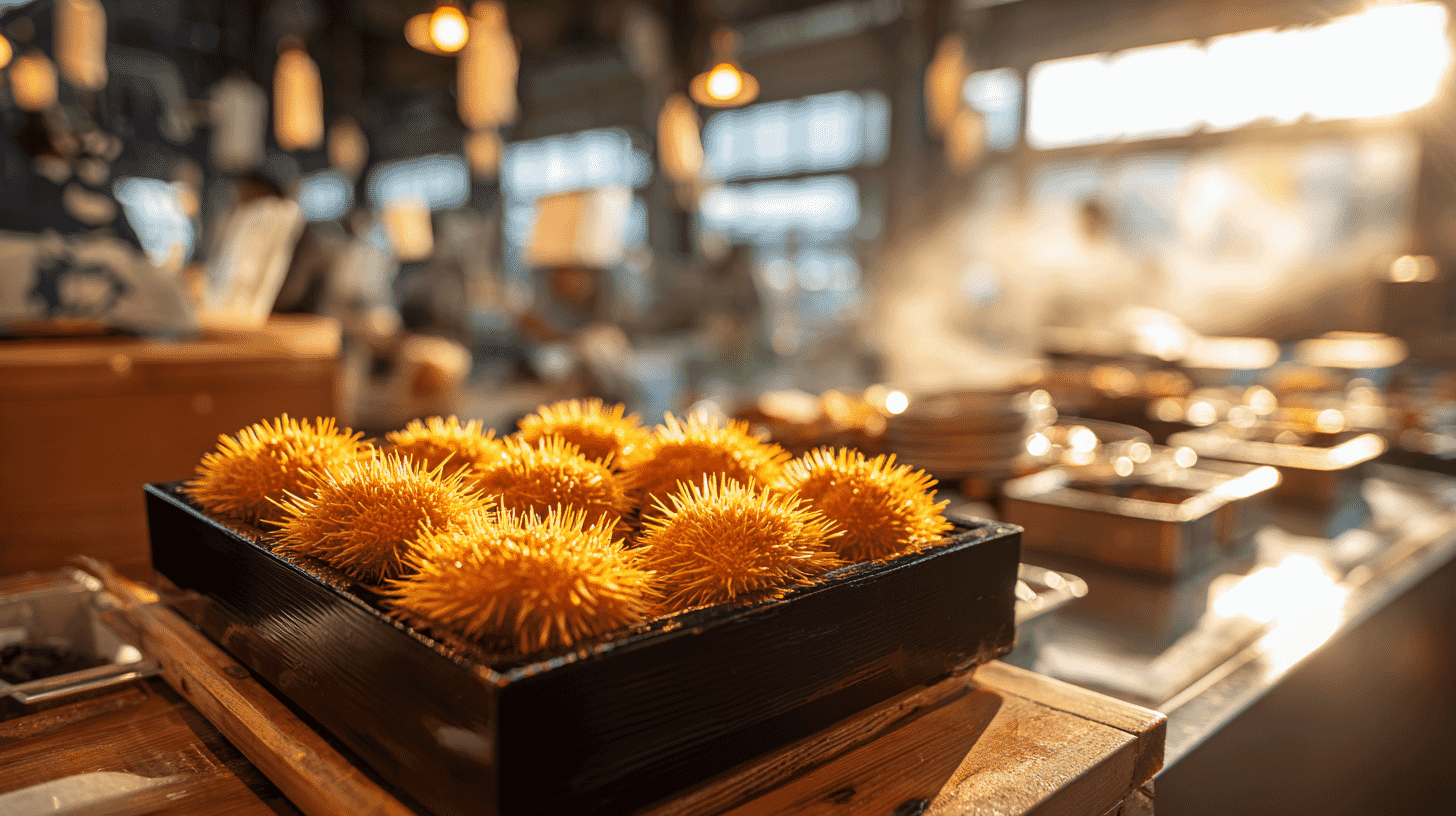
On the morning of January 5, 2026, a purple sea urchin (Murasaki uni) from Hakodate, Hokkaido was auctioned for an unprecedented 35 million yen (approximately $228,000 USD) at Tokyo's Toyosu Market during the traditional New Year's first auction, known as "hatsuseri." The 400-gram portion translates to an astounding 87,500 yen (about $570) per gram.

This record-breaking bid represents a five-fold increase from the previous year's top uni, which sold for 7 million yen. The winning bidders were a joint team from Sushi Takamitsu, a prestigious sushi restaurant in Nakameguro, Tokyo, and Uni Tora (Tiger Sea Urchin), a specialty uni restaurant chain operated by Beyond Tsukiji Holdings Co., Ltd. The two companies formed a business alliance in November 2025, making this their first joint participation in the New Year auction.

Presented in Traditional Echizen Lacquerware

The winning uni was presented in a specially crafted box made of Echizen lacquerware, a traditional craft from Fukui Prefecture. Branded as "Hadate no Nama Uni" (Hadate Fresh Sea Urchin), it represents the highest quality available at Toyosu Market, excelling in color, grain size, sweetness, and umami flavor.

According to Akiyoshi Yamazaki, Managing Director of Yamaji wholesalers, when converted to a per-kilogram price, this uni is worth approximately 20 million yen—"more expensive than tuna," he noted.

Available as a $6,500 Uni Bowl and $10,000 Course

The record-breaking uni will be served to the public in the following ways:

At Sushi Takamitsu:

  • Served as part of a 1.5 million yen ($10,000) course to 16 guests on the evening of January 5th

At Uni Tora Main Store:

  • Available from January 6th as the "First Auction Uni Bowl"
  • Priced at 1 million yen ($6,500) per bowl, before tax
  • Limited to just 5 portions

The Cultural Significance of Japan's "Hatsumono" (First of the Year)

In Japan, there is a deeply rooted cultural tradition of valuing "hatsumono"—the first harvest or catch of the season—as auspicious items. Foods traded for the first time in the new year are believed to carry special significance, and consuming them is thought to bring good fortune for the coming year.

The exceptionally high prices at the first auction serve several purposes:

  1. Good Fortune and Prosperity - Securing the "ichiban" (number one) position symbolizes wishes for business success in the coming year
  2. Publicity Value - Major media coverage provides significant brand exposure for the winning restaurants
  3. Honoring Producers - The high bids demonstrate appreciation and support for fishermen and producers who cultivate premium quality seafood
  4. Promoting Japanese Food Culture - The auction helps showcase Japan's fish-eating culture both domestically and internationally

As one Toyosu Market official explained, "The uniquely Japanese tradition of favoring auspicious first catches continues to be passed down to this day."

Why Sea Urchin Prices Are Soaring

In recent years, overall sea urchin prices in Japan have been trending sharply upward. The main factors include:

Environmental Factors:

  • Worsening "isoyake" (barren grounds) due to rising sea temperatures
  • Declining seaweed populations, particularly kelp, which sea urchins feed on
  • Ongoing effects of the devastating red tide that struck Hokkaido in 2021

Market Factors:

  • Decreasing domestic uni supply, particularly from Hokkaido
  • Rising demand for premium seafood driven by inbound tourism
  • Higher prices for imported Russian uni due to yen depreciation

The Ezo Bafun uni (short-spined sea urchin) is particularly vulnerable as it prefers cold water environments. Catches have plummeted dramatically, with 2025 auctions seeing prices as high as 29,000 yen ($190) per 100 grams.

Tuna Also Sets Record on the Same Day

On the same day, a bluefin tuna from Oma, Aomori Prefecture also set an all-time record at 510.3 million yen (approximately $3.3 million). The winner was Kiyomura Corporation, which operates the "Sushizanmai" chain, marking their first winning bid in six years.

The 2026 first auction was unprecedented, with both tuna and sea urchin setting historical records on the same day.

Japan's Position in the Global Sea Urchin Market

Japan dominates the global sea urchin market, consuming approximately 80-90% of the world's total production. While sea urchins are also eaten in Mediterranean countries like France, Italy, and Spain, as well as South American nations like Chile and Peru, Japan's style of consuming uni raw as sashimi or sushi is relatively unique.

In many other countries, sea urchin is more commonly prepared as pasta sauce, incorporated into soups, or used as a cooked ingredient rather than eaten fresh.

Your Thoughts?

In Japan, sea urchin is cherished both as an auspicious New Year delicacy and as one of the ultimate luxury foods. While 87,500 yen per gram may seem extraordinary, for Japanese people, securing the "ichiban" carries cultural and spiritual significance that transcends mere monetary value.

Now we'd love to hear from you around the world: Is sea urchin eaten in your country? If so, how is it typically prepared? And what do you think about this $228,000 price tag? Please share your thoughts in the comments!

References

Reactions in Japan

35 million yen for uni, over 80,000 yen per gram... that exceeds my annual salary 😂 But considering its value as a good luck charm, advertising effect, and respect for producers, I can understand it. It's a symbol of Japanese food culture.

I agree 0
I disagree 0

Speaking as a fisherman's son, this news makes me happy. We often get lowballed on regular sales, so seeing this kind of recognition at the first auction is encouraging. We'll keep focusing on quality.

I agree 0
I disagree 0

I'd love to try a 1 million yen uni bowl just once! But realistically it's impossible... I'll have to settle for regular conveyor belt sushi uni 🍣

I agree 0
I disagree 0

I understand criticism that first auction prices are purely speculative with no economic rationality. But the ripple effects of 'special occasion' spending in Japan's economy shouldn't be underestimated. The buzz also stimulates inbound tourism demand.

I agree 0
I disagree 0

High prices like this exist because there's demand. But rising sea temperatures are continuously degrading sea urchin habitats. Without serious consideration of sustainable fishing, uni will truly become a 'phantom ingredient' in the near future.

I agree 0
I disagree 0

As a fellow sushi chef, handling 35 million yen uni must be incredibly pressureful. Freshness management, serving temperature, compatibility with rice... delivering it in perfect condition is a craftsman's duty.

I agree 0
I disagree 0

As a Hokkaido local, I'm proud that Hakodate uni fetches such high prices. But honestly, even locally it's become too expensive to eat casually. It feels like prices have become tourist-oriented.

I agree 0
I disagree 0

500 million for tuna, 35 million for uni... Japan really spends money on food. But seeing news like this makes me want to eat proper cuisine. Better work hard at my part-time job.

I agree 0
I disagree 0

There's a theory that first auction prices are leading indicators for stock prices. This year both tuna and uni hit all-time highs. Should we be optimistic about the economy? Or is it just a superstition?

I agree 0
I disagree 0

For small restaurants like mine, even regular uni is difficult to procure. Some days we can't put it on the menu considering cost ratios. I feel the gap with high-end restaurants is only widening.

I agree 0
I disagree 0

First auctions didn't fetch these prices in the old days. Even during the bubble era, I think it was just a few million yen. Times have changed. But if this helps preserve Japanese culture, I think it's good.

I agree 0
I disagree 0

The presentation of 'Hadate fresh uni' in Echizen lacquerware is brilliant. Adding value not just through ingredients but fusion with traditional crafts. This is true Japanese branding.

I agree 0
I disagree 0

Honestly, isn't this just a rich person's indulgence? How many children could be fed with 35 million yen... In a world where food waste is a problem, I question this kind of consumption.

I agree 0
I disagree 0

Valuing 'first catches' is an ancient Japanese tradition. Even Edo period records of 'hatsu-gatsuo' (first bonito) show commoners spending large portions of annual income on firsts. Modern first auctions are an extension of this.

I agree 0
I disagree 0

The pressure to win number one is intense. We bid with all our heart to meet customer expectations, but the relief after it's over is immense. So glad we successfully got number one this year too.

I agree 0
I disagree 0

So jealous of those who got reservations for the 1 million yen uni bowl! Wonder what it tastes like... Waiting for reports from those who tried it 🙏 #FirstAuction #Uni #ToyosuMarket

I agree 0
I disagree 0

Voices from Around the World

Michael Thompson

We eat uni from the West Coast at sushi restaurants in America, but $228,000!? Even at high-end LA sushi spots, it's around $13 per piece. Japan's 'good luck charm' culture is fascinating, but that's a hard price for me to wrap my head around.

Sophie Laurent

In France, uni ('oursin') is popular in Mediterranean cuisine. We use it in pasta sauce or soup. But we don't really have a culture of eating it raw like in Japan. A 35 million yen uni bowl... that's a luxury experience I'd love to try once.

Carlos Rodriguez

Chile is one of the world's largest sea urchin exporters. We call it 'erizo' and eat it raw with lemon or use it as empanada filling. It's nice to know Japan values Chilean uni so highly.

Emma Watson

To be honest, there's almost no culture of eating sea urchin in the UK. When I first tried it at a high-end Japanese restaurant in London, I was surprised by its creamy taste. But 35 million yen... you could buy a house with that!

Giovanni Rossi

In Italy, especially Sardinia and Sicily, uni is very popular. 'Spaghetti con ricci di mare' (sea urchin pasta) is exquisite. I didn't know about Japan's first auction culture, but the tradition of praying for good luck in the new year is wonderful.

Liu Wei

In China, uni is also recognized as a luxury ingredient. It's popular in coastal cities like Dalian and Qingdao, but raw eating culture isn't as developed as in Japan. This price probably includes investment value as well.

Kim Min-jun

In Korea, uni ('seongge') is also popular. Korean style is to eat it with soy sauce or put it in bibimbap. Japan's first auction culture makes news in Korea too, and we watch it every year!

Sarah Miller

Australia has sea urchins too, but not many people eat them. I've tried it at Japanese restaurants in Sydney and Melbourne. Creamy and unique taste. $228,000 is crazy, but I respect it as Japanese culture.

Hans Mueller

In Germany, there's almost no habit of eating sea urchin. But recently, high-end sushi restaurants have been increasing in big cities like Berlin, giving more opportunities to experience uni. I admire Japanese passion for food.

Maria Gonzalez

In Spain, especially Galicia, sea urchin is a traditional ingredient. Called 'erizo de mar', we eat it fresh as is. It's interesting that we share the raw eating culture with Japan. But this price is shocking!

James Chen

In Singapore, we have many opportunities to eat uni at Japanese restaurants. Hokkaido uni is popular at hotel sushi bars. But 35 million yen is beyond imagination... Japan's New Year culture is truly unique.

Pedro Santos

In Brazil, there's almost no culture of eating sea urchin. You might see it at Japanese restaurants in São Paulo's Liberdade district, but for most Brazilians it's an unknown ingredient. Seeing this amount, it must really be special in Japan.

Anna Kowalski

In Poland, sea urchin is completely unfamiliar. But recently, more young people are interested in Japanese culture, and due to the sushi boom, some are trying uni. Reading this article, I learned about the depth of Japanese food culture.

Ahmed Hassan

In Dubai, high-end Japanese restaurants are increasing and uni is popular. Among the wealthy, eating fish from Japan's first auction has become a status symbol. This price is probably just another talking point for them.

Olivia Brown

Vancouver, Canada has strong Japanese food culture, and locally caught uni is popular. BC sea urchins are even exported to Japan. But only Japan has first auctions with prices like this! You can really feel the cultural difference.

Raj Patel

In India, there's no culture of eating sea urchin at all. Many people are vegetarian, and seafood itself is regional. But high-end hotels in Mumbai and Delhi serve authentic sushi by Japanese chefs, so I'd like to try it someday.