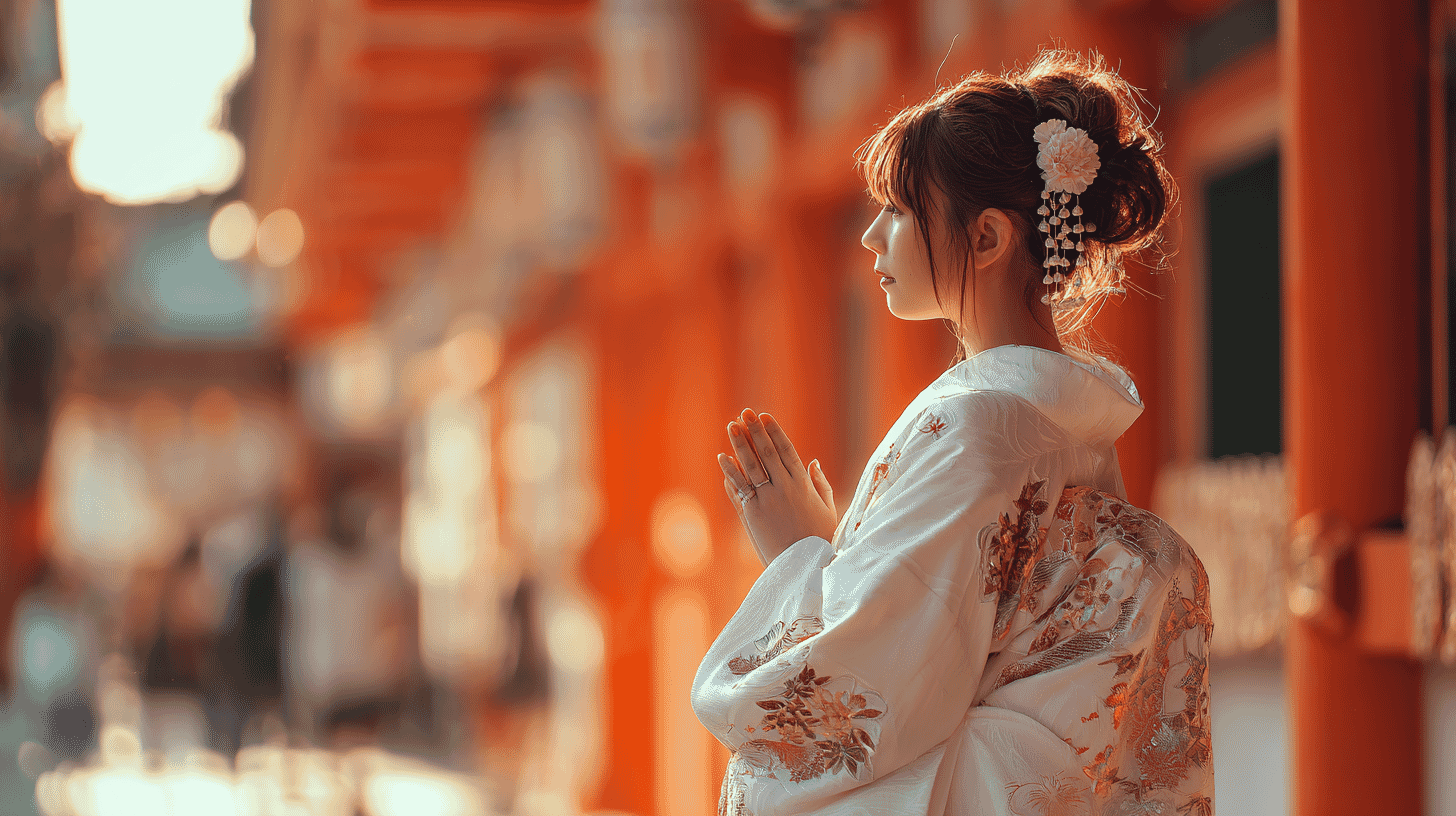
From the 1970s through the 1990s, a coming-of-age furisode meant a red one. White was the colour people avoided as too plain for a celebration. Now the kimono trade describes the white revival as the biggest in about half a century, and one major photo studio chain ranked white first among colours for the 2026 ceremonies. What changed, between social media and what white has long meant in Japan.
The Remarkable Revival of White
At Japan's Coming-of-Age Day ceremonies in January 2025, a striking trend has emerged among the sea of vibrant kimonos: white furisode are everywhere. These elegant long-sleeved kimonos in pure white and soft cream tones, once considered too "plain" and "modest" for such celebratory occasions, are enjoying what the kimono trade calls their biggest resurgence in roughly half a century.
Kimono rental shops and traditional clothing stores across Japan report dramatic increases in white furisode reservations. Industry surveys show that white now ranks among the top three most popular colors, alongside traditional favorites like black and navy blue. Surveys of Gen Z respondents show a clear polarization between "monochrome cool" and "white/pastel-based" styles.
What's driving this remarkable shift? The answer lies at the intersection of social media culture, evolving aesthetic sensibilities, and the deep cultural significance of white in Japanese tradition.
When White Meant "Too Plain"
Looking back at furisode history, the 1970s through 1990s were dominated by vibrant reds and elaborate, eye-catching patterns. The image of a red furisode became synonymous with Coming-of-Age ceremonies, and the prevailing philosophy was "the more colorful, the better."
During this era, white furisode were often dismissed as "too understated" and "lacking festivity." White was associated with simplicity and modesty, qualities that seemed at odds with the celebration of a major life milestone. This tendency was particularly strong during Japan's bubble economy era of the 1980s, when gorgeously embellished kimonos with abundant gold and silver threading were highly prized.
There were practical concerns too: white is an "expansion color" that some worried would make the wearer appear larger. Combined with its reputation for showing dirt easily, white seemed like a risky choice for such an important day.
How Social Media Transformed White's Value
The turning point came in the late 2010s with the explosive growth of social media. As Instagram and TikTok became essential tools for young people, "being photogenic" became a crucial criterion for choosing what to wear.
This is where white furisode truly shine. White possesses what the Japanese call "reflector board effect" (refu-ban kouka), the natural ability to reflect light and brighten the face. Just like the reflector boards professional photographers use, white fabric creates soft, flattering illumination that makes skin appear healthier and more radiant.
For young adults who plan to share their Coming-of-Age photos on social media, this effect is incredibly appealing. With both the ceremony day and pre-ceremony photo shoots ("maedori") being important occasions for capturing memories, white furisode have become the optimal choice for looking one's best on camera.
White also harmonizes with any background. Whether posed against the vermillion gates of a Shinto shrine, the greenery of a Japanese garden, or a clear blue sky, white creates beautiful contrast while letting the wearer remain the focal point, a significant advantage in the era of location-based photography.
Gen Z Aesthetics and the Appeal of White
The aesthetic preferences of Gen Z also play a crucial role in white furisode's popularity. Today's young adults gravitate toward muted colors and nuanced tones, showing a preference for "refined," "elegant," and "sophisticated" looks rather than the "flashier is better" mentality of previous generations.
White furisode align perfectly with this sensibility. A particularly popular trend is "one-tone coordination," where the furisode, obi belt, and accessories are all unified in the same color family. "All-white" styling has become especially fashionable, creating an ethereal, dreamy aesthetic.
Designs featuring minimal color, perhaps only gold, silver, or platinum accents on a white base, are also gaining traction. Some young women even choose nearly solid white furisode with subtle patterns, embracing a minimalist approach that finds elegance in simplicity. This represents a distinctly modern sensibility that values understated sophistication over excessive ornamentation.
The Deep Cultural Meaning of White in Japan
Beyond aesthetics and photography, the resurgence of white furisode connects to the profound symbolic meaning of white in Japanese culture.
Since ancient times, white has represented purity, sanctity, and spiritual cleanliness in Japan. The white shiromuku wedding kimono that brides traditionally wear symbolizes being "undyed by any color" and starting a new life with a "blank slate." Similarly, choosing a white furisode for the Coming-of-Age ceremony carries symbolic weight, it represents stepping into a future that remains unwritten and full of possibility.
As the word kohaku (red and white) suggests, white has long been treated as a sacred color indispensable to celebrations. As a symbol of purity and possibility, it fits the moment of stepping into adulthood at twenty.
Current White Furisode Trends
The white boom turned out to be no one-season fad. Studio Alice, a large photo studio chain, announced on February 17, 2026 that white had taken first place in its ranking of furisode colours for that year's ceremonies, with white and cream also prominent in its breakdown by colour. Rankings vary by retailer, and some put muted pink first. Still, white becoming a fixture near the top is itself the measure of how far things have moved. The styling has branched out too:
Classical Patterns on White Traditional motifs like pine-bamboo-plum (shochikubai), cranes, and peonies rendered in gold and silver on white backgrounds balance heritage with contemporary appeal. These designs offer elegance and celebration without overwhelming the wearer.
Modern Japanese Fusion Contemporary interpretations feature bold designs like red camellias or dramatic peacock motifs on white grounds. The simplicity of the white base allows intricate patterns to truly stand out.
Monotone Coordination The "all-white" styling trend extends to obi belts, obi accessories, and even hair ornaments, all coordinated in white or pale tones. This creates a delicate, translucent aesthetic that photographs beautifully.
Western-Inspired Touches The "ballet-core" trend has reached furisode fashion, with lace collar accessories, pearl hair ornaments, and ribbon decorations adding romantic Western elements that complement white furisode perfectly.
Tips for Choosing a White Furisode
First, understand that "white" encompasses many variations, pure white, off-white, and ecru (yellowish white) each have different effects and suit different skin tones. Off-white is generally considered the most universally flattering for Japanese complexions.
Concerns about white's expanding effect can be addressed through strategic use of contrasting "締め色" (shime-iro) or "accent colors" in the obi and accessories. Dark colors like black or navy create visual definition and a slimming effect.
Also be mindful that white shows dirt more easily. When renting, choose a reputable shop known for excellent maintenance and cleaning of their garments.
More Than Just "Instagram-Worthy"
What was once dismissed as "too modest" is now celebrated as "elegant," "refined," and "ethereal." The shift shows how adaptable Japanese fashion culture can be.
Choosing white for one's Coming-of-Age ceremony, selecting a color that symbolizes a blank slate and unlimited possibility, is one way to express hope for the journey ahead.
Does your country have ceremonies or traditions that celebrate becoming an adult? Are there special garments worn for these occasions?
References
- https://prtimes.jp/main/html/rd/p/000000098.000032126.html (Studio Alice on its 2026 furisode colour ranking)
- https://www.saganokan.com/furisode/content/47174/
- https://kimono-rentalier.jp/column/furisode/seijinshiki-furisode-white/
- https://kimono-rentalier.jp/column/coming-of-age/furisode-trend/
- https://yumekirara.com/cate01/2024020101/
- https://furisode-hakubi.jp/blog/furisode-history/
- https://idolbyyamato.jp/blog/4119/
Global Discussion
15 comments