Yoshinoya Aims to Become World's #1 Ramen Provider | Japan's Gyudon Giant Reveals Bold 5-Year Strategy

The Beef Bowl King Sets Its Sights on a New Crown

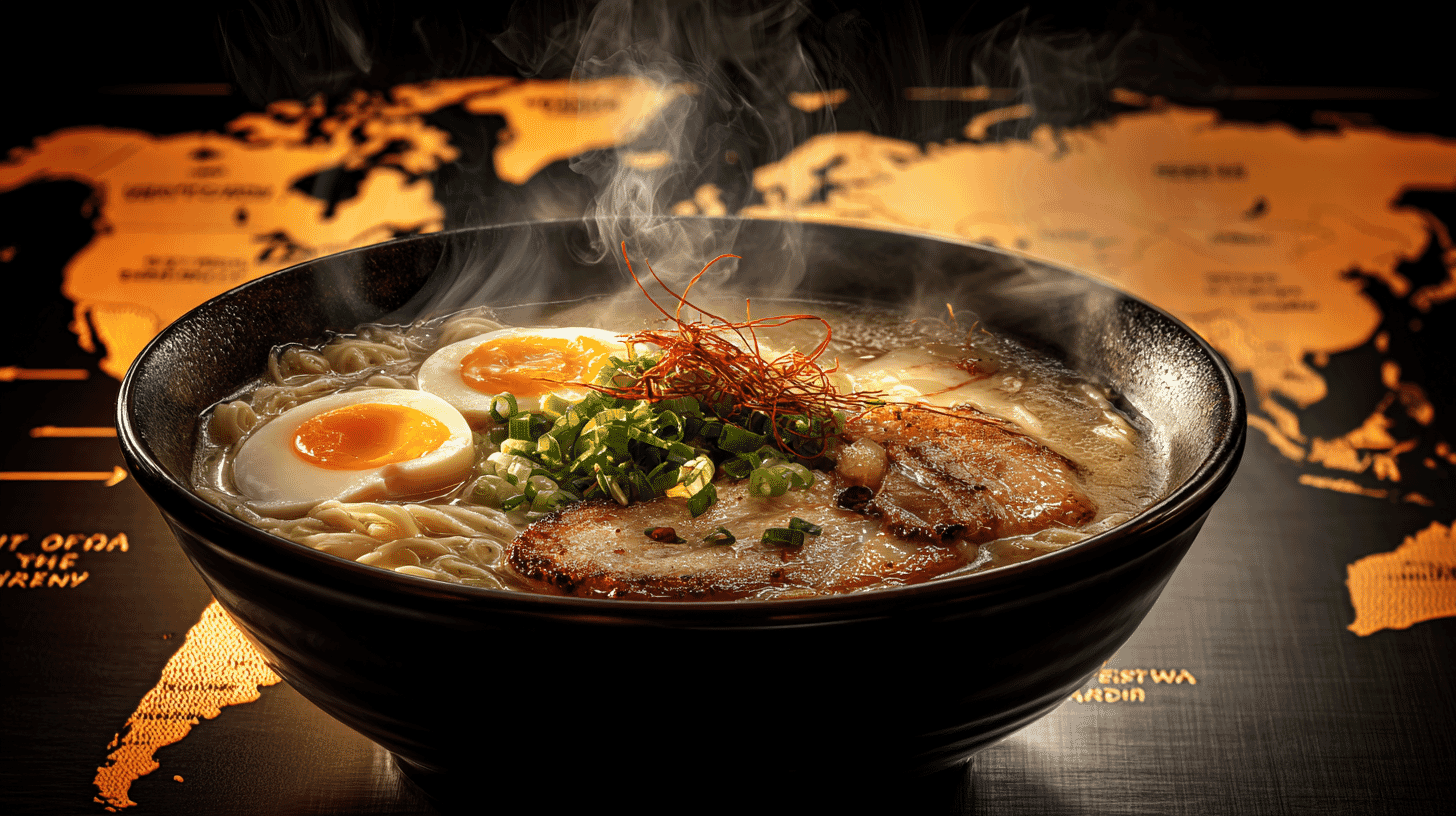
Yoshinoya Holdings, the company that revolutionized Japan's fast-food industry with its iconic "fast, delicious, and affordable" beef bowl (gyudon), has announced an ambitious new venture. The company's top leadership has unveiled plans to expand its ramen business fivefold within five years, with the ultimate goal of becoming the world's number one ramen provider by serving count.

With over 125 years of history, Yoshinoya transformed Japanese food culture through a single product: the gyudon. Now, the company is setting its sights on another beloved Japanese soul food—ramen—as it aims for global dominance in yet another culinary category.

Why Ramen, and Why Now?

A Maturing Beef Bowl Market Demands New Growth Strategies

The domestic beef bowl market in Japan has reached maturity, with the "Big Three" of Yoshinoya, Sukiya, and Matsuya locked in fierce competition. While each chain continues to differentiate through pricing strategies and menu diversification, significant market expansion remains challenging.

Against this backdrop, Yoshinoya Holdings has decided to accelerate group-wide growth through a full-scale entry into the ramen business.

Global Ramen Demand Is Exploding

Ramen has evolved into one of Japan's most recognizable cultural exports worldwide. Japanese-style ramen shops are proliferating across North America, Europe, and Asia, with the market expanding year after year. Several factors are driving this ramen boom:

  • Sustained global interest in Japanese cuisine
  • Inbound tourism increasing awareness of authentic Japanese ramen
  • Success stories of Japanese ramen chains expanding overseas
  • Ramen's high customizability allowing easy localization

Inside Yoshinoya's Ramen Strategy

Concrete Goals: 5x Growth in 5 Years

Yoshinoya Holdings has set a clear target: expand its group ramen operations fivefold over five years. This isn't merely about store count—it's about achieving the highest serving volume of ramen in the world.

Leveraging Decades of Operational Expertise

Yoshinoya's greatest asset is the operational know-how accumulated over decades:

  • Efficient store operations: Systems designed to run smoothly with minimal staff
  • Supply chain mastery: Nationwide ingredient procurement and distribution networks
  • Price competitiveness: Cost reduction through economies of scale
  • Strategic location selection: Prime spots near train stations and major roads

By applying these strengths to the ramen business, Yoshinoya can achieve rapid expansion that would be impossible for independent ramen shops.

Multi-Brand Potential

Yoshinoya Holdings has experience managing multiple brands beyond its flagship beef bowl chain, including the udon chain Hanamaru. In the ramen space, the company could potentially develop multiple brands targeting different customer segments and price points to capture the broadest possible market.

Industry Impact and Competitive Landscape

Major Chains Intensifying Ramen Market Competition

Yoshinoya's serious entry into ramen could significantly impact the entire food service industry. The ramen market, already competitive with established players like Kourakuen, Hidakaya, and Ippudo, will see competition intensify further with Japan's largest beef bowl chain joining the fray.

Implications for Independent Ramen Shops

For independently owned ramen shops, this development could pose a significant threat. Competing against major chains' pricing power and location strategies will require even greater emphasis on uniqueness and specialization.

Challenges and Future Outlook

Obstacles to Overcome

To achieve its goal of becoming the world's top ramen provider, Yoshinoya must address several challenges:

  • Maintaining ramen quality: Soup preparation and noodle management differ significantly from beef bowl operations
  • Building brand identity: Moving beyond the "Yoshinoya = beef bowl" perception
  • International expansion expertise: Adapting to various food cultures and regulations
  • Talent acquisition and development: Building capacity to support rapid growth

Bringing Japanese Food Culture to the World

If Yoshinoya succeeds in this venture, it could set a powerful precedent for Japan's food service industry. The company could potentially bring ramen—a quintessentially Japanese culinary tradition—closer to people around the world.

Can Yoshinoya apply its philosophy of "delicious food, served fast, at affordable prices" to ramen? This bold new chapter in the company's story is one to watch closely.


In Japan, a beef bowl chain's audacious goal to become the world's #1 ramen provider is generating significant buzz. What's the perception of Japanese ramen in your country? Have you seen similar cross-industry expansions in the food business? Share your thoughts in the comments!

References

Reactions in Japan

I was honestly surprised by Yoshinoya aiming for world #1 in ramen. But considering how well they manage their beef bowl operations, they might actually pull it off. Could be a real threat depending on the price point.

I agree 0
I disagree 0

Yoshinoya HD's ramen strategy looks ambitious on paper, but ramen quality varies more than beef bowls. The key will be whether they can serve genuinely good ramen through chain operations.

I agree 0
I disagree 0

It's tough seeing big companies keep entering the market. But shops like mine have to compete on taste and dedication. I believe there's room for coexistence.

I agree 0
I disagree 0

Watching how Yoshinoya HD's stock price reacts to this announcement. The ramen market has growth potential, so if this works out, their corporate value could rise significantly.

I agree 0
I disagree 0

The key word is 'serving count' for world #1. They're not claiming to be the best-tasting. Same logic as McDonald's not being the world's best burger.

I agree 0
I disagree 0

I've tried Yoshinoya's ramen once and it was actually pretty good. If I can get it in the 500 yen range, I'd be happy to have another lunch option.

I agree 0
I disagree 0

As a mom, having more affordable ramen chains where families can eat quickly is helpful. But Yoshinoya's image is so tied to beef bowls, I can't quite picture them doing ramen.

I agree 0
I disagree 0

I'm uncomfortable with how they're using 'world's best.' Japanese ramen culture is about craftsman skill and individuality. Talking about being #1 through mass production misses the point of what ramen is about.

I agree 0
I disagree 0

This is strategic diversification anticipating the maturing beef bowl market. Makes sense as a business decision for Yoshinoya HD. International expansion will be key.

I agree 0
I disagree 0

I used to work part-time at Yoshinoya, and their operations are really impressive. If they can apply that know-how to ramen, they'll be strong. But ramen cooking is complex, so it might be tough on the front lines.

I agree 0
I disagree 0

Living in the US, ramen here is way too expensive. Over $20 a bowl is normal. Would love it if Yoshinoya could spread affordable, tasty ramen.

I agree 0
I disagree 0

5x growth in 5 years is a very high bar. Are they planning M&A or organic growth? Curious about the specific roadmap.

I agree 0
I disagree 0

More ramen chains where you can eat for under 500 yen is great news for students! Yoshinoya probably stays open late, so I could stop by after my part-time job.

I agree 0
I disagree 0

For noodle and soup manufacturers, this means a major new client and business opportunity. Could impact the entire supply chain.

I agree 0
I disagree 0

Honestly, I don't expect much from chain ramen. But depending on how serious Yoshinoya is, they might surprise us. At least beat Hidakaya-level quality, please.

I agree 0
I disagree 0

The gap between 'beef bowl Yoshinoya' and 'world's #1 ramen' makes for great marketing. They've got the buzz. Now it's about execution.

I agree 0
I disagree 0

Voices from Around the World

Michael Chen

I've had Yoshinoya's beef bowl several times in NYC. The affordable and fast service is appealing. If they can deliver ramen at the same quality level, I'd be happy to have a more accessible option than the expensive ramen shops we have now.

Sophie Martin

Japanese ramen is very popular in France. But 'authentic' ramen from a fast-food chain seems a bit contradictory to me. I always thought ramen was an artisan's craft.

James Wilson

Paying £15 for a bowl of ramen in London is rough. If Japanese chains enter the market and create price competition, I'd welcome it as a consumer.

Kim Soo-yeon

We have beef bowl chains in Korea too, but entering the ramen market is an interesting strategy. Since instant noodle culture is strong in Korea, it would be interesting to see how Japanese-style fresh noodle ramen chains would be received.

David Lee

The Japanese food market in Singapore is very competitive. If Yoshinoya seriously enters the ramen business, differentiation from existing ramen chains will be crucial.

Emma Thompson

In Australia, Japanese ramen is treated as a premium food. If chain expansion makes authentic ramen more accessible, I think that would be wonderful.

Carlos Rodriguez

Ramen has started becoming popular in Mexico recently, but there are still few shops and they're expensive. If major Japanese chains come here, it might become more accessible.

Hans Mueller

As a German, I understand the efficiency-focused business model. But food culture can't be measured by efficiency alone. I question whether the soul of ramen can be mass-produced.

Lisa Wang

Japanese-style ramen is gaining popularity in China. Yoshinoya already has brand recognition here, so their ramen business could succeed. However, competition with local ramen shops will be intense.

Sarah Johnson

From an American perspective, the 'world's #1' goal is great marketing. It's an interesting business case to see if they can replicate the success of Starbucks or McDonald's with Japanese ramen.

Paolo Rossi

As an Italian, I can't help but compare this to pasta culture. Chain restaurant pasta is convenient, but it's not real Italian food. Will ramen follow the same path?

Nguyen Van Minh

Vietnam has pho as our noodle culture, but Japanese ramen is popular among younger generations. I think it's good that more people can experience Japanese ramen through major chain expansion.

Amanda Peters

In Canada, Japanese ramen chains like Ippudo are popular. If Yoshinoya enters the market, increased competition could be good for consumers. Hoping for lower prices!

Raj Patel

Japanese food is still a niche market in India, but it's growing. If they offer vegetarian ramen options, there might be potential in the Indian market. I wonder if Yoshinoya is thinking that far ahead.

Olivia Brown

New Zealand has many Japanese food fans. If a brand like Yoshinoya seriously expands into ramen, I'd love for them to come here too. Waiting in Auckland!