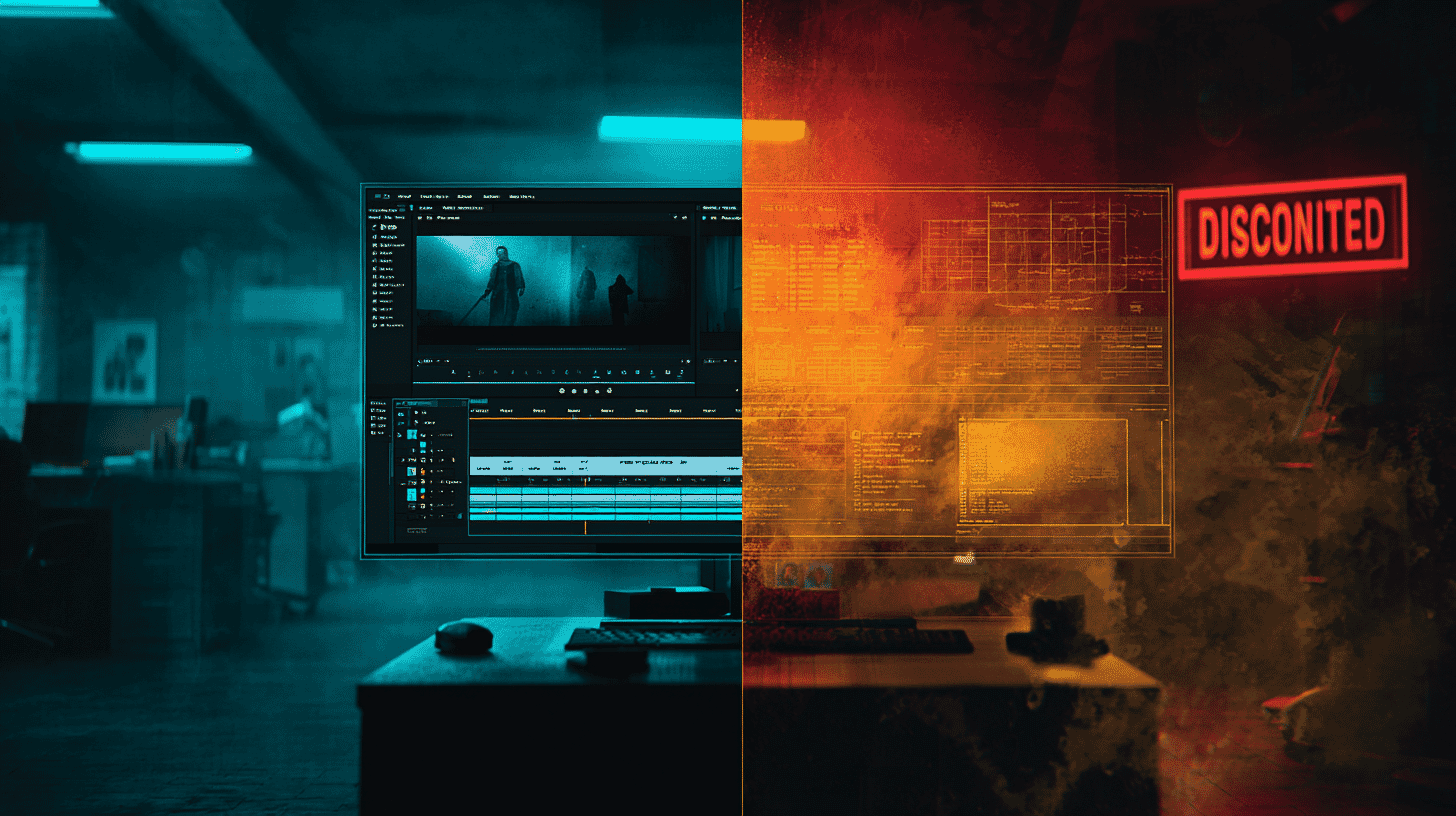
Adobe announced it was discontinuing its legendary animation tool, then reversed the decision just 48 hours later. What forced a tech giant to back down was a storm of protest from creators and the reality that 25 years of animation workflow cannot simply be replaced by AI. Here is the full story of Adobe Animate's near-death experience.
From "Flash" to Almost Forgotten: What Is Adobe Animate?
If you were on the internet in the 2000s, you almost certainly encountered the work of Adobe Animate, even if you didn't know it.
Originally launched in 1996 as FutureSplash Animator, the software was rebranded multiple times: first as Macromedia Flash, then Adobe Flash Professional after Adobe's acquisition of Macromedia, and finally Adobe Animate in 2016.
During the peak of Flash culture, this tool powered an entire generation of internet creativity. Flash games, web animations, interactive banner ads, and viral cartoon series, all built with this one piece of software. In Japan, "Flash anime" became a cultural phenomenon in its own right, with creators uploading short animated works to sites like 2channel and Nico Nico Douga, birthing a grassroots animation movement that ran parallel to the mainstream anime industry.
In Japan, a distinctive "Flash anime" culture took shape, with creators posting short animations on 2channel and Niconico Douga. This grassroots animation scene, separate from commercial anime, defined an era.
Even after the Flash plugin was deprecated in 2020, the authoring tool survived. Adobe Animate continued supporting HTML5 Canvas, WebGL, and video output, making it relevant for modern 2D animation workflows, from TV cartoons to game assets and interactive web content.
The Bombshell: "Adobe Animate Will Be Discontinued"
On February 2, 2026, Adobe dropped a bombshell. Emails landed in subscribers' inboxes and an FAQ appeared on the company's support site: Adobe Animate would be discontinued on March 1, 2026. No new purchases. Enterprise users would get support until 2029; individual subscribers only until 2027. After that, not only would support end, access to files and project data would too.
Adobe's official explanation was diplomatic but vague: the tool had "served its purpose well" over 25 years, and "new platforms and paradigms" now "better serve the needs of users." Reading between the lines, the message was clear: Adobe was reallocating resources toward AI-powered tools like Firefly, and legacy products that didn't fit the AI narrative were being cut.
The suggested replacements were telling. Adobe recommended After Effects for complex keyframe animation and Adobe Express for quick motion effects. Neither offers the frame-by-frame vector animation workflow, symbol-based rigging, or timeline-driven interactivity that made Animate irreplaceable for many professionals.
The Backlash: Creators Erupt
The reaction was immediate and fierce. Social media exploded with responses ranging from disbelief to fury.
Game developer Tyler Glaiel posted on X: calling for Adobe to open-source the software rather than kill it, arguing that no other animation program replicates Flash's functionality for 2D game art. Others described the decision as potentially career-ending, with one user writing that it would "legit ruin my life."
A Japanese user studying animation posted that their entire semester had been built around Adobe Animate classes, now rendered uncertain. Educators worldwide faced the same dilemma: curricula designed around Animate suddenly had no guaranteed future.
The backlash wasn't limited to individuals. Animation studios that had built entire production pipelines around Animate, some spanning decades of institutional knowledge, faced the prospect of expensive, disruptive migrations to alternative software.
Why Japan's Anime Industry Cared Deeply
While Adobe Animate isn't the dominant tool in mainstream Japanese anime production (where software like CLIP STUDIO PAINT and RETAS dominate the traditional hand-drawn pipeline), it holds a unique and important position in the industry.
The most prominent example is Science SARU, the animation studio co-founded by acclaimed director Masaaki Yuasa and producer Eunyoung Choi in 2013. Science SARU made Adobe Flash (later Animate) a core part of its production workflow, using it to streamline the traditionally labor-intensive anime pipeline.
Director Yuasa explained the philosophy: in conventional anime production, the process from layout to key animation to in-between frames to coloring involves multiple specialists passing work between departments. Flash allowed a single animator to handle the entire process, from drawing to animation to coloring, dramatically improving efficiency without sacrificing quality.
This approach powered award-winning productions including the animated film Lu Over the Wall (2017), which won the Crystal Award at the Annecy International Animation Festival, and the TV anime Keep Your Hands Off Eizouken! (2020), which earned the Grand Prize at Japan's Agency for Cultural Affairs Media Arts Festival and was named one of the best TV shows of 2020 by The New York Times.
Science SARU's success demonstrated that digital tools could coexist with the artistic tradition of Japanese anime, and Adobe Animate was central to that proof of concept. The prospect of losing the tool, even for a studio that could adapt, sent a worrying signal about the stability of creative software ecosystems.
Beyond Science SARU, independent Japanese game developers and web animators who had grown up in the Flash era also relied on Animate. For these smaller creators, switching tools isn't just inconvenient, it means relearning workflows, converting file libraries, and potentially losing access to years of project data.
The Stock Price Factor
While creator backlash dominated social media, the financial markets delivered their own verdict. Adobe's stock price dropped more than 5% following the announcement. Over the previous year, the stock had already declined roughly 40%, as investors grew skeptical about whether Adobe's aggressive AI pivot was translating into meaningful subscription growth.
The Animate discontinuation, while affecting a relatively small product, became a lightning rod for broader concerns about Adobe's strategy: was the company alienating its core creative user base in pursuit of an AI future that hadn't yet proven its commercial value?
Some analysts noted that the Animate debacle, combined with ongoing scrutiny of Adobe's AI initiatives, contributed to bearish sentiment around the stock. The reversal, when it came, may have been driven as much by shareholder pressure as by user feedback.
The Reversal: Maintenance Mode
On February 4, just two days after the original announcement, Adobe updated its FAQ page and posted on Reddit and X through community representative Mike Chambers. The message: Adobe Animate was not being discontinued.
Chambers acknowledged that the original communication "did not meet our standards" and had caused "confusion and angst within the community." The new policy:
- Adobe Animate would enter "maintenance mode" indefinitely
- The tool would remain available for both new and existing users
- Security patches and bug fixes would continue
- No new features would be added
- There would be no deadline for discontinuation
The competitor Moho Animation, which had already launched a $100 discount promotion anticipating an influx of refugees from Animate, noted the irony of the reversal while emphasizing its own perpetual licensing model, a pointed contrast to Adobe's subscription-based approach.
What "Maintenance Mode" Really Means
While the reversal was welcomed, experienced observers noted that "maintenance mode" is not a lifeline, it's a slow sunset. Without new features, Animate will gradually fall behind as operating systems update, Creative Cloud dependencies shift, and competing tools evolve.
For studios like Science SARU and educational institutions, the immediate crisis is averted. Current projects can continue, and there's no urgent need to retool curricula. But the long-term message is unmistakable: Adobe's investment and innovation are going elsewhere.
The situation also highlights a fundamental tension in the subscription software model. Users pay monthly fees for continuous access and ongoing development. When a company shifts a product to maintenance mode while continuing to charge the same price, the value proposition becomes questionable. Several Reddit users called for Adobe to convert Animate to a perpetual license, arguing that charging subscription fees for software in permanent feature freeze is unreasonable.
A Broader Pattern: AI vs. Legacy Creative Tools
The Animate episode isn't isolated. It reflects a pattern across the creative software industry where companies are betting heavily on generative AI while deprioritizing traditional tools. Adobe's Firefly AI, integrated throughout Creative Cloud, represents the company's vision for the future, one where AI assists or replaces manual creative processes.
For 2D animation specifically, this creates a philosophical conflict. Frame-by-frame animation is inherently a craft that values human intention in every drawing. AI-generated animation, while advancing rapidly, operates on fundamentally different principles, interpolating between states rather than expressing specific artistic choices in each frame.
The question many animators are asking is whether the industry will make room for both approaches, or whether the market will increasingly favor AI-assisted tools at the expense of traditional ones.
What This Means for You
Whether you're an animator, a gamer who grew up on Flash content, or simply someone interested in how tech companies navigate the AI transition, the Adobe Animate saga offers a compelling case study in the tension between corporate strategy and creative community needs.
In Japan, Flash culture left an indelible mark on internet history, and studios like Science SARU proved that the tool could produce world-class animation. In countries around the world, Animate powered everything from Saturday morning cartoons to indie games. Its near-death and resurrection is a story about what happens when a company's strategic direction collides with the creative ecosystem it helped build.
How does your country's animation or creative community feel about the shift toward AI tools? Has the Animate situation affected anyone you know?
References
- https://helpx.adobe.com/animate/kb/end-of-life.html
- https://automaton-media.com/articles/newsjp/adobe-animate-415996/
- https://techcrunch.com/2026/02/02/adobe-animate-is-shutting-down-as-company-focuses-on-ai/
- https://www.itmedia.co.jp/news/articles/2602/04/news070.html
- https://kai-you.net/article/94550
- https://3dvf.com/en/adobe-apologizes-animate-will-remain-available-but/
- https://cgworld.jp/feature/2001-cgw257eizouken.html








Global Discussion
15 comments