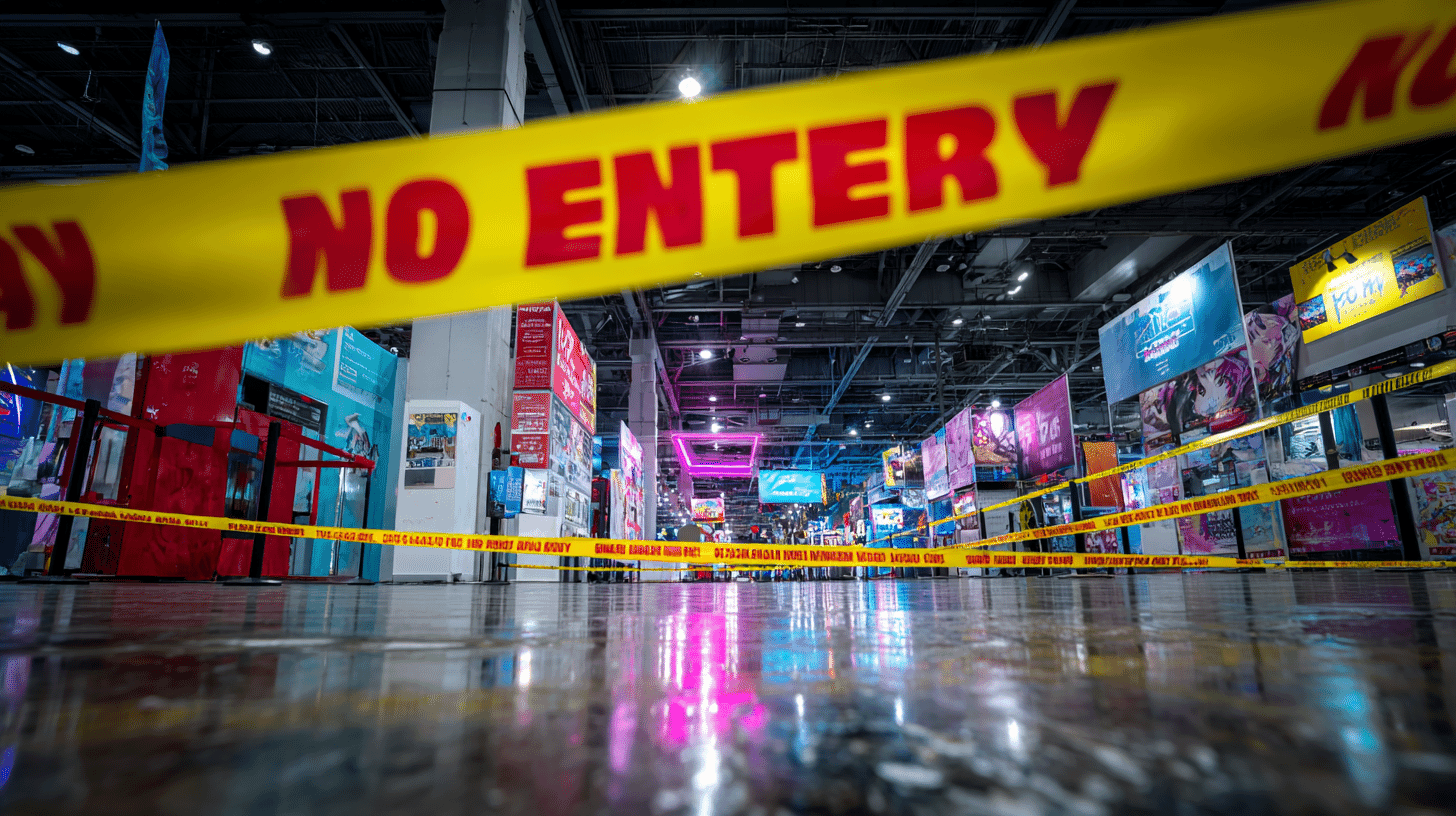
Detective Conan has been banned from anime events across China. Not because of anything in the show itself, but because it collaborated with My Hero Academia, a manga labeled as "insulting to China." That single partnership was enough to trigger cosplay bans, merchandise restrictions, and even prohibitions on traditional Japanese clothing at some venues. Here's what's happening at the intersection of anime and politics in China.
The Anniversary Collab That Started It All
On January 31, 2026, a special collaboration was announced to celebrate the 30th anniversary of the Detective Conan TV anime and the 10th anniversary of the My Hero Academia (MHA) TV anime. Conan creator Gosho Aoyama drew MHA protagonist Izuku Midoriya, while MHA creator Kohei Horikoshi drew Conan protagonist Edogawa Conan. A special promotional video was also released.
While fans in Japan largely celebrated the crossover, the reaction on Chinese social media platform Weibo was explosive, and furious.
Why My Hero Academia Is Considered "Anti-China"
The controversy traces back to 2020, when a character named "Shiga Maruta" appeared in My Hero Academia. This character was a villain, an evil doctor who conducted human experiments. The name "Maruta" drew immediate backlash in China and Korea because it evokes the codename used by Unit 731 of the Imperial Japanese Army during World War II. Unit 731 was a covert biological and chemical warfare research unit based in Manchuria (northeastern China) that conducted horrific human experiments on Chinese, Korean, and other prisoners. The victims were referred to as "Maruta" (meaning "logs" in Japanese), a dehumanizing term used to disguise the nature of the experiments.
MHA creator Horikoshi quickly apologized, stating there was no intentional reference. Publisher Shueisha also apologized and changed the character's name in the collected volumes. However, the damage in China was done. MHA was removed from Chinese streaming platforms, and people who cosplayed as MHA characters at events in China were physically attacked on multiple occasions.
"Guilt by Association": How Conan Got Caught in the Crossfire
The logic among Chinese critics was straightforward: "MHA insults China. Conan collaborated with MHA. Therefore, Conan is complicit."
Detective Conan's Chinese IP management company, a Shanghai-based firm (Shanghai Xinchuanghua Culture Development), issued a statement on January 31 saying the collaboration was led by the Japanese rights holders and "carries no stance or implication." But rather than calming the situation, this response was widely seen as evasive and insincere.
Jimu News, a media outlet under the Hubei provincial government, published an editorial condemning the collaboration as "ignoring the historical wounds and national sentiments of the Chinese people." The editorial stated that a beloved anime choosing to partner with a work already labeled as "anti-China" constituted a double betrayal, both of history and of fans' trust.
Event Bans Spread Nationwide
The backlash quickly moved from online anger to real-world restrictions.
On February 5, organizers of an anime event in Lanzhou, Gansu Province, announced that cosplay related to both Detective Conan and MHA would be prohibited. Merchandise display and sales were also banned. The organizers cited "historical issues that harm the feelings of the Chinese people" and extended the ban to include traditional Japanese clothing like kimono and wooden sandals (geta), as well as any attire associated with "militarism."
IJOY (Beijing International Animation Game Festival), one of northern China's largest anime events, similarly announced that its February 7–8 event would ban both franchises' cosplay and merchandise. Their statement referenced the need to "safeguard cultural security and ideological integrity, advocate correct historical views, and fulfill obligations as Chinese citizens."
The Bigger Picture: Japan-China Tensions and a Cultural Crackdown
The Conan controversy doesn't exist in isolation. Since late 2025, China has been tightening restrictions on Japanese anime, manga, and entertainment more broadly.
In December 2025, the theatrical run of "Demon Slayer: Infinity Castle" was abruptly cut short in China. Screenings of a remastered Detective Conan film and the latest Crayon Shin-chan movie were postponed indefinitely. Japanese singer Maki Otsuki was escorted offstage during a concert in Shanghai in November 2025.
In late December 2025, COMICUP, China's largest fan convention with roughly 7,000 booths, suddenly pivoted to a "New Chinese Style–only" format, effectively banning all Japanese anime and manga content. The shift came just days before the event and devastated exhibitors and cosplayers alike.
These restrictions coincide with rising political tensions. Japanese Prime Minister Sanae Takaichi's comments characterizing a potential Chinese attack on Taiwan as a "survival-threatening situation" prompted sharp diplomatic responses from Beijing. Entertainment and culture have become collateral damage in this broader geopolitical friction.
Japan's Reaction: Fatigue and a Wake-Up Call
On Japanese social media, the dominant responses range from dismissive ("If they don't like it, don't watch it") to exasperated ("Let's just stop exporting anime to China altogether").
However, some voices offer more nuanced analysis. An article in Toyo Keizai Online argued that while the backlash against Conan specifically feels like an overreaction, the sensitivity around Unit 731 is understandable given the real atrocities that occurred. The article drew parallels with similar controversies in Japan itself, such as the backlash against BTS for wearing a T-shirt depicting an atomic bomb, or criticism of a Japanese idol group for wearing Nazi-style uniforms.
From a business perspective, the incident has intensified an ongoing debate about Japan's entertainment industry's dependence on the Chinese market. When a single collaboration can cause an entire franchise to be blacklisted overnight, some industry observers argue it's time to reassess that dependence and diversify into other markets.
What About Your Country?
Is the politicization of anime and manga a phenomenon unique to China, or does something similar happen in your country? Have foreign entertainment products ever been restricted or boycotted for political reasons where you live? How do you think entertainment should navigate sensitive historical issues?
References
- https://www.recordchina.co.jp/b969658-s25-c30-d0052.html
- https://japantoday.com/category/national/detective-conan-faces-china-backlash-over-tie-up-with-contentious-manga
- https://www.globaltimes.cn/page/202602/1354600.shtml
- https://coki.jp/article/column/68127/
- https://toyokeizai.net/articles/-/933510
- https://www.dexerto.com/entertainment/chinas-largest-comic-convention-bans-anime-and-manga-including-cosplay-3297565/




Global Discussion
15 comments