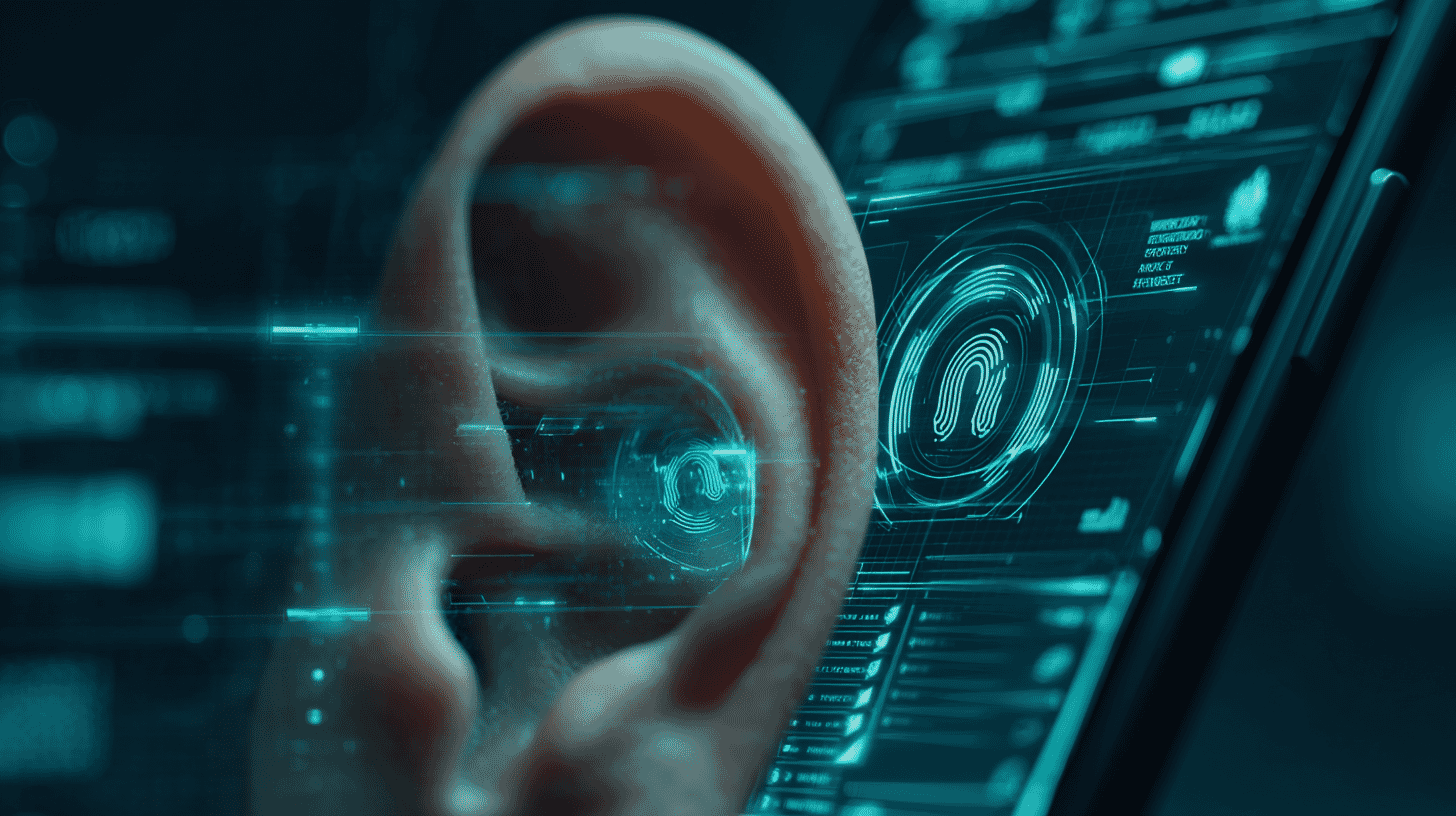
What if someone could secretly hear the answers through a tiny wireless earbud during an online test? Preventing exactly that is the aim of a new "ear scanning" technology.
On January 20, 2026, the Duolingo English Test (DET), accepted by more than 6,000 educational institutions worldwide, announced it was introducing "Ear Scan." The step is mandatory for every test-taker.
Why "Ear Scanning" Became Necessary
As online testing has become more common, cheating methods have grown more sophisticated. One major concern is the use of wireless earbuds. Modern earbuds have shrunk so much that they are virtually invisible to the naked eye. Test-takers have been caught hiding tiny devices deep in their ear canals to receive answers from accomplices outside the room.
In Japan, the 2022 Common University Entrance Test produced a national scandal when exam questions were relayed outside the room by smartphone mid-test. During the pandemic, when remote testing expanded rapidly, several South Korean universities saw reported cases of group cheating over calls and social media. For anyone administering an exam, this is no longer a problem that can wait.
How Duolingo's "Ear Scan" Works
The "Ear Scan" that DET has introduced requires all test-takers to scan both ears with their smartphone camera before the exam begins.
Test-takers first point the camera at one ear from a short distance, then bring the same ear closer for a second pass. This far-and-near scan is repeated for both ears.
The judgment is made by Duolingo's own technique, combining machine learning with sensors built into the smartphone, looking for earbuds or listening aids concealed in the ear. Because the design doesn't depend on a particular handset, the company says the same standard holds whatever device a candidate uses.
Ear Biometrics: As Unique as Fingerprints
Like fingerprints, the shape of the ear varies from person to person, and it has long been studied as a biometric identifier.
In March 2016, NEC, working with Nagaoka University of Technology, announced "ear acoustic authentication." A microphone-equipped earphone sends sound toward the ear canal and identifies the person from the characteristics of the reflection. NEC puts it at over 99% accuracy in roughly one second. The canal runs two to three centimeters from opening to eardrum, and the fine irregularities along its wall differ enough between people to serve as a signature.
Because it reads information from inside the body, it is hard to spoof. Since masks made facial recognition awkward during the pandemic, ear biometrics has drawn attention as an identity-verification option.
That said, DET's Ear Scan is not built for identity verification. Its sole purpose is to detect, from the camera image, whether a device is hidden inside the ear.
Multi-Layered Security for Online Testing
Beyond Ear Scan, the DET layers several other measures into a comprehensive defense.
First, there is a dual AI-and-human proctoring system. AI analyzes the test video to flag suspicious behavior, and human proctors then review whatever gets flagged. Eye movement and unusual sounds are among the signals it watches for.
Second, the test is adaptive. Drawing on a database of more than 45,000 questions, it adjusts what appears in real time based on each response, so no two tests are alike. That cuts the risk of leaked questions or pre-planned cheating.
Third, a required secondary camera and a 360-degree room scan monitor the whole testing environment. Test-takers must position their camera so that their keyboard, screen, and upper body are visible.
Adoption in Japan and Impact on University Admissions
DET scores are accepted by a number of Japanese universities, among them the University of Tsukuba, International Christian University and Ritsumeikan University. In September 2025 Duolingo announced a full push into the Japanese market, offering domestic universities up to 100,000 free test administrations over the following five years.
The fee is US$70, roughly a tenth of a Japanese university's typical application costs and less than half of TOEFL or IELTS. Candidates test from home at any hour and receive results within 48 hours, with no charge for sending scores.
Policy has been moving too. In November 2025, the education ministry's working group on comprehensive English assessment in university admissions took up the anti-cheating measures of each testing body at its fifth meeting. Duolingo announced that same month that it had joined the group.
The Technology-vs-Cheating Arms Race
Ear Scan illustrates a simple bind: when the methods change, the countermeasures have to change with them. Duolingo says it is also working on detecting deepfakes and cheating assisted by generative AI.
The value of online testing lies in removing geographic and economic barriers to sitting an exam. That value holds only as long as the resulting scores are believed. Asking candidates to film the inside of their ears is one of the costs of keeping that condition intact.
In Japan, there's ongoing debate about preventing cheating in online exams. What about in your country? How are online tests and biometric security measures handled where you live? We'd love to hear about it.









Global Discussion
15 comments