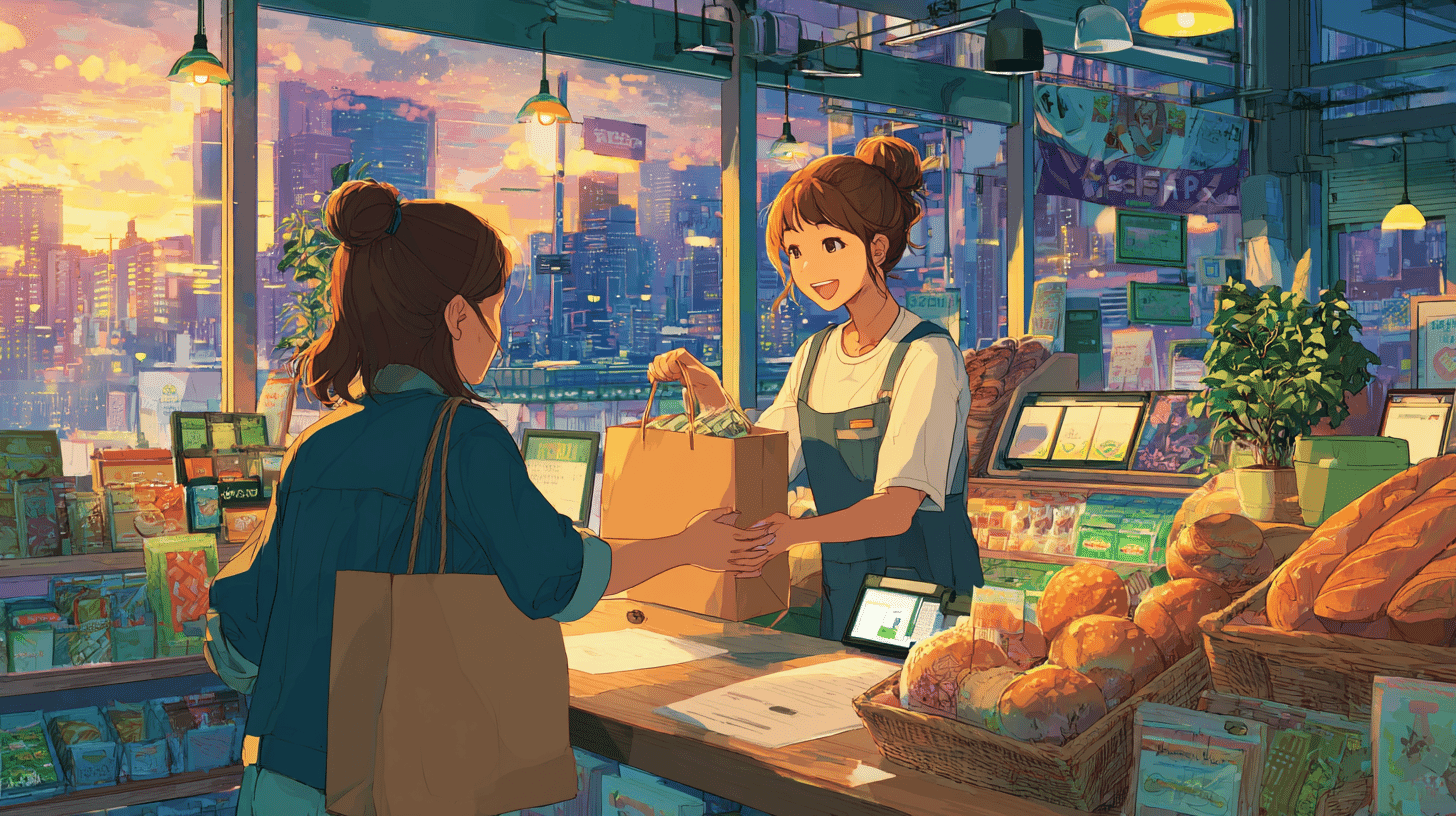
In Japan, the equivalent of one rice ball of food per person is thrown away every day. The world's largest food waste reduction app, used by 120 million people, has now arrived in Japan. Can its Surprise Bags of leftover food at half price or less change how food waste is handled?
World's Biggest Food Waste App Makes Historic Japan Debut
On January 28, 2026, Denmark-born food waste reduction app "Too Good To Go" launched its services in Japan. Having already operated in 20 countries worldwide and helped prevent over 500 million meals from being wasted, this marks the company's first expansion into Asia.
The service initially covers Tokyo's Shinjuku, Shibuya, and Meguro districts, with over 80 partner stores including household names like Krispy Kreme Doughnuts, FamilyMart, and NewDays, as well as local favorites like the Instagram-famous "Dream On."
The Revolutionary "Surprise Bag" Model
Too Good To Go's standout feature is its "Surprise Bag" format, a unique approach to selling surplus food.
Partner stores pack leftover food items into bags sold at half the regular price or less, similar to a Japanese fukubukuro (lucky bag). The catch? You don't know exactly what's inside until you open it. This element of surprise and anticipation has become one of the key reasons for the app's global success.
Using the app is simple:
- Find nearby stores - Search participating locations on the map. Japan gets an exclusive "station name search" feature
- Reserve and pay for your Surprise Bag - Check pickup times and book
- Pick up at the designated time - Just show your smartphone screen at the store
A bakery's Surprise Bag, for example, might include 4-5 items, sweet pastries, savory bread, for around ¥1,000 (roughly $7 USD). Some bags offer discounts of up to 70% off retail prices.
Why Japan? The "Mottainai" Connection
Too Good To Go Japan cites the natural alignment with Japan's "mottainai" philosophy as a key reason for choosing this market.
"Mottainai," a uniquely Japanese concept expressing regret over waste, resonates strongly with the company's "win-win-win" business model that benefits consumers, stores, and society. Combined with Japan's massive food service and retail market ripe for transformation, these factors made Japan the clear choice for Asia's first launch.
The Japanese tagline "Oishii Sentaku" (Delicious Choice) encapsulates this vision, choices that are delicious for your taste buds, your wallet, and the environment.
Japan's Serious Food Waste Problem
According to Japan's Ministry of the Environment, food loss in fiscal year 2023 totaled approximately 4.64 million tons. That translates to about 37 kg per person annually, or roughly one onigiri (rice ball) worth of food thrown away every single day.
To put this in perspective, this figure is 1.3 times the amount of food aid sent to people suffering from hunger worldwide (3.7 million tons). The scale of edible food being discarded is staggering.
Furthermore, food waste accounts for approximately 10% of global greenhouse gas emissions, four times the aviation industry's total output. Reducing food loss isn't just an ethical imperative; it's an environmental emergency.
The Japanese government has set targets aligned with the UN Sustainable Development Goals: a 60% reduction in commercial food waste and 50% reduction in household food waste by 2030 (compared to 2000 levels). While progress is being made, 2.31 million tons from businesses and 2.33 million tons from households in 2023, more action is needed.
FamilyMart Partnership: Combining Forces with "Teary-Eyed Stickers"
A particularly noteworthy development is FamilyMart's pilot program with Too Good To Go.
FamilyMart has launched a partnership across 6 Tokyo stores, combining the app with their "Famima Eco Discount (Teary-Eyed Sticker)" campaign that began nationwide in March 2025.
These "Teary-Eyed Stickers" feature a crying character with the message "Please help me" on discounted items, a creative approach to lowering the psychological barrier to purchasing marked-down products. Combined with other initiatives, store waste has decreased by approximately 5% year-over-year, with projected annual reductions of around 3,000 tons.
On Too Good To Go, FamilyMart uniquely offers both Surprise Bags and individual "Teary-Eyed Sticker" items. The app will even be used for ehomaki (traditional Setsubun sushi rolls) sales.
How It Differs from Japan's Existing "TABETE" Service
Japan already has "TABETE," a similar service that launched in 2018. The key difference lies in their approach:
| Feature | Too Good To Go | TABETE |
|---|---|---|
| Format | Surprise Bag (contents unknown) | Individual items (you choose) |
| Pricing | Half price or less | Set by each store |
| Coverage | Global (21 countries) | Japan only |
While not being able to choose items might seem like a disadvantage, behavioral economics recognizes the "surprise effect", uncertainty actually increases purchase motivation and satisfaction. The "What's in today's Surprise Bag?" social media posts have driven organic growth, helping power the app's expansion to 21 countries and 120 million users.
The Business Logic: Why Stores Sell at Half Price
There's sound economic reasoning behind stores willingly selling at steep discounts.
The concept of "sunk costs" explains this phenomenon. The cost to make bread or prepared meals has already been incurred regardless of whether items sell. At closing time, unsold products face two options: disposal (which costs money and generates zero revenue) or sale through Too Good To Go.
Even at half price, the store generates revenue while eliminating disposal costs. The rational calculation is clear: selling beats throwing away every time.
Additionally, food waste reduction initiatives boost companies' ESG (Environmental, Social, Governance) credentials and appeal to increasingly sustainability-conscious consumers.
A Certified "B Corp" Social Enterprise
Too Good To Go holds B Corp certification, an international recognition for companies demonstrating high standards of social and environmental performance.
The company now operates in 21 countries across Europe, North America, and Asia-Pacific, with over 120 million registered users and 180,000+ partner stores. Global partners include major brands like Starbucks, McDonald's, IKEA, Domino's Pizza, and PAUL.
While currently limited to parts of Tokyo, nationwide expansion is anticipated. The combination of "excitement opening a Surprise Bag" and "satisfaction knowing you're helping the planet" may be this service's true appeal.
What food waste reduction initiatives exist in your country? Have you used apps or services that let you purchase surplus food?






Global Discussion
18 comments