🏆 Hakuho, the greatest yokozuna in sumo history with a record 45 championships, has left the Japan Sumo Association.

His stable was shut down over a disciple's violence scandal, with no timeline for reopening after more than a year. When Hakuho hinted at future cooperation, saying "My turn will come in 10 or 15 years," Chairman Hakkaku kept his distance: "Our role is to guide amateur sumo." With Toyota chairman Akio Toyoda as his backer and a "World Sumo Grand Slam" vision, what winds of change will this legendary champion bring to the tradition-bound world of sumo?

Why Hakuho Left the Japan Sumo Association

On June 9, 2025, former yokozuna Hakuho Sho (40) officially resigned from the Japan Sumo Association (JSA). The departure of sumo's all-time greatest champion—holder of records for most career wins (1,187) and most top-division championships (45)—sent shockwaves through the sumo world.

The immediate trigger was a violence scandal that erupted in February 2024 involving his disciple Hokuseiho, who had assaulted junior wrestlers at Miyagino Stable. As the stablemaster, Hakuho was held responsible for failing to properly address the situation. He was demoted two ranks from committee member to ordinary elder, with a 20% salary reduction for three months. More significantly, Miyagino Stable was closed indefinitely, and Hakuho along with all his wrestlers were transferred to Isegahama Stable.

Despite spending over a year under the supervision of Isegahama-oyakata (former yokozuna Asahifuji), working toward the stable's restoration, no concrete timeline was ever provided. At his press conference, Hakuho stated: "The biggest reason for my resignation was that there was no specific deadline—it just kept getting pushed back."

"My Turn Will Come in 10 or 15 Years"

In January 2025, prior to his departure, Hakuho gave a revealing interview to the Asahi Shimbun newspaper about his potential future relationship with the JSA.

When asked "Will the day come when you work hand-in-hand with the Japan Sumo Association again?", Hakuho smiled and answered: "I love sumo. The sumo world won't always have good times. In 10 years, or maybe 15 years, I think my turn will come."

This statement suggests that Hakuho does not seek a complete break with the association, but rather envisions future collaboration.

Chairman Hakkaku's Response: "Our Role Is to Guide Amateur Sumo"

When a Weekly Post reporter asked JSA Chairman Hakkaku (former yokozuna Hokutoumi, 62) about Hakuho's comments, he first said, "I haven't seen [the article], so I can't really say..." before adding: "Our role is to guide amateur sumo."

When pressed further about whether this meant the JSA was already cooperating with the Japan Sumo Federation (which oversees amateur sumo), he replied vaguely: "I wonder if they're holding tournaments this year... I think everyone is working hard on high school tournaments and middle school tournaments."

Notably, Chairman Hakkaku made no mention whatsoever of any intention to work alongside Hakuho. This response clearly indicates the JSA's cautious—perhaps even cold—stance toward future cooperation with the former champion.

The World Sumo Grand Slam Vision

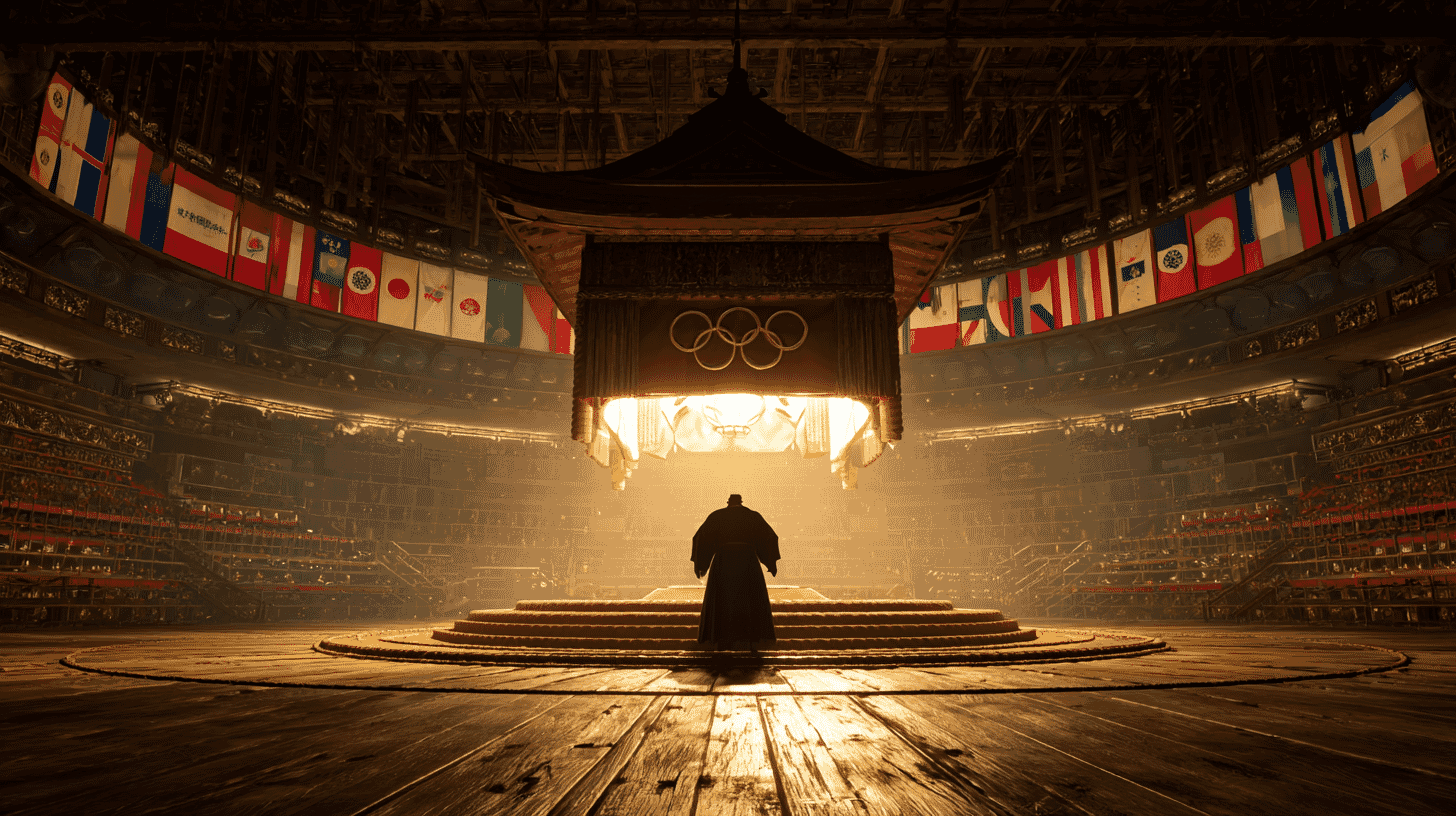
At his retirement press conference, Hakuho unveiled his "World Sumo Grand Slam" concept. This project aims to develop the international Hakuho Cup children's sumo tournament, which he founded during his active career, into a global initiative promoting amateur sumo with the ultimate goal of Olympic inclusion.

On June 14, 2025, he announced the establishment of "Hakuho Dayan Sumo & Sports Co., Ltd." to advance this vision. The company name "Dayan" comes from Dayan Khan, the 16th-century hero who unified Mongolia and is an ancestor of Hakuho.

The project has powerful backing. Toyota Motor Corporation Chairman Akio Toyoda has pledged full support for Hakuho, and around the same time became the new chairman of the Japan Sumo Federation, which oversees domestic amateur sumo.

The next Hakuho Cup is scheduled for February 2026 and will, for the first time, include women's and adult divisions. Hakuho explained: "Without gender equality, we can't achieve Olympic status."

Growing Concerns Among Sumo Elders

While the JSA has officially maintained a wait-and-see approach to Hakuho's plans, anxiety is spreading among sumo elders behind the scenes.

One young stablemaster in his 30s expressed concern: "Regardless of sumo skill or technique, former wrestlers receive a certain income just for being 'former wrestlers.' If promising high school and college sumo athletes see they can earn a stable income by joining this new sumo venture, they might choose that path instead."

Others point out that Hakuho's deep understanding of professional sumo's traditions and customs means he knows exactly what to change and how. One sumo insider admitted: "If he makes the matches more entertaining and the wrestlers' skill level rises, we could lose fans and wrestlers to his organization."

The Exodus of Grand Champions

With Hakuho's departure, six of the eleven wrestlers who reached yokozuna rank and retired since 1989 have now left the JSA. Akebono, Takanohana, Wakanohana, Asashoryu, Harumafuji, and now Hakuho—together, these six won a combined 117 championships during their careers, dwarfing the 30 titles won by the four who remained with the association.

A journalist who covered Hakuho for many years noted: "The main attractions who carried sumo's banner keep disappearing one after another. Isn't that a cause for concern?"

Between Tradition and Reform

Whether Hakuho's "World Sumo Grand Slam" will coexist harmoniously with professional sumo or become a competitor remains to be seen.

At his press conference, Hakuho expressed his philosophy: "I believe sumo's appeal lies in its ability to eliminate discrimination, prejudice, and conflict—to deliver hope to the world." What changes will history's most accomplished champion bring to sumo from outside the ring? Will his "turn" really come in 10 or 15 years?

In Japan, sumo is not merely a sport but a treasured traditional culture with deep connections to Shinto religious ceremonies. In your country, what discussions exist about internationalizing traditional martial arts or sports? And when legendary athletes clash with their governing organizations, how are such conflicts typically resolved? We'd love to hear about your country's experiences!
References

Reactions in Japan

Considering Hakuho's achievements, the JSA's treatment is too cold. Forcing out a grand champion who won 45 times like this is a huge loss for the sumo world

I agree 0
I disagree 0

Wait, it's a fact that he ignored his disciple's violence problem. He should take responsibility as a stablemaster. We need to look at this calmly, not just with sympathy

I agree 0
I disagree 0

Chairman Hakkaku's 'I haven't seen the article' comment is such an obvious dodge lol. The JSA probably can't openly state how they'll deal with Hakuho

I agree 0
I disagree 0

If the World Sumo Grand Slam actually happens, it'll be interesting. Professional sumo needs to feel threatened and change, or young aspiring wrestlers might go that way instead

I agree 0
I disagree 0

The dream of making sumo an Olympic sport is great, but how do you reconcile that with traditions like not allowing women on the dohyo? Is starting a women's division in the Hakuho Cup the first step?

I agree 0
I disagree 0

Akebono, Takanohana, Asashoryu, Harumafuji, and now Hakuho... So many yokozuna since Heisei leaving the JSA is abnormal. There must be something wrong with the organization

I agree 0
I disagree 0

Having Toyota's Chairman Toyoda backing him is powerful. With that kind of funding, he might actually pull off world tournaments

I agree 0
I disagree 0

Honestly, I remember Hakuho being criticized for his slaps and elbow strikes as not befitting a yokozuna. The deterioration of his relationship with the JSA probably started back then

I agree 0
I disagree 0

Saying his turn will come in 10-15 years means he'll help when the JSA gets in trouble, right? Can't tell if it's sarcasm or serious

I agree 0
I disagree 0

I'm a parent who sends my child to Hakuho Cup every year. Hakuho is really kind to children, and I'm happy he'll continue these activities

I agree 0
I disagree 0

The story that he refused even after Isegahama-oyakata tried multiple times to keep him shows how much distrust he had. The internal atmosphere must have been really bad

I agree 0
I disagree 0

Is it true that he bought land in Nihonbashi for 1.6 billion yen to build a stable but the JSA stopped the construction? If so, that's going too far

I agree 0
I disagree 0

Since sumo has religious ritual aspects, there are limits to globalization. To aim for the Olympics, wouldn't you have to separate the religious elements?

I agree 0
I disagree 0

Hakuho said young stablemasters can't speak freely because of seniority - that's the same problem every Japanese company has. It's not just the sumo world

I agree 0
I disagree 0

Wouldn't Hakuho have been able to reform things better from inside the JSA? I think changing from within is faster than doing something from outside

I agree 0
I disagree 0

Some say he's being discriminated against because he's from Mongolia, but Terunofuji is doing fine as yokozuna. I don't think it's about foreign discrimination

I agree 0
I disagree 0

He said he has no regrets, but his true feelings showed when he said he wanted to watch his disciples become yokozuna and ozeki up close. Must have been complicated emotions

I agree 0
I disagree 0

In the end, whether professional sumo can continue depends on having new wrestlers. With new recruits declining, Hakuho's new organization could become a real threat

I agree 0
I disagree 0

Voices from Around the World

James O'Brien

45 championships is phenomenal. It's sad when the greatest athlete in any sport clashes with the organization. Similar things happen in the NFL. Legends always seek innovation, and conservative organizations fear it

Sophie Laurent

Making sumo an Olympic sport is an interesting idea. But as a French person, there's criticism that judo lost its original spirit when it became Olympic. Internationalizing traditional sports is a double-edged sword

Chen Wei

China also has traditional wrestling similar to sumo. If Hakuho's global vision succeeds, it might be possible to have tournaments integrating traditional martial arts from across Asia. It's an exciting prospect

Kim Tae-young

Korean ssireum faces similar challenges. It's really hard to internationalize while preserving tradition. I'm watching Hakuho's challenge with interest

Michael Schmidt

As a German, I've been interested in Japanese sumo for years. The conflict between organizational conservatism and individual innovation is universal. Hakuho initiating change from outside might be the right choice

Emily Watson

English cricket also has a history of struggling between tradition and reform. There was much opposition to T20, but it ultimately revitalized the sport. Sumo shouldn't be too afraid of change

Marco Rossi

I'm Italian but I've been to see sumo in Japan. The mystique of sumo is wonderful, but there's much that's hard for foreigners to understand. I'd be happy if Hakuho's activities can bridge that gap

Liam Murphy

In Australia, mixed martial arts are popular. Globalizing sumo is very welcome. I hope there are more opportunities to experience it firsthand

Anna Petrova

Russia has sumo clubs too, and I know athletes who participated in the Hakuho Cup. His activities already have international impact. That influence won't change even after leaving the JSA

Carlos Mendez

In Mexico, lucha libre is a national sport that spread worldwide while preserving traditional rules. Sumo can do the same. I support Hakuho's challenge

Henrik Larsson

As a Swede, I find it interesting that Toyota's Chairman Toyoda is backing him. Corporate sponsorship accelerating sports internationalization is common. Dreams are easier to achieve with funding

Priya Sharma

India has kushti, traditional wrestling with many similarities to sumo. This could be an opportunity for Asian traditional martial arts to gain global recognition

David Williams

I'm Canadian and interested in Japanese culture, including sumo. The story of an athlete leaving an organization to forge a new path is inspiring. Looking forward to seeing how it turns out in 10 years

Fatima Al-Hassan

I live in the UAE, and interest in Japanese culture is growing in the Middle East. If a sumo event was held in Dubai, I'd definitely go. Looking forward to Hakuho's global vision

Thomas Andersen

In Norway, we often debate balancing preservation and modernization of traditional sports. Hakuho's approach seems to aim for both. Wishing him success

Rachel Cohen

As an Israeli martial arts fan, I have deep respect for sumo. However, the rule preventing women from entering the ring is hard to understand internationally. I hope Hakuho can break down that barrier