🏛️ A 117-year-old prison once called "Japan's Most Beautiful Jail" is being transformed into an ultra-luxury hotel starting at $1,000/night. Each suite is created by connecting nine solitary confinement cells. On June 25, 2026, Japan's first "prison hotel" opens its historic doors for an unprecedented hospitality experience.

A Meiji-Era Masterpiece Reborn After 117 Years

On June 25, 2026, Japan's first "prison hotel" will open in Nara Prefecture. HOSHINOYA Nara Prison, operated under Hoshino Resorts' most prestigious brand, will transform the Former Nara Prison—built in 1908 during the Meiji era—into a world-class luxury hotel.

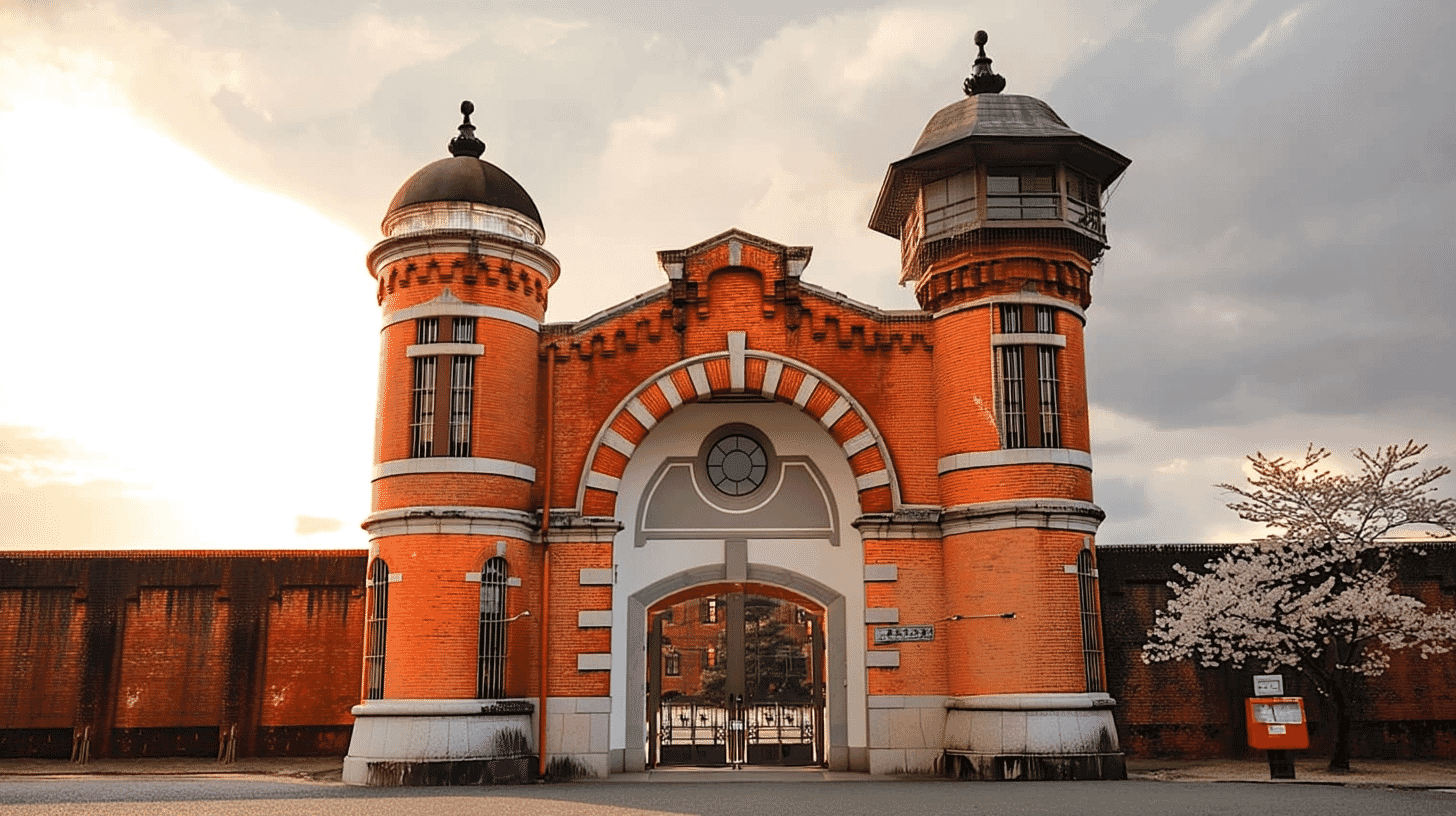
The Former Nara Prison is one of the "Five Great Prisons of Meiji," constructed as part of Japan's rapid modernization efforts. Of the five prisons built in Chiba, Kanazawa, Nara, Nagasaki, and Kagoshima, only Nara's remains intact. It was designated as an Important Cultural Property of Japan in 2017, representing a rare surviving example of Meiji-era institutional architecture.

Why Did Meiji Japan Build "Beautiful" Prisons?

During the Edo period (1603-1868), Japan relied on corporal punishment such as flogging. However, the Meiji government needed to modernize its justice system to renegotiate the unequal treaties with Western powers. Adopting Western-style prison systems became essential to demonstrating Japan's status as a civilized nation.

The prison was designed by Keijiro Yamashita, a Ministry of Justice architect who traveled to eight countries in Europe and America, inspecting approximately 30 prison facilities before creating his plans. He implemented the "Haviland System"—a radial design where five cellblocks extend from a central watchtower, allowing a small number of guards to monitor the entire facility efficiently.

The Romanesque-style red brick building was constructed using bricks manufactured by the inmates themselves as part of their prison labor. Most of the construction work was also performed by prisoners.

Unique Suites Created from Connected Solitary Cells

The most distinctive feature of HOSHINOYA Nara Prison is its room design. Each suite is created by connecting 9-11 solitary confinement cells, each measuring approximately 54 square feet (5㎡). The 48 guest rooms feature a continuous layout where the bedroom flows into the living area and bathroom—a truly unique configuration only possible in a former prison.

Hoshino Resorts CEO Yoshiharu Hoshino explains: "The original solitary cell doors remain completely intact. When you enter, you can still sense where the divisions were—it creates this strange sensation of a luxurious room that still feels like a cell."

Room rates start at ¥147,000 (approximately $1,000) per night, including tax and service charges, with meals available separately. Check-in is at 3:00 PM and check-out at 12:00 PM.

"Not a Prison Hotel, but Staying in Cultural Heritage"

General Manager Nobaya Kakegawa of HOSHINOYA Nara Prison explains the concept:

"The word 'prison' might conjure images of a provocative experience, but this is not a prison hotel. It's a luxury hotel utilizing a national Important Cultural Property that happens to be a former prison."

The hotel's concept is "Dawn of Cultural Heritage." The logo incorporates an hourglass design, symbolizing how this building that counted over 100 years as a prison now begins counting time anew.

Nara Prison Museum Opens First

Preceding the hotel opening, the "Nara Prison Museum by Hoshino Resorts" will open on April 27, 2026. This facility will be accessible to day visitors without hotel reservations, with the concept "Questions from a Beautiful Prison."

The museum consists of three exhibition wings: Wing A covers "History and Architecture," Wing B presents "Body and Mind" from the inmates' perspective, and Wing C features "Prison and Society" with works by international artists.

The art direction comes from Taku Satoh, known for designing packaging for major Japanese products like Lotte's Xylitol gum and Meiji's milk. Museum designer Adrien Gardère, whose credits include the Louvre-Lens museum, serves as museography supervisor.

Prison Hotels Around the World

Converted prison hotels are actually quite common internationally:

  • The Liberty Hotel (Boston, USA) - An 1851 prison transformed into a luxury hotel in 2007
  • Malmaison Oxford (UK) - An 11th-century castle used as a prison from the 18th century, now a boutique hotel
  • Four Seasons Sultanahmet (Istanbul, Turkey) - A century-old prison converted to a luxury hotel
  • Best Western Premier Katajanokka (Helsinki, Finland) - A former political prison now a Nordic modern hotel

However, operating a luxury hotel within a nationally designated Important Cultural Property of this scale is exceptionally rare worldwide.

Location and Access

HOSHINOYA Nara Prison is located about 13 minutes by bus from Kintetsu Nara Station, then a 6-minute walk from Hannya-ji bus stop. It's also approximately 13 minutes on foot from Todai-ji Temple, a UNESCO World Heritage Site.

The location is accessible from both Osaka and Kyoto in about one hour, positioning it well for international tourism following Expo 2025 Osaka.

Mixed Reactions to "Prison as Hotel" Concept

Japanese social media has been buzzing with anticipation: "You can stay there without committing a crime!" "I can experience life as a prisoner!" "I definitely want to go!" However, some express concern: "Staying in a building where inmates' resentment has accumulated over decades..."

CEO Hoshino acknowledges: "Some people might find it scary, but many are interested in the architecture or simply want to experience staying there." He expresses confidence in providing historical building value as an experiential offering.


Japan is pioneering a new form of tourism: experiencing history by staying overnight in it. How does your country utilize former prisons and historic buildings? Would you want to stay in a prison hotel? We'd love to hear your thoughts and perspectives from around the world.

References

Reactions in Japan

It's already a miracle that this Meiji-era brick building wasn't demolished, but it got designated as Important Cultural Property AND you can stay there? As an architecture nerd, I'm tearing up. You can actually walk through the Haviland System's radial layout yourself!

I agree 0
I disagree 0

150,000 yen per night... to stay in a cell... 150,000 yen... Well, they connected 9 cells so that's about 16,000 per cell... wait, that's not the point

I agree 0
I disagree 0

As a local, I have mixed feelings... This place has been known as 'Nara Juvenile Prison' for years. But I guess it's better to preserve it through utilization than let it decay. It's walking distance from Todai-ji, so maybe it'll boost tourism.

I agree 0
I disagree 0

HOSHINOYA doing a prison concept is so bold, I love it 💕 I've stayed at Bali, Kyoto, and Karuizawa but I'm definitely booking this one. How many chances do you get to sleep in a Cultural Property? June 25th is starred on my calendar!

I agree 0
I disagree 0

Luxury stay in a former juvenile prison... Thinking about what the inmates went through here makes me feel uncomfortable. Is it okay to consume this as entertainment?

I agree 0
I disagree 0

What if my boss suggests the company trip should be to the prison hotel... Actually, since I'm already in the prison called 'office' every day, a real prison might be better (dead eyes)

I agree 0
I disagree 0

I've photographed the old Nara Prison many times before renovation. That unique atmosphere, light streaming through high ceilings, brick texture... How much will remain after it becomes a hotel? Looking forward to the museum section.

I agree 0
I disagree 0

As a former Ministry of Justice employee: Private utilization of correctional facilities is a global trend, but this is Japan's first attempt. Given the enormous maintenance costs, if this becomes a model case for preservation through tourism revenue without relying on taxes, it would be significant.

I agree 0
I disagree 0

Wait, can we play escape games??? Probably not lol But I wanna stay with friends and be like 'which prison uniform should I wear today~?' www It's definitely gonna go viral

I agree 0
I disagree 0

Former prison sites tend to have... um... various things happening... If you hear footsteps in the corridor at night or knocking on doors... maybe it's for people who can dismiss it as 'atmosphere'...

I agree 0
I disagree 0

Wonder if it works as a wedding venue... 'Let's be imprisoned together forever' kind of vibe? No wait, that's bad luck. But it is photogenic. Wedding dress in the brick corridor... maybe it works...?

I agree 0
I disagree 0

Academically fascinating as a fusion of dark tourism and luxury tourism. How to turn 'negative heritage' into tourism resources - I want to do comparative research with prison hotels worldwide. Time to write a paper.

I agree 0
I disagree 0

Keijiro Yamashita designed this after inspecting over 30 prisons in Europe and America. Japan needed to show 'we're a proper rule-of-law nation' to revise the unequal treaties. That spirit is embedded in every single brick.

I agree 0
I disagree 0

Did you know the designer was the grandfather of jazz pianist Yosuke Yamashita? He also served as chairman of the 'Association for Treasuring the Former Nara Prison.' Must be an artistic bloodline.

I agree 0
I disagree 0

This facility has a long history of educational rehabilitation for juvenile offenders. They even had classes where inmates wrote poetry as prison work. I hope the museum properly conveys this history and significance, not just the glamorous hotel part.

I agree 0
I disagree 0

I worked at that facility for over 30 years. I was sad when they decided to close it, but I'm deeply moved that it will remain in a different form. I've made a promise with former colleagues to visit when it opens.

I agree 0
I disagree 0

Apparently the museum allows day visits, so maybe I'll just do that... but wonder how much admission is. They're serving curry bread and cheesecake at the cafe, but that's probably expensive too, right?

I agree 0
I disagree 0

Taku Satoh is the art director!? Super curious about the museum logo and merchandise. Will it be simple and cool like Xylitol gum? Can't wait for the shop.

I agree 0
I disagree 0

Voices from Around the World

Thomas Anderson

I've stayed at the Liberty Hotel in Boston, but Japan's prison hotel is a Cultural Property. That's a different level of historical significance than American converted prison hotels. Meiji era is early 1900s, right? Amazing that building still stands.

Sophie Martin

$1,000/night seems excessive? Even luxury hotels in Paris don't charge that much. But the experience of 'staying in a Cultural Property' is truly one-of-a-kind. I wonder if Japanese have a culture of paying for historical preservation.

James Robertson

I've stayed at Malmaison Oxford. The rooms made from connected cells had ceiling arches showing original divisions - quite interesting. Wonder if Japan's will be similar. From the red brick photos, it has a vibe similar to British prisons.

Lena Müller

In Germany, how to handle 'negative heritage' is extremely sensitive. Was there no ethical debate about turning a prison into a luxury hotel? I wonder how former inmates and their families feel about this.

Kim Min-jun

As a Korean, Japanese prisons remind me of colonial times. But this was built in Meiji era for Japanese, and I acknowledge its architectural value. Korea also has examples of converting Japanese colonial buildings into tourist facilities.

Maria García

Spanish architect here. The Haviland System's radial design is a masterpiece of prison architecture. Reminds me of Foucault's 'Discipline and Punish.' Staying in a panopticon-like surveillance space seems philosophically fascinating.

Lucas Oliveira

Considering Brazil's overcrowded prisons, I'm amazed that Japan's Meiji-era prison was designed so beautifully. Did they have human rights awareness back then? Or was it to impress the West? Either way, fascinating.

Emma Wilson

As an Australian, convict history is part of our national identity. Port Arthur in Tasmania is a World Heritage Site. I think it's a good approach that Japan isn't hiding 'negative history' but including a museum alongside.

Chen Wei

From a Chinese perspective, Japan is good at repurposing old buildings. In China, we tend to rebuild. But turning a prison into a hotel feels a bit uncomfortable. Wonder how it is in terms of feng shui.

Alessandro Rossi

Italy has many hotels in old buildings, but no prison hotels. I didn't know the 'HOSHINOYA' brand, but from the photos, the design sense is wonderful. Italians would probably like it.

Anika Patel

I work in India's tourism industry. Japan's hospitality quality is famous. If they can provide luxury experience even with prison material, that's impressive. India has many historical buildings too, so I'd like to learn from this.

Henrik Svensson

Swedish here. Stockholm also has Långholmen prison hotel. But Japan's combination of 'Cultural Property' and 'luxury' is new. Nordic ones are relatively casual in comparison.

Rachel Green

Canadian here. Ottawa has a jail hostel too, but it's famous for being haunted... lol. Japan's looks bright and clean so maybe it's okay? The red brick is beautiful, I'd like to stay there once.

Fatima Al-Hassan

In Dubai, new luxury hotels keep being built, but we don't have the concept of utilizing 100+ year old buildings like Japan. Protecting cultural heritage while making it a tourism resource is a smart approach.

Michael O'Brien

Ireland also has former prisons as tourist sites (Kilmainham Gaol). But you can't stay there. Japan's approach is bold, but probably effective for building preservation.

Yuki Tanaka

Japanese-Kiwi living in New Zealand. Every time I visit Japan, there are new tourist spots. Prison hotel will be hard to explain to foreign friends lol, but it's an innovative idea typical of Japan.