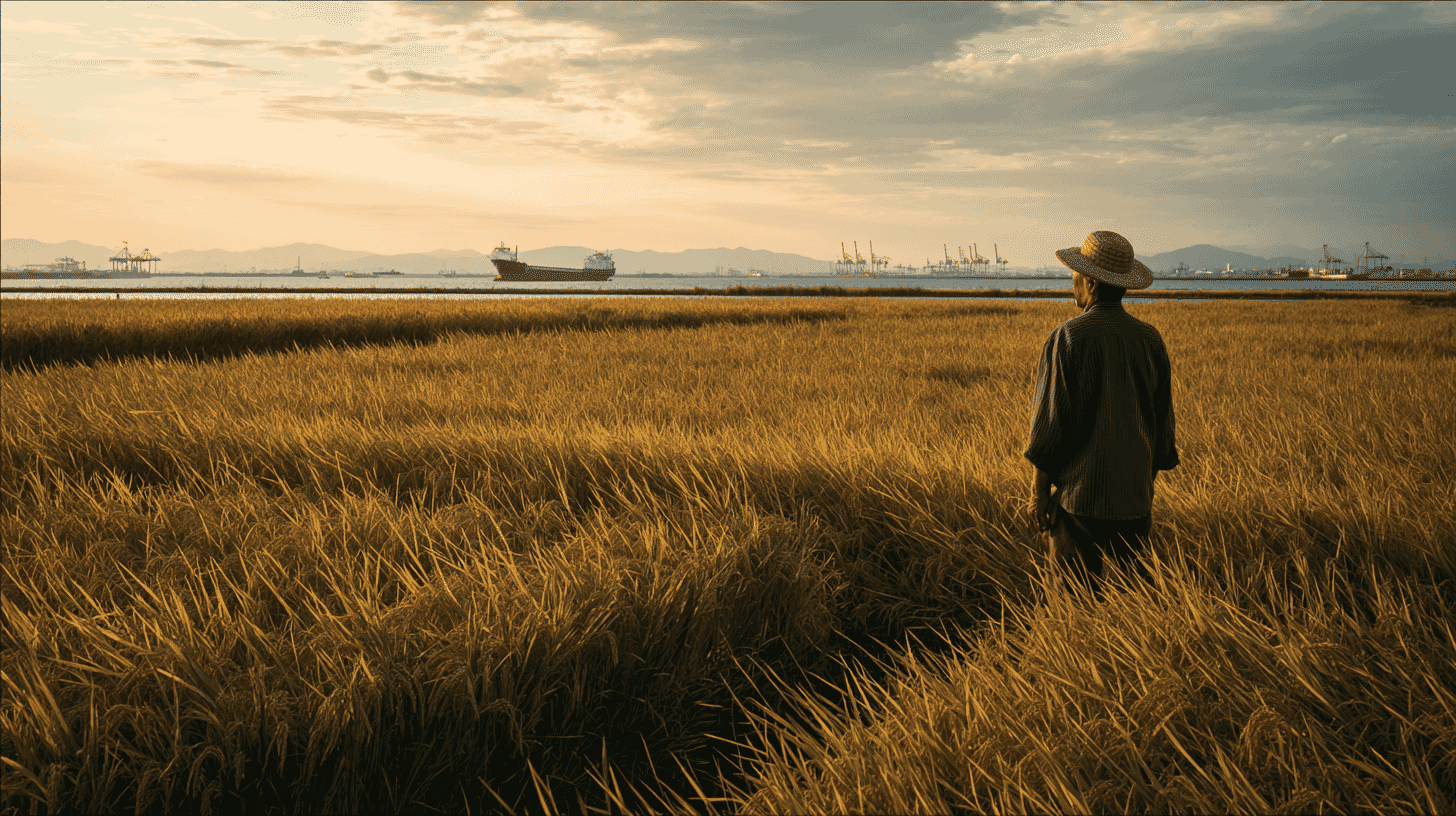
In 2025, Japan's rice imports underwent a dramatic transformation. Private rice imports surged from just 1,000 tons the previous year to over 96,000 tons, an extraordinary 95-fold increase. Even after paying tariffs of 341 yen per kilogram, imported rice became cheaper than domestic rice. How did this price inversion happen? This article explores the "Reiwa Rice Crisis," the forces behind the price surge, and what it means for Japan's food supply and agriculture.
The 95x Shock: Why Private Imports Exploded
According to trade statistics released by Japan's Ministry of Finance on January 29, 2026, private rice imports reached 96,834 tons in 2025, up from 1,015 tons the year before, a 95.4-fold increase and the highest since the current system began in 1999.
Normally, Japan's rice imports are dominated by Minimum Access (MA) rice under government trade agreements, with approximately 770,000 tons imported tariff-free annually. When private companies import rice outside this quota, they face a steep tariff of 341 yen per kilogram, roughly 1,700 yen for a 5kg bag.
Until recently, this deterrent kept private imports to just 600-800 tons per year. But 2025 changed everything. As domestic rice prices soared to 4,000-5,000 yen per 5kg at retail, a price inversion occurred: imported rice became cheaper even with tariffs. Demand surged, especially from the restaurant and prepared food industries.
The Structure of the "Reiwa Rice Crisis"
In the summer of 2024, rice disappeared from supermarket shelves across Japan. This chaos, dubbed the "Reiwa Rice Crisis" (令和の米騒動), resulted from multiple converging factors.
Supply-Side Issues
- Production cuts of 100,000 tons due to acreage reduction policies for 2023 crop
- Heat damage causing chalky rice and quality degradation (estimated 300,000-ton loss)
- Sharp decline in Grade 1 rice ratio (Niigata dropped from 80-90% to just 15%)
Demand-Side Shifts
- Increased consumption from inbound tourists (50,000-70,000 tons annually)
- Panic buying triggered by a Nankai Trough earthquake advisory
- Declining private inventory (400,000 tons below previous year since 2022)
Policy Response Delays
- Delayed decision to release government reserve rice
- Ministry of Agriculture's prediction that "prices will stabilize with new crop" proved wrong
- Admitted supply-demand forecasting errors only in August
The result: despite a normal harvest (crop index 101), prices surged to historic highs, an abnormal situation.
Major Companies Adopt Imported Rice
As prices climbed, major corporations pivoted to imported rice.
Restaurant Chains
- Colowide: Introduced California Calrose rice at "Gyu-Kaku" and "Shabu-Shabu Onyasai" locations
- Matsuya Foods: Switched to domestic-Calrose blend at approximately 1,100 stores
- Yoshinoya: Has used imported rice blends for years (optimized for gyudon)
Retail
- AEON: Launched "Karoyaka," 100% Calrose rice, at 2,894 yen for 4kg across 600 urban stores
- My Basket: Sells "Niho no Takumi" (80% US, 20% domestic) at approximately 3,700 yen for 5kg
- Keikyu Store: Offers Calrose rice at around 3,000 yen for 4kg
Convenience Stores
- Seven-Eleven: Switched fried rice onigiri to Australian rice
About 78% of imported rice comes from the US, primarily California's medium-grain "Calrose" variety. Slightly longer than Japanese short-grain rice, Calrose has a lighter texture ideal for curry, fried rice, and risotto.
Impact on Domestic Agriculture
While the import surge provides short-term price relief, long-term risks loom.
Food Security Concerns Japan has maintained nearly 100% rice self-sufficiency, but growing import dependence raises concerns about food availability during emergencies. With about 40% of paddy fields left fallow under production control policies, Japan's potential annual output of 10 million tons is capped at roughly 6.5 million tons.
Shrinking Domestic Demand If the restaurant and prepared food industries permanently shift to imported rice, domestic demand could structurally decline. As consumers grow accustomed to imported rice's texture, domestic rice consumption may continue falling.
Pressure on Farmers High rice prices might seem beneficial for farmers, but the reality is complex. Rising land rents, surging fertilizer and fuel costs, and labor shortages due to aging populations squeeze farm management. Small and medium-scale farmers are especially vulnerable.
2026 Outlook: Where Will Prices Go?
As of December 2025, 2025 crop rice inventory is building up, and movement has slowed. Multiple factors are at play:
- Consumer purchase reluctance at 4,500-5,000 yen/5kg retail prices
- Diversified choices: government reserve rice, 2024 crop, imported rice
- Higher-than-expected harvest and increased planting for staple rice
Experts suggest prices may gradually fall from January 2026, potentially reaching around 4,000 yen/5kg. By June-July 2026, before the new harvest arrives, prices could drop further to 3,500-4,000 yen/5kg as distributors clear excess inventory.
A Turning Point for Production Control Policy
The "Reiwa Rice Crisis" exposed the limits of Japan's production control policy (gentan), which began in 1971 and was nominally abolished in 2017 but effectively continues. The policy of "production according to demand" proved incapable of responding to sudden demand shifts.
For the 2025 crop year, 29 prefectures made the unusual decision to increase production targets, effectively signaling a shift toward expansion. Some experts advocate transitioning to European-style direct payments that support farmers when prices fall.
Balancing food security, farm viability, and consumer affordability: multiple perspectives must inform policy going forward.
In Japan, the surge in rice prices and imports has sparked intense debate. How does your country handle staple food price volatility or import dependence? What are your views on food self-sufficiency versus affordability, or how farmers should be supported?
References
- https://www.nikkei.com/nkd/company/article/?DisplayType=1&ng=DGXZQOUA295440Z20C26A1000000
- https://www.tokyo-np.co.jp/article/465321
- https://www.nippon.com/ja/japan-data/h02475/
- https://www.mri.co.jp/knowledge/column/20250807_2.html
- https://www.nli-research.co.jp/report/detail/id=82236
- https://agri.mynavi.jp/2025_12_19_428712/
- https://jbpress.ismedia.jp/articles/-/90232







Global Discussion
16 comments