
In 2025 bear attacks in Japan reached a record, with 13 people killed, and the Self-Defense Forces and riot police were called in. Yet in Karuizawa, a resort town that welcomes 8 million visitors a year, there has not been a single human casualty in residential areas for 15 years. Here is the non-lethal wildlife management of the NPO Picchio that lies behind that record.
A Tale of Two Japans: Crisis vs. Coexistence
Japan is facing an unprecedented bear emergency in 2025. According to the Ministry of the Environment, between April and November, more than 230 people were attacked by bears, the highest figure ever recorded. At least 13 people lost their lives.
Bears have been spotted in supermarkets, school grounds, residential neighborhoods, and even train station restrooms. The situation became so dire that Japan's Self-Defense Forces and riot police were deployed to affected areas, particularly in Akita Prefecture. The U.S. and U.K. embassies issued travel advisories warning visitors about bear encounters.
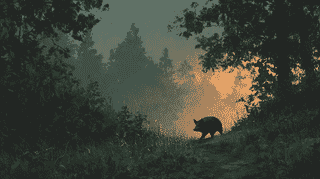
Against this national backdrop of fear and tragedy, one place stands out: Karuizawa, Nagano Prefecture, Japan's premier resort destination. Despite being home to just 20,000 residents while hosting 8 million tourists annually, this town has maintained zero human casualties in residential areas for 15 consecutive years.
The Unique Challenge of Karuizawa
Karuizawa sits at the foot of Mount Asama, where roughly two-thirds of the town falls within a Wildlife Protection Area. This means the Asian black bear's natural habitat directly overlaps with human living spaces, elegant villa communities, shopping districts, and tourist attractions.
In the late 1990s, Karuizawa faced a crisis. Bears were raiding garbage more than 100 times per year. Residents were attacked. Something had to change.
Enter NPO Picchio, which evolved from a bird research center established by Hoshino Resorts in 1992. In 2000, they received an official contract from Karuizawa Town to manage the bear problem, and they approached it in a radically different way.
The Picchio Philosophy: Coexistence, Not Extermination
Picchio operates on a clear dual mandate: "Protect human safety" AND "Prevent bear extinction." Rather than viewing these goals as contradictory, they've developed a scientific, data-driven approach that achieves both.
Individual Identification and Tracking
When bears venture too close to human areas, Picchio captures them using barrel traps. While sedated, each bear undergoes measurements, DNA sampling, and is fitted with a radio transmitter collar before being released. As of October 2025, 49 bears are being tracked this way.
Each bear receives a unique name, "841 (Yayoi)," "920 (Kunio)," "314 (Pi)", and their individual personalities, preferred routes, and behavioral patterns are documented and shared among the team.
Aversive Conditioning
Simply catching and relocating bears doesn't work long-term. Picchio practices "learning-based release", when releasing captured bears, staff and dogs bark aggressively while shooting rubber bullets to create negative associations. The message is clear: "Approaching humans means something scary happens."
Japan's Only Bear Dogs
Perhaps the most remarkable aspect of Picchio's operation is their use of Karelian Bear Dogs, a Finnish breed specially trained to detect and chase bears. Japan's Wildlife Protection Areas prohibit firearms, making these dogs essential for non-lethal deterrence.
Picchio introduced Japan's first Karelian Bear Dog in 2004, importing the concept from America's Wind River Bear Institute. Currently, two dogs and two handlers work full-time.
In 2018, Picchio achieved Japan's first successful breeding of bear dogs, with "Elf", one of two puppies who passed rigorous aptitude tests, now actively working in the field.
24/7 Monitoring
Except during hibernation season, Picchio operates daily. Night shifts (11 PM to 7 AM) are particularly crucial, as staff patrol the town with antennas to detect transmitter signals. When a bear approaches human areas, immediate action follows.
Community Partnership
Picchio's success isn't just about professional expertise, it depends on community-wide cooperation.
Bear-Proof Garbage Systems
Picchio developed special garbage containers that won't tip over even when shaken by a large bear, with handles designed so bear paws can't open them. Result: the 100+ annual garbage-raiding incidents dropped to zero by 2009.
Electric Fence Training
Local beekeepers and farmers receive guidance on installing and maintaining electric fences. Proper voltage management has dramatically reduced agricultural damage.
Education from Day One
Karuizawa elementary schools give bear bells to incoming first-graders. Picchio conducts annual classes teaching children about bear ecology and how to respond to encounters. Sometimes local children even get to name newly collared bears, "234 (Kunikun)" was named by students from the Kazakoshi district.
Economic Impact: Safety Protects Value
Karuizawa Town pays Picchio approximately 24 million yen ($160,000) annually for bear management. This investment delivers significant returns.
Tourism Protection
The Karuizawa Prince Shopping Plaza near the station generates 59 billion yen ($390 million) in annual sales. The general manager emphasizes that Karuizawa's appeal lies in "shopping surrounded by nature", which only works when visitors feel safe.
Real Estate Value
Karuizawa's land prices have risen for 13 consecutive years, with the Old Karuizawa district maintaining the highest prices in Nagano Prefecture for three years running. Premium areas command 400,000-600,000 yen per tsubo ($1,100-$1,650 per square meter), with luxury villas selling for 200 million to over 2 billion yen ($1.3-13+ million).
While other Japanese resort towns collapsed after the bubble economy, Karuizawa has maintained its value. A key factor? The peace of mind provided by professional wildlife management.
Why Can't This Spread Nationwide?
Despite national interest, several obstacles prevent easy replication of the Karuizawa model.
Karelian Bear Dogs are extremely difficult to breed, and Picchio remains the only organization in Japan using them for bear management. Even when breeding succeeds, not every puppy passes the demanding aptitude tests required for active service.
Training professional bear management staff takes years. Picchio's seven-person team possesses deep expertise, they understand each bear's individual personality and can customize their approach accordingly.
Finally, the long-term investment mindset and three-way cooperation between government, residents, and experts that Karuizawa has cultivated is difficult to establish elsewhere.
2025: Minimal Culling, Maximum Safety
In 2025, Karuizawa euthanized only one bear, an individual that repeatedly crossed the human-wildlife boundary and was deemed too dangerous. Amid national debates about mass culling, Karuizawa's approach demonstrates that human safety can be achieved with minimal loss of animal life.
As one Picchio staff member puts it: "Once we name a bear, we commit to managing and responding to that individual properly." This simple statement captures their entire philosophy.
Japan is currently engaged in intense debate about bear-human coexistence. The Karuizawa model is being recognized as a realistic approach that prioritizes human safety while maintaining a commitment to non-lethal management wherever possible.
How does your country handle wildlife that ventures into human spaces? What approaches exist for coexisting with bears or other large animals?
References
- https://txbiz.tv-tokyo.co.jp/readings/018365
- https://picchio.co.jp/about/bear/
- https://npo.picchio.jp/
- https://www.jiji.com/jc/v8?id=20250519beardog
- https://www.britannica.com/science/Why-Have-There-Been-So-Many-Bear-Attacks-in-Japan-in-2025
- https://www.aljazeera.com/news/2025/11/14/whats-behind-a-surge-in-bear-attacks-in-japan







Global Discussion
0 comments