
Eight hours of punishment running. Fielding drills that continued even as players bled. These were once common practices in Japanese high school baseball. Why do young athletes push themselves so hard for Koshien, and how is that culture changing today? Here is the story of passion and reform across a century of high school baseball.
What Is Koshien: Japan's Baseball "Holy Ground"
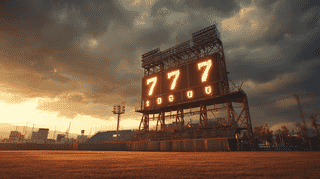
Koshien Stadium, located in Nishinomiya, Hyogo Prefecture, opened in 1924. It's far more than a sports facility; it holds sacred significance as the "holy ground" of Japanese high school baseball. Every spring and summer, teams from all 47 prefectures converge here for national tournaments that captivate the entire nation.
An American sports journalist once described Koshien as "a shrine to young people's hard work and purity." The phenomenon transcends mere athletic competition. Television broadcasts draw massive ratings, and programs like "Netto Koshien" share the human dramas behind each team. Win and achieve glory; lose and your high school baseball journey ends instantly. This sudden-death tension resonates deeply with viewers.
"Days of Hell": Training Practices of the Past
Makoto Kito, a former professional pitcher who won 78 games for teams including Hiroshima, recalls the brutal training during his days at Chukyo High School (now Chukyo University Chukyo High School).
In autumn 1982, after failing to qualify for Koshien for three consecutive seasons, training intensified dramatically. After losing a game one day, Kito and fellow outfielder Sasaki were ordered to run laps around the school grounds. What began around 3 PM wouldn't end until the coach gave permission.
Even when the coach drove away, he would sometimes suddenly return, keeping the players on edge. Finally, an assistant coach called for confirmation, and only when they heard "You can stop now" did they finish, at approximately 11 PM. They had been running for eight hours.
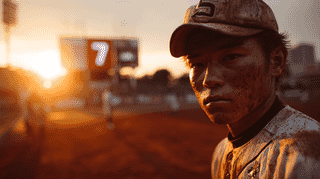
In spring 1983, after losing in the prefectural quarterfinals, the entire team was made to run from the stadium back to school. Not just the players who competed, but everyone, including those who had been cheering in the stands. Kito ran wearing his number 9 jersey, and even after reaching school, more practice awaited.
Such "spirit-based" training was not unusual in high school baseball at the time. Restricting water intake, endless repetitive drills, psychological pressure, these were believed to be essential methods for building strength and character.
Why Pursue Koshien So Desperately?
For Japanese high school baseball players, Koshien represents the ultimate dream. Several factors explain this intense dedication.
First, there's tremendous social recognition and praise. Qualifying for Koshien brings pride to entire communities. Banners appear in shopping districts, and local media provide extensive coverage. Players become instant celebrities.
Second, Koshien serves as a gateway to professional baseball. Each year's draft sees many players who performed well at Koshien get selected. For those aspiring to go pro, it's the premier stage to showcase their abilities.
Third, there's Japan's unique concept of "seishun" (youth). The three years of high school represent a limited time to pursue a single goal alongside teammates with total commitment. This experience is treasured throughout Japanese society. The tradition of losing players collecting dirt from Koshien's field symbolizes this sentiment perfectly.
Fourth, baseball is viewed as spiritual cultivation. American media has described Japanese high school baseball as "baseball as a martial art." The sport is positioned not merely as athletic training but as character development emphasizing etiquette, perseverance, and team unity.
Transforming High School Baseball: The Shift Toward Player Protection
In recent years, high school baseball has entered a significant transitional period. The 2018 summer tournament, where Kosei Yoshida of Kanaashi Nogyo pitched all five games through the semifinals, and the 2019 incident where Roki Sasaki of Ofunato High School was held out of the prefectural finals sparked major debates.
In response, pitch count limits of "500 pitches per week" were introduced starting with the 2020 Spring Tournament. Additionally, since spring 2023, tie-breaker rules begin in the 10th inning.
Verification by the Japan High School Baseball Federation has confirmed that shoulder and elbow pain occurrence rates among players have shown declining trends since implementing pitch limits. From 2024, these guidelines became official rules after the trial period concluded.
Training environments have also evolved. The old directives of "don't drink water" and "don't rest" have disappeared, replaced by sports science-based training methods. Employing multiple pitchers has become standard strategy at powerhouse schools.
Yuki Saito, who experienced a 15-inning tie and replay game in the 2006 summer final, commented: "Pitch count limits alone cannot completely prevent injuries. With players having different levels of flexibility and fatigue, personalized approaches are also necessary."
Remaining Challenges and Future Prospects
While reforms progress, challenges remain. Critics note that pitch limits disadvantage teams with fewer pitchers. Experts also continue debating whether "500 pitches per week" provides sufficient protection.
MLB pitcher Yu Darvish pointed out that "if there are only two games per week, pitchers could throw 250 balls per game," suggesting the limits are insufficient. Masumi Kuwata warned that "high schoolers in their growth period end up throwing twice as much as professionals."
Nevertheless, the growing acceptance of values like "some things matter more than winning" and "individual futures matter more than team success" represents a significant shift in Japanese high school baseball culture.
The passion for reaching Koshien remains unchanged, but how that dream is pursued has definitely evolved. Protecting player health while continuing to chase dreams, a new era of high school baseball has begun.
How does your country balance passion and health in high school sports?






Global Discussion
15 comments