🚌 An 18-meter futuristic vehicle has arrived on the streets of Nagoya. With the sleek appearance of a tram, the flexibility of a bus, and capacity for 122 passengers, Japan's newest urban transit system lets you travel directly from Nagoya Station to the bustling Sakae district—without going underground. On February 13, 2026, Nagoya's "SRT" officially begins service.
What is Nagoya's SRT?
On January 6, 2026, a new street-level public transportation system called "SRT" began test runs through Nagoya's urban core. Images of the sleek, black-bodied vehicle cruising down Hirokoji-dori have already gone viral on social media.
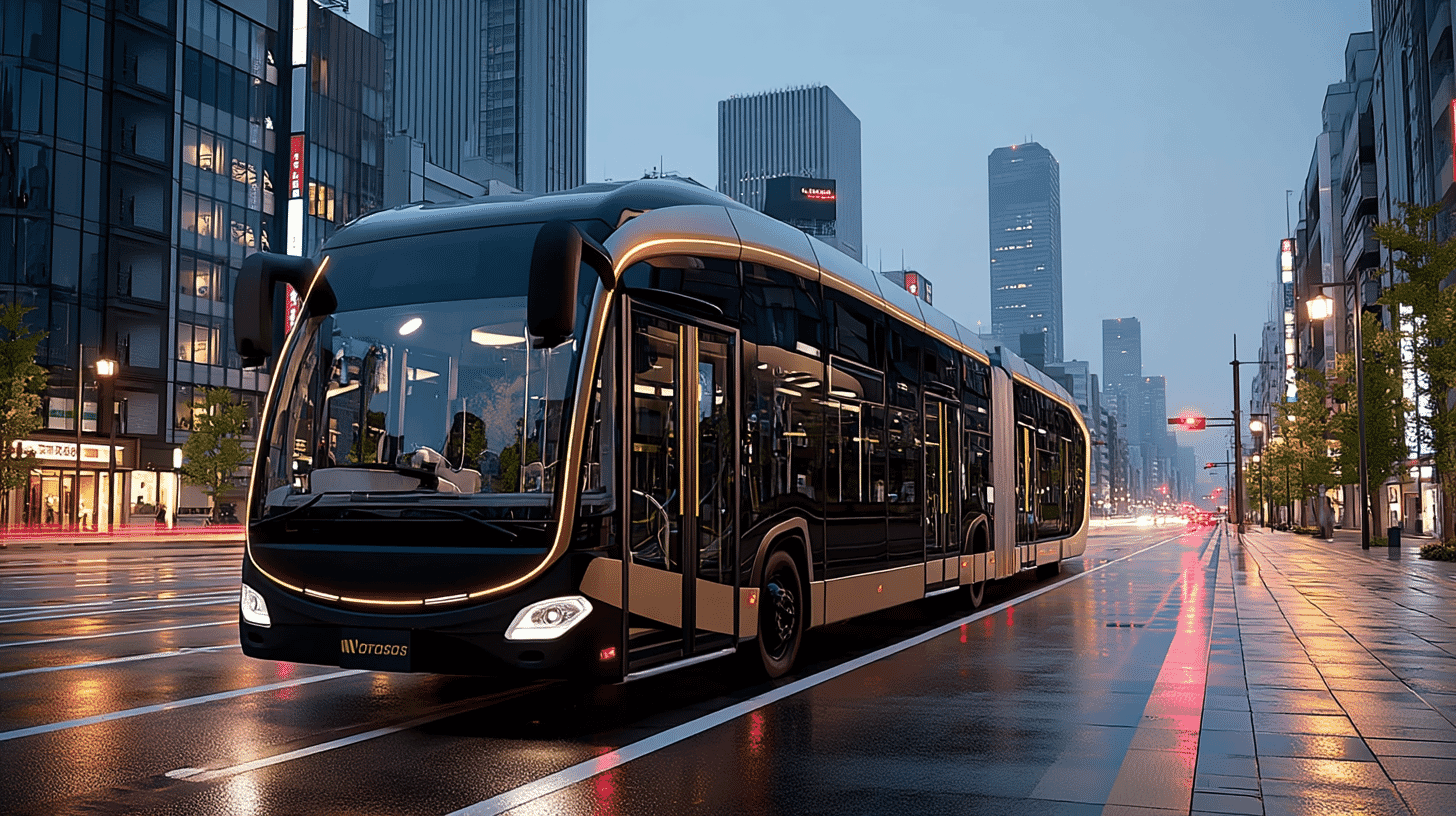
SRT stands for "Smart Roadway Transit," a unique transportation concept that Nagoya has been developing since the 2010s. While technically a bus system, its appearance is distinctly futuristic—a far cry from conventional buses.
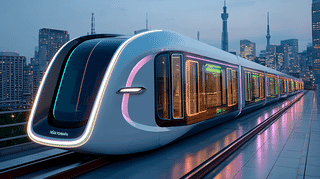
The vehicle is an approximately 18-meter Mercedes-Benz "Citaro G" articulated bus. Two sections connected by a flexible bellows create a tram-like silhouette. Dark green panels trace elegant lines along the body, while expansive glass windows provide an open, airy feel. The rear wheel sets are covered by sleek spats, further emphasizing the vehicle's train-like aesthetic.
Route Overview: Connecting Nagoya Station and Sakae
The inaugural SRT route connects Nagoya Station with Sakae, the city's premier entertainment and shopping district. The "Nagoya Station–Sakae Line" runs primarily along Hirokoji-dori, spanning approximately 5.6 kilometers with seven stops.
The planned stops include:
- Nagoya Station (Sakura-dori side)
- Nagoya Station (Midland Square front)
- Yanagibashi
- Nayabashi
- Honmachi-dori (Hirokoji-Honmachi)
- Sakae
- International Center Station
Notably, stops at Yanagibashi, Nayabashi, and Honmachi-dori address areas previously lacking direct subway access. Currently, traveling from Nagoya Station to these neighborhoods requires transferring or navigating complex underground passages.
Service will operate four days per week (Friday through Monday) plus holidays, with 12 daily runs between 9 AM and 5 PM. Adult fare is ¥210 (approximately $1.40 USD), with children's fare at ¥100. Payment options include cash, transit IC cards, and contactless credit card payments—with a daily cap of ¥500 for contactless users, making it especially tourist-friendly.
Why SRT? Nagoya's Strategy for the Linear Shinkansen Era
Nagoya's investment in SRT is driven by the anticipated opening of the Linear Chuo Shinkansen (maglev line). Once operational, the maglev will reduce travel time between Nagoya and Tokyo (Shinagawa) to just 40 minutes, potentially bringing millions of additional visitors to the city.
Currently, travelers between Nagoya Station and Sakae typically take the Higashiyama subway line, which is perpetually crowded. The connection between JR Nagoya Station and the subway can be confusing for tourists, and both Nagoya and Sakae subway stations have platforms located deep underground, requiring significant time to reach street level.
SRT eliminates these pain points by operating entirely at ground level. Passengers can enjoy city views through large windows while traveling—a significant upgrade to the visitor experience.
Additionally, Nagoya will host the Asian and Asian Para Games in fall 2026. The city is already planning to extend SRT service to Nagoya Castle and potentially create a circular route through the historic Osu district.
Japan's Growing BRT Movement
Nagoya's SRT represents a broader trend in Japanese urban transportation. BRT (Bus Rapid Transit) and articulated bus systems have now been introduced in over 11 cities across Japan.
Tokyo launched "Tokyo BRT" connecting Toranomon/Shimbashi with the Odaiba waterfront area. Yokohama introduced "Bayside Blue" in 2020. Fukuoka operates "Fukuoka BRT" as a circular route linking Hakata, Tenjin, and the waterfront. Kobe's "Port Loop," Kawasaki's "KAWASAKI BRT," and Gifu's "Seiryu Liner" demonstrate how major cities are embracing articulated buses.
Several factors drive this BRT boom. First, costs are dramatically lower than subway or light rail construction since existing road infrastructure can be utilized. Second, routes and schedules can be adjusted flexibly as demand changes. Third, with Japan facing a severe bus driver shortage, articulated buses allow one driver to transport double the passengers, improving labor efficiency.
Following the 2011 Great East Japan Earthquake, JR East rebuilt the damaged Kesennuma and Ofunato rail lines as BRT routes using converted railway beds. This flexible approach restored transportation faster than traditional rail reconstruction would have allowed—demonstrating BRT's adaptability in crisis situations.
Challenges and Future Prospects
Despite excitement surrounding SRT, critics have identified several concerns.
The current schedule of approximately one bus per hour may be insufficient for spontaneous use. Without dedicated bus lanes, vehicles could face traffic delays. International BRT systems typically feature dedicated lanes and signal priority, leading some observers to characterize Japanese "BRTs" as half-measures compared to global standards.
Nagoya officials acknowledge these limitations, stating they will evaluate dedicated lane implementation and fleet expansion based on operational results. The second and third SRT vehicles are planned to be domestically manufactured by J-Bus, indicating ongoing development.
Looking further ahead, autonomous driving technology could transform the system. Self-driving capabilities would address driver shortages while enabling much more frequent service.
Your City's Next-Generation Transit
Nagoya's SRT signals a new era for Japanese urban mobility. Neither subway nor conventional bus, BRT/SRT represents a third option that cities nationwide are exploring.
While articulated buses and BRT systems are spreading across Japan, challenges remain around dedicated infrastructure and service frequency. What next-generation public transportation exists in your country or city? Do you have true BRT with dedicated lanes, or are buses still stuck in traffic? Share your experiences and perspectives in the comments below.

References
Reactions in Japan
Spotted the SRT during test runs! So cool... the hidden wheels make it look like a train. Not having to go underground from Nagoya Station to Sakae is revolutionary.
Honestly, calling SRT with one bus per hour and no dedicated lanes 'next-generation transit' is a stretch. Learn from Bogotá or Curitiba's BRT. It's just an articulated bus.
Successfully photographed the SRT on Hirokoji-dori 📸 Apparently it's a Mercedes-Benz Citaro G. The spat design hiding the wheels is absolutely brilliant.
A ¥500 daily cap for contactless payment is pretty reasonable, right? Seems tourist-friendly. Now if they just increase the frequency, I'd have no complaints.
When you're stuck behind that huge bus on Hirokoji-dori, you literally can't pass. 18 meters with no dedicated lane is honestly annoying. It'll make traffic worse.
SRT's essence lies not in transportation but in urban spatial reorganization. The terrace-style stops are the first step in transforming Hirokoji-dori from a 'transit corridor' to a 'dwelling space.' Should be evaluated with a long-term perspective.
Heard it has low floors and ramps, so I'm excited. Finding elevators in the subway is exhausting, so ground-level transportation is truly appreciated.
Between Kikan Bus and Yutorito Line, Nagoya sure loves unique transit systems. Now SRT? Another original concept. Worried about using vehicles incompatible with other cities.
This is basically Kawamura administration's legacy project. With Linear delayed, SRT going ahead alone feels half-baked. At least open the Nagoya Castle route by the Expo.
Love the black body with Urban Gold as the symbol color, with unified design extending to the stops. Finally feels like Japan has total-design public transit.
Seriously, vehicles #2 and beyond will be domestic J-Bus? Smart move since imports have high maintenance costs. Looking forward to the Hino Blue Ribbon Hybrid articulated.
Launching when inbound tourists increase for Asian Games is smart. But 4 days/week, 12 runs/day might leave tourists stranded. Extra service during the Games is essential.
One driver carrying double the passengers with articulated buses makes sense for carbon neutrality and driver shortage. But diesel is a bit... couldn't they do electric?
Redevelopment demand along SRT routes will definitely rise. Nayabashi-Honmachi area especially has huge potential since it was far from subway stations. Already moving in anticipation of land price increases.
Subway escalators are long and scary, so being able to travel above ground is nice. Just worried about whether I can use my senior pass... post-ride reimbursement is such a hassle.
Filmed the test run. Watching it smoothly turn at Sakae intersection with that length is satisfying. The driver's skill is impressive.
Custom-designed vehicles and dedicated stops—how much tax money did this cost? Couldn't they just buy existing articulated buses? Flashy but wasteful box administration.
Curious if it's designed with future autonomous driving in mind. If Level 4 autonomy like Tesla's Cybercab becomes reality, SRT's value will skyrocket.
Living in Bogotá, Colombia. Our TransMilenio carries 2.4 million daily on dedicated lanes. Nagoya's SRT looks nice, but 4 days a week, 12 runs a day? That's not BRT, that's a tourist shuttle.
Urban planner in Stockholm. So Japan discovered BRT! Jokes aside, the low-floor design combined with contactless payment is a good approach for aging societies. Though lack of dedicated lanes could be fatal.
From Los Angeles. Our city is so car-dependent that even BRT is challenging. Envious that Nagoya is exploring surface transit possibilities. Wish LA Metro would learn from this.
Guangzhou's BRT runs over 350 buses per hour on dedicated lanes. With Japan's technical capability, they should be able to do the same. Why just one per hour? Political issues?
Living in Paris. Japan's design sense remains superb. Love this black and gold color scheme—wish our buses had it. But in France, BRT without dedicated lanes is unthinkable.
Having experienced Cairo traffic, on-time service without dedicated lanes sounds like fantasy. Maybe it works because Japanese road manners are good? Would never work here.
From Seoul. Korea has dark history of introducing articulated buses in 2004 and withdrawing after 4 years—didn't fit our road environment. Hope Nagoya did thorough testing first...
As a German, proud to see Mercedes-Benz Citaro operating in Japan. But switching to domestic vehicles next? I sense Japanese automotive industry pride at work.
As an Italian tourist, I thought Japanese public transit was perfect. Hearing 'subway is inconvenient' from Nagoya Station to Sakae shows every city has challenges. Hope SRT becomes the solution.
Dublin has articulated buses too, but honestly not much different from regular buses. Without dedicated lanes, you just get stuck in traffic. Hope Nagoya doesn't repeat our mistakes.
Nagoya's SRT looks 100 times cleaner than Mumbai's BEST buses. But ¥210 fare (about 140 rupees) might be expensive for common people. Is it reasonable for Japanese prices?
Sydney's Metrobus uses articulated buses too, but having vs not having dedicated lanes makes a world of difference. Curious if Nagoya plans to add dedicated lanes eventually.
Curitiba's BRT has been running since 1974 and is a global model. Triple-articulated buses carry 270 passengers. Maybe Nagoya will get there in 50 years? Not a bad first step.
Reminds me of Taichung BRT failure... regime change led to plan modifications and dedicated lanes removed. Pray Nagoya isn't affected by politics. The design is genuinely cool.
Living in Vancouver. We have electric trolley buses, but Nagoya's SRT seems to be diesel. Disappointing that it's not zero-emission vehicles in 2026.
Japanese living in LA. America is too car-centric, so I'm envious. Definitely want to ride when I visit Japan. But when I showed American friends, they were confused: 'A bus? Not a train?' lol