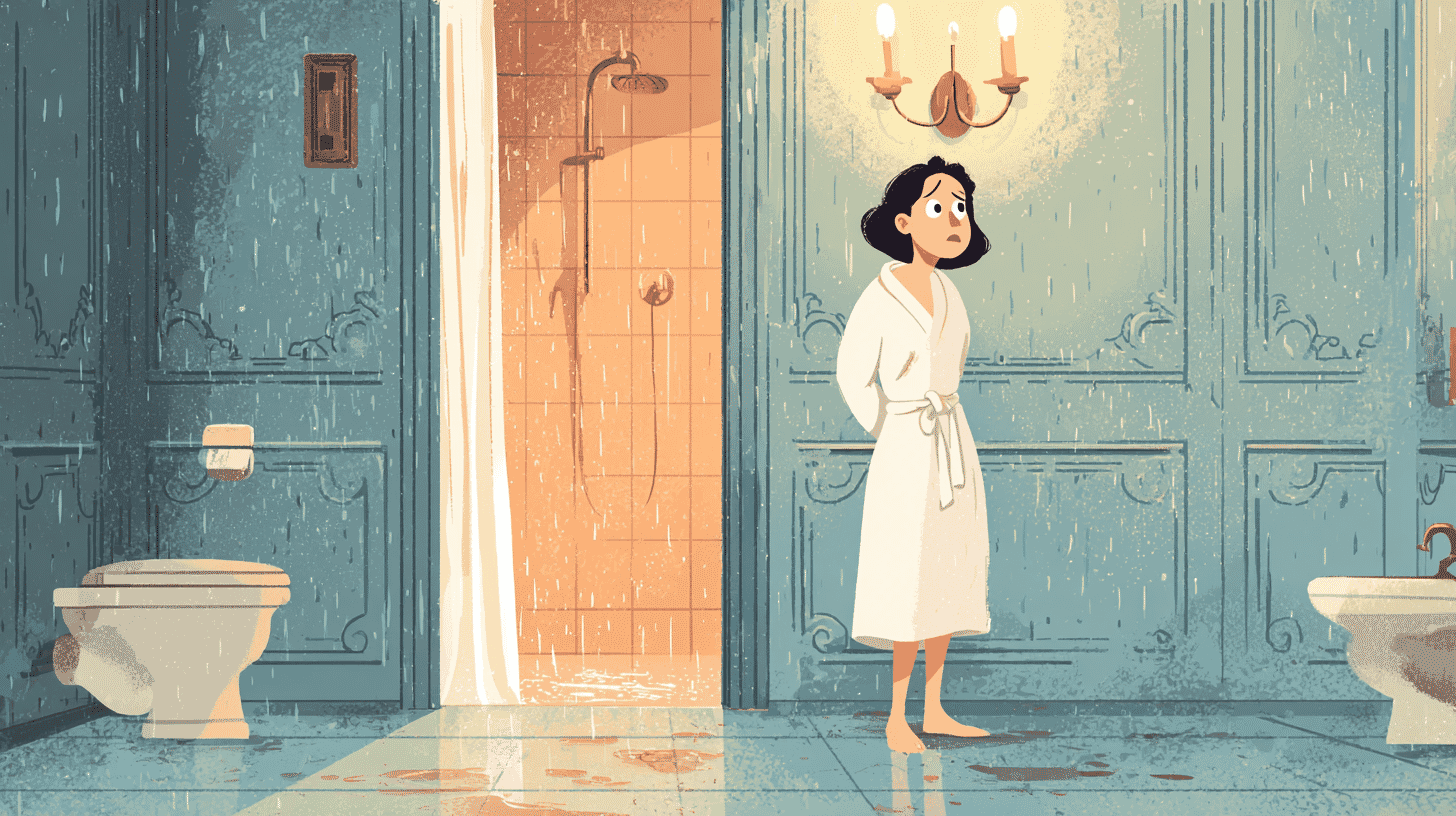
How hard can it be to take a shower? When a former Olympic gold medalist arrived in Milan to commentate on the 2026 Winter Games, she was left speechless by her hotel bathroom: no bathtub, no wall, just a thin curtain separating the shower from the toilet. Her plea for advice went viral in Japan, sparking a nationwide conversation about why European hotel showers feel like an "impossible game" for Japanese travelers.
An Olympic Commentator's Unexpected Challenge in Milan
In February 2026, the world descended on Italy for the Milan-Cortina Winter Olympics. Among them was Nana Takagi, a gold medalist in speed skating at the 2018 PyeongChang Olympics, who traveled to Milan as a TV commentator for the Games. But before she could focus on analyzing skating races, she encountered an unexpected hurdle, in her hotel bathroom.
Takagi posted a photo on X (formerly Twitter) showing a bathroom layout that left her bewildered. There was no bathtub. The shower area had no walls, no glass partition, and no step-up, just a single thin curtain separating it from the toilet, which sat on the same flat, continuous floor. The sink was also in the same open space with no barriers whatsoever.
"How on earth am I supposed to shower without flooding the entire floor?" she wrote. "Another Olympic-level challenge has appeared... Everyone, I need your best ideas." The post racked up over 18 million views and ignited a massive discussion across Japanese social media.
Japan's Internet Rallies to Help
Japanese users with experience abroad responded one after another with advice.
Broadly, the responses fell into two camps: the "just accept it" school and the "strategic engineering" school.
The acceptance camp offered zen-like wisdom: "The curtain is only there to keep water off the toilet, a wet floor is expected," "Wear flip-flops and shower with confidence," and "Just go for it and wipe up with a towel afterward." Seasoned backpackers chimed in with: "This is exactly why 'bring flip-flops' is backpacker rule number one."
The engineering camp, however, brought practical brilliance: "Evacuate the toilet paper immediately, the backup roll placement in that photo is dangerously close to the splash zone," "Don't put the bath mat down before showering, place it after you're done," and "Request an extra towel from the front desk and build a little dam." Some users even suggested asking the hotel to switch rooms to one with a bathtub.
Why European Hotels Are Built for "Wet Floors"
This "shower problem" is actually a well-known rite of passage for Japanese travelers in Europe. In many European hotels, especially in Southern Europe, including Italy, France, and Spain, shower areas without enclosed booths or bathtubs are common. These "wet room" designs feature gently sloped floors that drain water without needing full waterproofing barriers.
There are practical reasons behind this design philosophy. Many European hotels occupy buildings that are over a century old, where major plumbing renovations are difficult or prohibited due to historic preservation requirements. Additionally, the European approach to showering tends to be more utilitarian, a quick rinse rather than an immersive experience, so elaborate water containment simply isn't a priority.
Several Japanese users pointed out that Takagi's room was likely a "universal design" or accessibility-focused room. These barrier-free bathrooms are designed for wheelchair users, with level-entry showers and no step-ups. Given that the Paralympic Games would follow the Olympics at the same venue, many such rooms had likely been prepared.
Japan's Unique Bathing Culture: Why "Don't Get the Floor Wet" Matters
To understand why this scene was so shocking to Japanese audiences, you need to understand Japan's exceptionally distinctive bathing culture.
In Japanese homes, the bathroom ("ofuro" area) and the toilet are almost always in completely separate rooms. The bathing room itself is a fully waterproof unit, a prefabricated module called a "unit bath" where the floor, walls, and ceiling are sealed against moisture. There's a drain in the floor, and you can splash water anywhere within this space. However, the critical rule is that water must never escape into the hallway, toilet room, or any other part of the house.
Japan also has a deeply rooted culture of soaking in hot water. From "onsen" (natural hot springs) to "sento" (public bathhouses), bathing in Japan is not just about cleaning the body, it's a ritual of relaxation and recovery known as "iyashi" (healing). Soaking in a deep, hot bathtub after a long day is a near-sacred daily practice for many Japanese people. A hotel without a bathtub feels fundamentally incomplete, as if a crucial tool for restoring both body and spirit is missing.
Comments on Takagi's post reflected this deeply: "No bathtub means no way to recover from fatigue" and "Anyone from a bathing culture absolutely needs a room with a tub" were common sentiments.
A Practical Survival Guide for European Hotel Showers
Based on the collective wisdom of well-traveled Japanese tourists, here are proven strategies for navigating European hotel bathrooms:
- Pack shower sandals (flip-flops): The simplest defense against wet floors
- Relocate the toilet paper immediately: This is your first mission before any shower
- Place the bath mat AFTER showering, not before: Putting it down first just means a soaked mat
- Trust the floor slope: Most wet rooms are designed with a slight gradient toward the drain
- Request a bathtub room when booking: It may cost extra, but for longer stays, it's worth it
- Ask the front desk for help: Room changes may be possible, especially during less busy periods
Embracing the Difference
Takagi's post resonated so deeply because nearly every Japanese person who has traveled to Europe has experienced the same moment of bewilderment. It has become such a universally recognized phenomenon that Japanese netizens call it a "European hotel classic" (ヨーロッパあるある).
The contrast between a "wet floor is normal" culture and a "never let water escape the bathroom" culture isn't about which approach is better. Each reflects centuries of climate, architecture, and lifestyle evolving together into distinct traditions.
What's the shower situation in hotels in your country? Are you a bathtub person or a shower-only person? Does a wet bathroom floor bother you, or is it just part of life?





Global Discussion
15 comments