🔥 Imagine spending 2-3 months creating intricate artwork from nothing but food ingredients—black beans, dried squid, seaweed, and bonito flakes—only to smash it against rival floats and then burn it all to ashes in a single night.
This is the Sagicho Festival of Omihachiman, Japan: a 400-year-old fire festival so wild that even the legendary warlord Oda Nobunaga couldn't resist joining the dance in outrageous costumes.
Here's why tens of thousands of visitors brave the crowds each March to witness this "most eccentric festival under heaven."
What is the Sagicho Festival?
The Sagicho Festival (左義長まつり) takes place annually in mid-March at Himure Hachimangu Shrine in Omihachiman City, Shiga Prefecture, near Japan's largest lake, Lake Biwa. Designated as a National Selected Intangible Folk Cultural Property, it's known as the "most eccentric festival under heaven" and "the festival that heralds spring in the lake country."
The stars of the show are massive ceremonial floats called "Sagicho"—towering triangular structures standing approximately 20 feet (6 meters) tall. Each Sagicho consists of three main components: a torch made of straw and cedar, decorative elements called "Dashi" featuring that year's Chinese zodiac animal, and red paper ornaments.
What makes this festival truly unique is that all Dashi decorations are crafted entirely from food ingredients. Black beans, red beans, soybeans, and sesame represent different colors and textures, while kelp, dried squid, bonito flakes, and dried fish provide additional materials. Artisans use these natural colors and textures to create remarkably detailed zodiac animals and elaborate backgrounds—works of edible art that will survive for only two days.
The Oda Nobunaga Connection
The festival's origins trace back to the Sagicho celebrations once held in the castle town of Azuchi, home of the legendary warlord Oda Nobunaga. Historical records from the "Shinchō-kō ki" (Chronicle of Lord Nobunaga) describe him as a flamboyant participant who "wore a Southern Barbarian hat, wrapped his face in red silk, donned a brocade robe, and danced among the townspeople in extravagant attire."
After Nobunaga's death at Honnō-ji temple in 1582, Toyotomi Hidetsugu built Hachiman Castle and established a new castle town. The merchants who relocated from Azuchi petitioned to dedicate Sagicho to Himure Hachimangu Shrine—both to express gratitude to Hidetsugu and to honor Nobunaga's memory. This tradition has continued unbroken for over 400 years.
Even today, many float carriers (called "Odoriko" or dancers) wear women's undergarments called nagajuban and apply theatrical makeup—a tradition said to honor Nobunaga's love of outlandish costumes.
Festival Highlights
Day 1: Parade and Dashi Contest (Saturday)
Just after noon, Sagicho floats from 13 participating neighborhoods converge at Himure Hachimangu Shrine. Here, the "Dashi Contest" takes place, where judges evaluate the craftsmanship of each neighborhood's creation—works that took 2-3 months to complete.
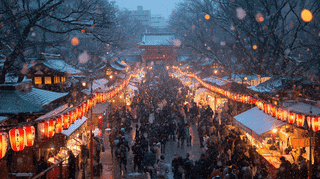
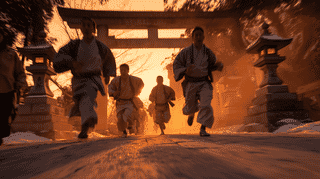
At 1:30 PM, the parade ("Togyo") begins. Carriers chant distinctive calls of "Cho-ya-re! Cho-ya-re!" and "Masse! Masse!" as the 13 floats wind through the atmospheric streets of the old castle town. The scene resembles something from the Edo period, drawing photographers from across Japan.
The day concludes with the Dashi Contest awards ceremony on the shrine's Noh stage.
Day 2: Fighting and Burning (Sunday)
Sunday morning sees the floats roaming freely through the old town, building toward the highlight event: the "Kenka" or "Fight." In this dramatic ritual, floats are deliberately crashed into each other as dozens of men push with all their strength, defending their neighborhood's honor. The decorated Dashi often get damaged or destroyed in these collisions. Spectators should exercise caution, as floats can tip in unexpected directions.
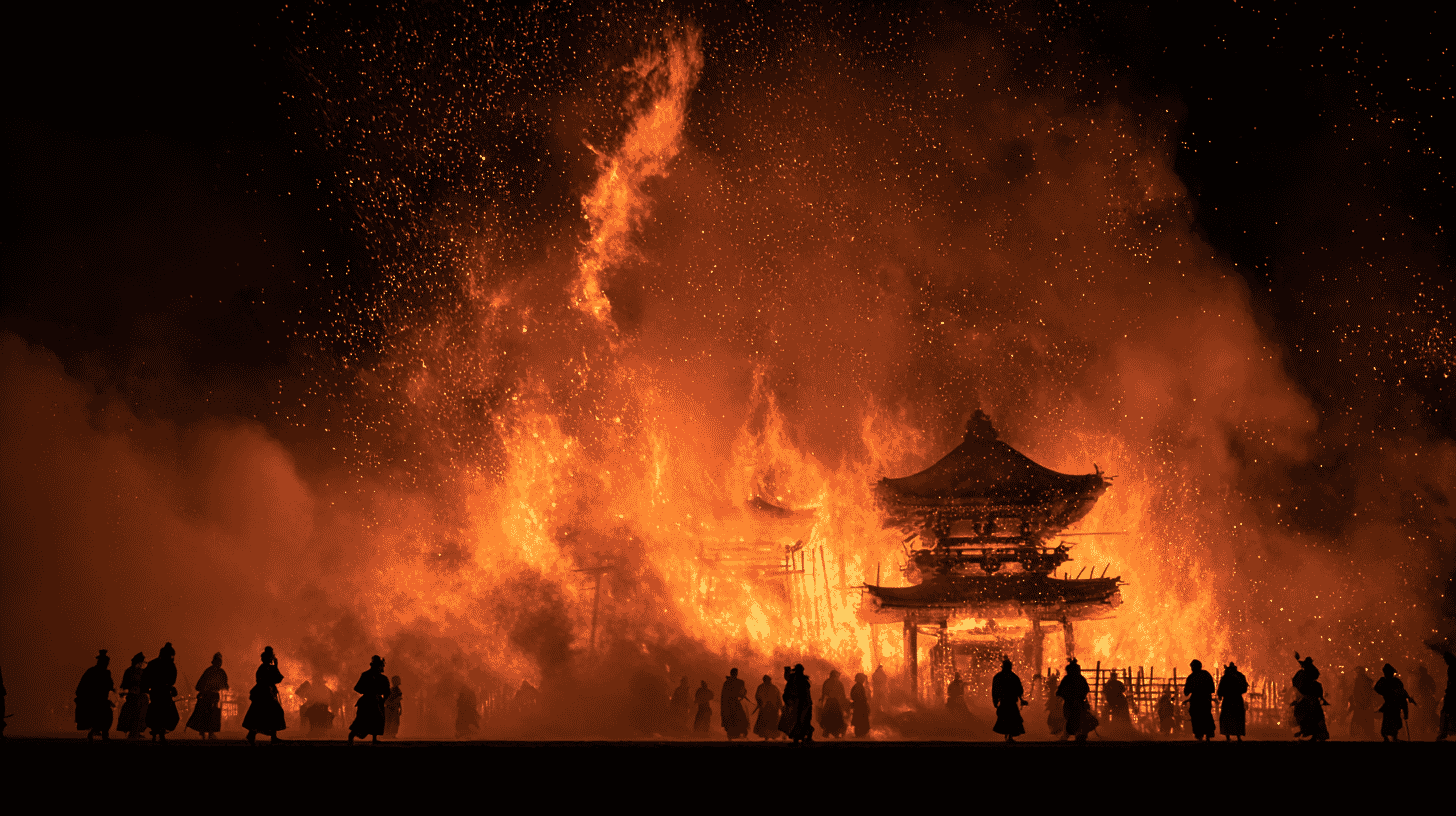
The climax arrives at 8:00 PM with the "Hōka" (sacred burning). As prayers for protection from fire, warding off evil, and abundant harvests rise with the flames, all Sagicho are offered to the gods. The first five floats are ignited simultaneously, with the remaining floats burned at 20-minute intervals.
Watching their months of work and the floats they carried with all their strength go up in flames, many young men openly weep. The final float burns until nearly midnight, and when the last ember dies, true spring arrives in the lake country.
Ancient Origins
The name "Sagicho" derives from Heian-period (794-1185) imperial court rituals. During New Year celebrations, broken polo-like mallets called "Gicchō" used in a game called "Dakyū" were bound in groups of three and ceremonially burned while court diviners (Onmyōji) chanted. "Sangicchō" (three mallets) eventually became "Sagicho."
Similar fire rituals survive across Japan today as "Dondo-yaki" or "Saito-yaki," where New Year decorations and sacred straw ropes are burned around January 15. The Omihachiman Sagicho was also held in January during the Edo period, but shifted to March after Japan adopted the Gregorian calendar in the Meiji era. Today it's held on a Saturday and Sunday in mid-March.
2026 Festival Information
The 2026 Sagicho Festival is scheduled for March 14-15 (Saturday-Sunday). This year's zodiac is the Horse (午/uma), and each neighborhood will create horse-themed Dashi.
The festival typically attracts 50,000-70,000 visitors. Due to heavy congestion around the venue, free shuttle buses operate from Obata and Taga municipal parking lots (Park and Ride service).
Note that 2026 also marks the 450th anniversary of Azuchi Castle's construction, making this year's festival extra special as Omihachiman celebrates its deep connections to Oda Nobunaga.
Practical Information
Location: Himure Hachimangu Shrine, 257 Miyauchi-cho, Omihachiman City, Shiga Prefecture
Access:
- Train: JR Biwako Line to Omihachiman Station, then Omi Railway Bus to "Obata Shiryokan-mae" (about 7 minutes)
- Car: Approximately 10 minutes from Ryuo IC on the Meishin Expressway
Estimated Costs for Visitors:
- Festival admission: Free
- Nearby parking: Available (paid lots plus free Park and Ride)
- Local specialty "Omi beef" skewers at food stalls: Around $5-8 USD
Conclusion
Among Japan's countless festivals, the Sagicho Festival occupies a unique position. Creating intricate art from food, smashing it in ritualized combat, then offering it to the gods through fire—these seemingly contradictory acts embody a distinctly Japanese aesthetic: the beauty of sacrifice and an appreciation for the ephemeral.
In the season when winter and spring wrestle for dominance, 400 years of tradition, human passion, and primal flame converge in a spectacular display. If you're in Japan in mid-March, this "most eccentric festival under heaven" is an experience you won't forget.
Does your country have festivals where precious objects are destroyed or burned as offerings? What beliefs or values lie behind such traditions? We'd love to hear your perspectives!
References
- https://www.sagicho.net/ (Sagicho Preservation Society Official Site)
- https://www.omi8.com/festival/sagicho (Omihachiman Tourism Association)
- https://www.biwako-visitors.jp/event/detail/25080/ (Shiga Prefecture Official Tourism Site)
Reactions in Japan
Every year during Sagicho, the roads get crazy with out-of-prefecture license plates... As a local, I have mixed feelings - happy yet inconvenienced. But the moment of the burning still makes me tear up.
People call it one of Japan's three great fire festivals, but Sagicho's uniqueness lies in the artistic beauty of the Dashi. The craftsmanship to achieve such precision using only food ingredients deserves more global recognition.
Just saw the Sagicho Dashi! The red of azuki beans, black of black beans, deep green of kelp... Amazing how much can be expressed with just food colors. There's something that connects to wagashi color schemes - very educational ✨
Honestly, I can't understand burning something that took months to make. Couldn't that effort and those food materials be used more effectively? Even if it's tradition, I feel a gap with modern values.
Been helping prepare for Sagicho since elementary school. My grandpa and his father before him all carried the floats. It's tough sometimes, but I think this festival is what keeps our community connected.
Isn't the episode of Lord Nobunaga dancing in women's clothes totally rock? Completely overturns the samurai warlord image. The modern carriers wearing nagajuban and makeup are properly inheriting that spirit - gives me chills.
There's criticism about burning food, but they mainly use dried goods that aren't being wasted. When you consider the social value of maintaining community ties, it can't be measured by simple 'waste' calculations.
Went a bit further from Kyoto to see it, and it was more impressive than I imagined. The men's intensity during the 'fighting' was incredible. I also liked that it hasn't become too touristy.
The Sagicho used to be much bigger, you know. They got smaller after power lines were installed. Still, I go see it every year. My grandson became a carrier too - makes me so happy.
A senior colleague invited me to carry for the first time. My shoulders hurt like hell, and balancing practice to the main event with work was tough. But during the burning, tears came out somehow. Definitely doing it again next year.
The Sagicho Dashi is incredibly interesting in terms of creativity within constraints. There's expression that only emerges because the materials are limited. Might make it my graduation project theme.
Worked in Tokyo for 20 years before coming back home. The Sagicho preparations I found annoying as a kid are now genuinely fun. This connection with community members - this is what hometown means.
Drinking local sake while watching Sagicho is just too good. It's cold, but the luxury of watching the burning while warming up with hot sake - once you try it, you can't stop.
The 'create and destroy' cycle seen in Sagicho is a theme underlying Japanese festival culture. Like spirit boat floating and Kyoto's Daimonji burning, it's a ritual form conscious of the boundary between this world and the next.
Watched it on video and started crying. Living here (in America), I miss Japanese festivals. Someday I want to take my kids to see it.
For this year's Dashi, we gathered 4 times a week from January. Teaching young people techniques like moistening kelp to shape it was hard, but the sense of achievement when it was complete is irreplaceable.
This reminds me of Las Fallas in Spain! In Valencia, we also build giant figures and burn them on the final day. It's fascinating that despite different cultures and distances, there's a similar spirit. Maybe 'purification through destruction' is a universal human concept.
Creating such intricate artwork from only food ingredients is incredible! It's on a completely different level from British food art. But honestly, I can't help thinking it's a waste to burn it all... Is this my cultural bias showing?
As a Chinese person, the zodiac theme feels familiar. But the atmosphere is completely different from Chinese fire festivals. Japanese ones seem to focus on 'burning beautifully.' It's interesting to feel these cultural differences.
Ireland has Celtic fire festival traditions too, so I really connect with this. The bonfires of Beltane and Samhain also symbolize the transition to new seasons. The concept of fire festivals welcoming spring exists worldwide.
As an American who goes to Burning Man every year, let me say this is real burning art. Months of preparation, created by community, offered to flames at the end. This is ultimate ephemeral art.
From a German perspective, turning this level of craftsmanship to ash in one night is hard to understand. We have a culture that values 'lasting quality.' But perhaps that's exactly why I'm drawn to Japanese culture that appreciates impermanence.
India's Holi festival also has a ritual called Holika Dahan where we burn evil. It happens the night before the festival of colors, and there's a common theme of burning for purification. Maybe there's a connection between Asian fire festivals.
As a chef, I'm shocked by the idea of using food as art materials. Using kelp and azuki beans' colors and textures this way... requires deep understanding of ingredients. France, as a culinary nation, has something to learn here.
Korea also has Daljip Taeugi, a straw-burning event at New Year! Similar in wishing for warding off evil and good harvests. I feel the cultural roots connecting neighboring countries. Want to see it in person someday.
The episode of Oda Nobunaga dancing in women's clothes is amazing! Historical rulers enjoying themselves with common people like this is rare worldwide, isn't it? Changed my image of Japanese samurai warlords.
Mexico's Day of the Dead also involves creating elaborate ofrendas (altars) that are taken apart after the celebration. The form is different, but I relate to the 'create, celebrate, let go' cycle. Same in being offerings to ancestors and gods.
As an Australian, this reminds me of Indigenous Aboriginal fire management ceremonies. Fire means not just destruction but regeneration. The concept of this festival 'calling spring' is intriguing.
In Russia's Maslenitsa, we also burn straw effigies to send off winter! Similar that it's held in March too. The feeling of longing for spring after harsh winter is something people from northern countries especially understand.
I'm Vietnamese-American. My parents' homeland also has customs of burning paper offerings at Lunar New Year. But I've never seen burning artwork made from food ingredients. Japanese aesthetic sense is truly unique.
In Sweden's Midsummer, we raise maypoles to celebrate but don't burn them. But the element of 'crashing floats together' is reminiscent of Viking-era festivals. Stirs my Nordic blood.
Judaism's Lag BaOmer also has bonfire traditions. Despite different religions and cultures, the format of community gathering around fire is universal. Maybe it's rooted in humanity's primal memories.