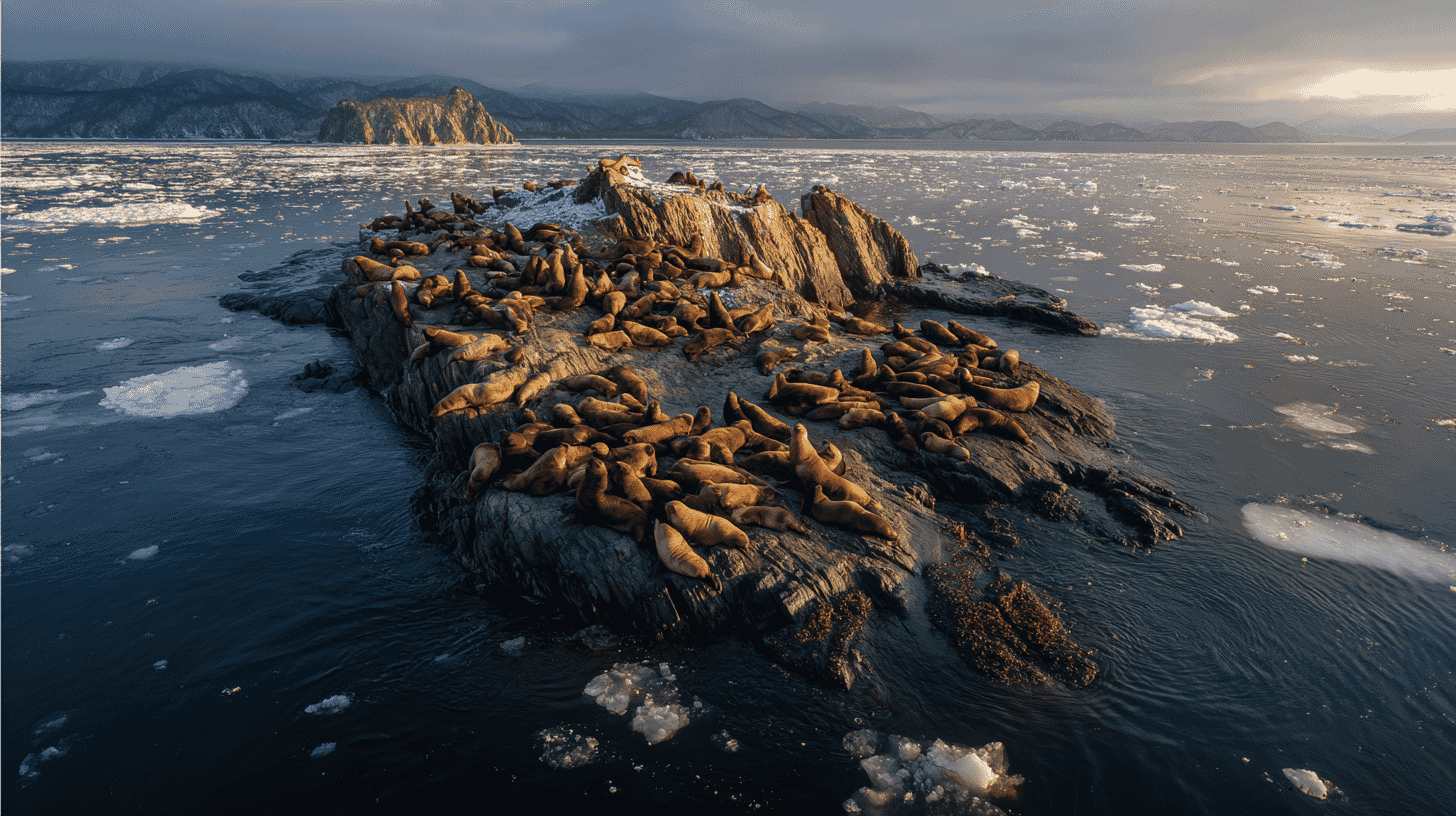
Picture 3,000 sea mammals, some of them over a tonne, crammed onto an island smaller than a soccer field. Every winter, Benten Island, floating just 1.4 km off Japan's northernmost point, is taken over by creatures locals call "sea gangsters." They cause about ¥1 billion (roughly $7 million) in annual fishery damage, and internationally they are protected as an endangered species. This is the front line of one of the hardest wildlife-human conflicts in the Pacific.
Meet the Steller Sea Lion: The Ocean's Largest Eared Seal
The Steller sea lion (Eumetopias jubatus) is the world's largest member of the eared seal family. Adult males can reach 3.3 meters in length and weigh up to 1,120 kilograms, roughly the weight of a small car. Females are somewhat smaller but still impressive at 2.9 meters and 350 kilograms.
Their range spans the entire North Pacific, from Hokkaido, Japan, to central California. However, all breeding takes place in Russian waters. The sea lions that visit Japan come not to breed, but to overwinter and feed in the rich fishing grounds off Hokkaido.
These powerful predators feast on a variety of fish, rockfish, smelt, walleye pollock, flounder, and rockfish, as well as squid and octopus. Underwater, they're remarkably agile, diving to average depths of 50 meters and traveling up to 20 kilometers during feeding expeditions.
Benten Island: A Sea Lion Paradise
Benten Island sits approximately 1.4 kilometers west of Cape Soya in Wakkanai City, Hokkaido. At just 4,800 square meters, it's slightly smaller than a regulation soccer pitch.
Yet this tiny rock becomes home to thousands of sea lions every year. From November through June, massive numbers migrate south from the Sea of Okhotsk near Sakhalin. Since 2016, their numbers have surged dramatically, with over 6,000 individuals observed at peak times in spring.
Drone footage shot on January 29, 2026 showed more than 3,000 sea lions covering the island, a record high for that point in the season. The animals use Benten Island as a rest stop, launching feeding forays into Hokkaido's coastal waters.
Research by the Hokkaido Research Organization has revealed that Benten Island hosts sea lions from all ten major breeding rookeries along the Asian coast. Approximately 60% originate from Tuleny Island (also known as Robben Island) off Sakhalin's east coast.
Why They're Called "Sea Gangsters"
The nickname "sea gangsters" (海のギャング) stems from the devastating impact these animals have on local fisheries. They infiltrate fishing nets to devour the catch, and frequently tear through the nets themselves, causing extensive damage.
According to Hokkaido Government data, fishery damage from Steller sea lions came to ¥1.027 billion in fiscal 2024. Counting fur seals and harbour seals as well, marine mammal damage totalled ¥1.189 billion, up 27.4% year on year, apparently because the sea lions ranged further afield chasing herring. Set against a decade ago, though, the figure has halved; the long-run trend is downward. The worst year on record was fiscal 2013, at roughly ¥1.98 billion.
The number understates the problem in one respect. Indirect damage is calculated from the fish carcasses left in the nets, so anything swallowed whole leaves no trace and never enters the tally. Nor does the income lost when fishermen stop working to avoid the animals.
The worst damage occurs between January and March along the Sea of Japan coast, where fishermen target herring and flatfish using gillnets. Sea lions are intelligent and quick to learn which boats catch the most fish, making them persistent and challenging adversaries. Local fishermen say their decade-long battle of wits against the sea lions has been "a complete loss."
Caught Between Endangered Species and Agricultural Pest
The complexity of this issue lies in the sea lion's dual status: internationally protected endangered species versus locally reviled agricultural pest.
On the IUCN Red List the species as a whole is listed as "Near Threatened," while the western population, which includes the animals around Japan and Russia, is listed as "Endangered" under the US Endangered Species Act. Numbers dropped dramatically from about 20,000 in the 1960s to roughly 13,000 by the 1990s. Consequently, both the United States and Russia maintain strict protection measures.
Japan's approach has swung dramatically over the decades. Through the 1960s, sea lions were actively culled as pest animals. In an era difficult to imagine today, Japan Self-Defense Force F-86 fighter jets strafed sea lion colonies, and ground troops used heavy machine guns for "pest control."
International criticism led to reduced culling, but mounting fishery damage prompted another policy reversal. In 2014, the Fisheries Agency established the "Steller Sea Lion Management Basic Policy," aiming to "minimize fishery damage within a range that doesn't risk extinction."
The current annual hunting quota is set at approximately 500 animals. However, actually achieving this number proves extremely difficult due to the aging of specialized hunters and the challenging conditions, shooting from unstable boats in rough winter seas.
The Search for Solutions
Fishing communities and local governments continue experimenting with damage reduction strategies.
Reinforced gillnets offer one promising approach. Made from stronger materials and designed to resist tearing, these nets are harder for sea lions to penetrate. However, their high cost has slowed widespread adoption.
Deterrent measures using blank cartridges (fireworks) and shotgun pellets are also employed, but the intelligent sea lions quickly habituate to these threats.
Training programs for fisherman-hunters have expanded, including subsidies for gun licenses and equipment, plus training courses for novice hunters.
Communities are also exploring ways to utilize culled sea lions. Local businesses produce canned sea lion meat and retort-pouch curry as regional souvenirs. However, demand remains limited, of approximately 250 animals culled annually, only 50-60 are processed for consumption.
A Universal Challenge: Wildlife-Human Coexistence
Benten Island's sea lions also represent untapped tourism potential. On clear days, visitors can spot the animals from Cape Soya with the naked eye, and drone footage of the massive gatherings is genuinely spectacular. Few places in the world offer such accessible views of wild Steller sea lions.
Yet for fishing families whose livelihoods are threatened, simplistic "ecotourism" proposals often meet resistance.
This situation reflects a universal challenge seen worldwide: the collision between wildlife and human communities. Japan alone faces similar conflicts with deer and wild boar damaging agriculture, bears encroaching on residential areas, and invasive species disrupting ecosystems. How do we protect endangered species while safeguarding the livelihoods of local residents? This difficult question remains without easy answers.
In Japan, Steller sea lions occupy an uneasy position between "pest" and "protected species." How does your country handle the relationship between wildlife and human communities? What are your thoughts on balancing fishery or agricultural damage prevention with wildlife conservation?
References
- https://www.khb-tv.co.jp/news/16322566
- https://sitakke.jp/post/13639/
- https://wakkanaipress.com/2025/01/08/74707/
- https://www.jfa.maff.go.jp/j/sigen/todohigaitaisaku.html
- https://en.wikipedia.org/wiki/Steller_sea_lion
- https://bioone.org/journals/mammal-study/volume-47/issue-2/ms2020-0029/Origin-and-Abundance-of-Steller-Sea-Lions-Eumetopias-jubatus-in/10.3106/ms2020-0029.full
- https://www.fisheries.noaa.gov/species/steller-sea-lion




Global Discussion
16 comments