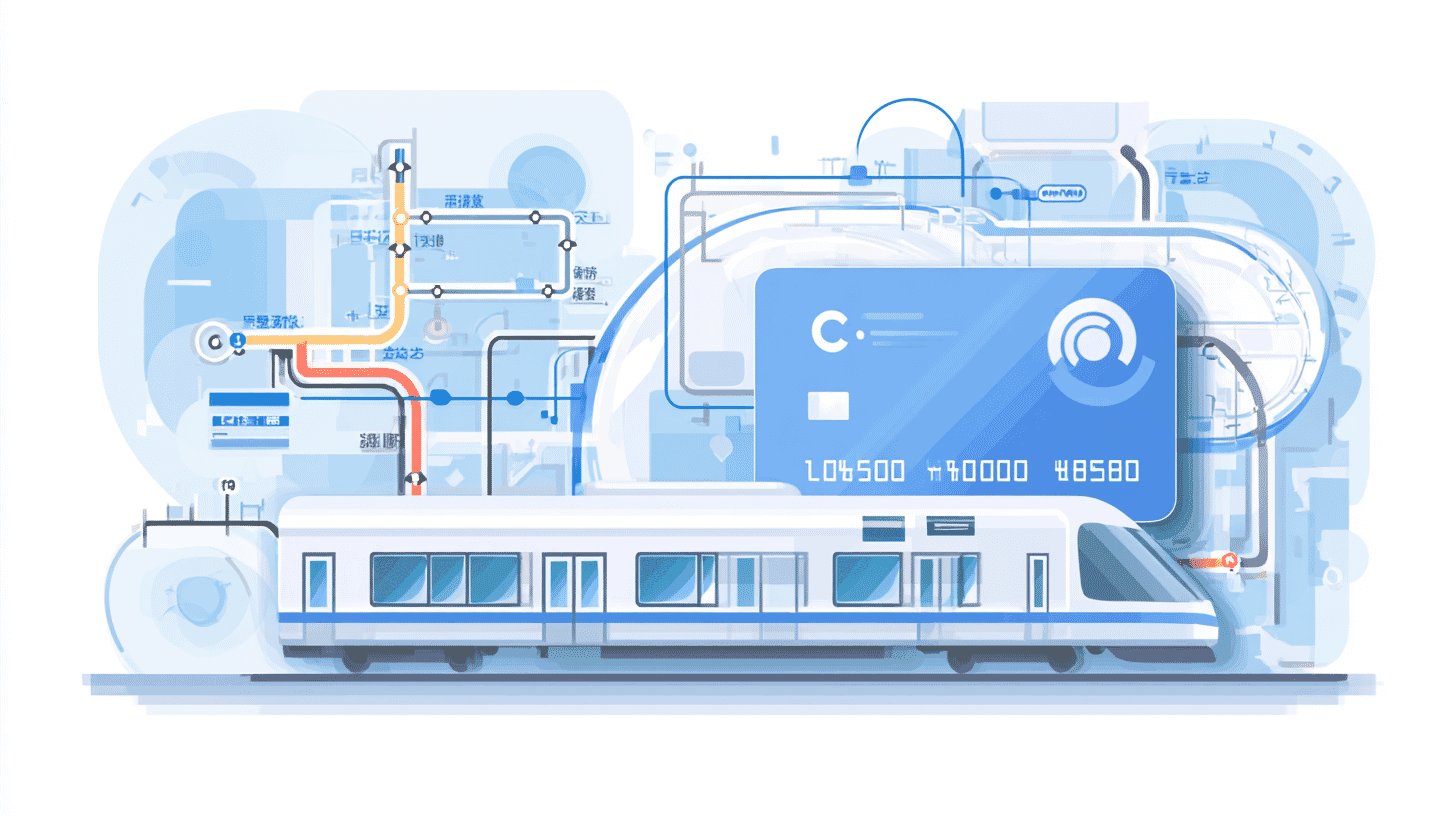
🚃 Tokyo trains are finally going contactless—but only halfway. On March 25, 2026, eleven private railway companies in the Tokyo area will launch interoperable contactless credit card payments across 54 lines and 729 stations. But with JR East and Keisei Railway staying out, how much will this really change travel in Tokyo? Here's what's happening, what's missing, and what comes next.

What's Actually Changing

Starting March 25, 2026, the following 11 railway operators will accept contactless credit card payments with full interoperability:

Participating operators: Odakyu, Odakyu Hakone, Keio, Keikyu, Sagami Railway, Seibu, Tokyu, Tokyo Metro, Toei Subway, Tobu, and Yokohama Minatomirai Railway

Accepted brands include Visa, Mastercard, JCB, American Express, Diners Club, Discover, and UnionPay. Apple Pay and Google Pay are also supported.

Until now, each company's contactless service was limited to its own lines. With this integration, travelers can now ride across multiple operators—say, boarding on Tokyu, transferring to Tokyo Metro, and exiting on Tobu—all with a single card tap.

Why Did This Take So Long?

Tokyo's rail network is extraordinarily complex:

  • Extensive through-service operations between private railways and subways
  • Transfer points requiring passengers to exit and re-enter gates
  • Different fare structures across companies

This complexity made cross-company fare calculation the biggest technical barrier. To solve this, the 11 operators partnered with Omron Social Solutions to develop a new fare calculation system, integrated with Sumitomo Mitsui Card's "stera transit" and QUADRAC's "Q-move" platforms.

The Elephant in the Room: JR East's Absence

The most notable non-participant is JR East.

The Yamanote Line, Chuo Line, Keihin-Tohoku Line, Sobu Line—Tokyo's busiest routes—will still require Suica or paper tickets.

JR East's official statement: "We currently have no plans to implement this service." As the company that built the Suica ecosystem, contactless credit card payments represent a competing service.

However, JR East also noted they will "continue to share information and coordinate with related operators"—leaving the door slightly open for future participation.

Keisei's Absence Hurts Inbound Tourism

Another significant gap is Keisei Railway.

The Skyliner and Access Express connecting Narita Airport to central Tokyo are among the first trains international visitors take. Not having contactless payment here undermines the "inbound-friendly" narrative of this initiative.

On the positive side, Keikyu—connecting Haneda Airport to Shinagawa and beyond—is participating. Travelers arriving at Haneda will benefit immediately.

Where Tokyo Stands Globally

London introduced contactless payments on public transit in 2014. Today, approximately 70% of pay-as-you-go journeys use contactless. Similar systems operate in over 580 cities worldwide, including Sydney, New York, and Singapore.

By this measure, Tokyo is over a decade behind.

But context matters. Japan pioneered transit IC cards with Suica in 2001—years ahead of most countries. Ironically, this success delayed the move to credit card payments. For domestic users, Suica already worked perfectly well.

What This Means for International Visitors

This service will benefit foreign tourists the most.

Before:

  • Buy a Suica card at the station (¥500 deposit)
  • Top up with cash at ticket machines
  • Navigate Japanese-language interfaces
  • Deal with refund procedures when leaving Japan

After:

  • Tap your existing card at the gate
  • Check fares on your regular card statement back home

However, with JR lines and Narita Airport access excluded, visitors still can't rely on contactless payment alone. A Suica card remains advisable for comprehensive coverage.

Key Questions Going Forward

Near-term:

  • Gradual expansion to currently excluded stations (Seibu plans full coverage by March 2027)
  • Clear communication to prevent confusion about which lines are covered

Longer-term:

  • Will JR East join? If so, when and how?
  • Will Keisei add Narita Airport routes?
  • Will Tokyo and Osaka systems eventually interoperate?

Is Suica Going Away?

Railway operators have explicitly stated that IC cards remain the "primary" payment method. Contactless credit cards are positioned as an additional option for "diverse customer needs."

Commuters with monthly passes, families needing child fares, people who want to pay at convenience stores with the same card—Suica and PASMO will remain practical for many use cases.

Even in London, Oyster cards still exist. Some tourists even buy them as souvenirs. Suica's penguin mascot may maintain similar appeal.

The Bottom Line

This 11-company collaboration marks a significant step for Tokyo's transit payments. But with JR and Keisei absent, "tap your card anywhere" remains out of reach.

In major cities worldwide, riding public transit with just a credit card is becoming the norm. For Tokyo to reach that standard, JR East's decision may be the key factor to watch.

How does public transit payment work in your country? Can you tap a regular credit card to ride, or do you need a dedicated transit card? We'd love to hear your experience.

References

Reactions in Japan

JR not being included is fatal. Not being able to use Yamanote Line cuts the value in half for foreign tourists.

I agree 0
I disagree 0

As station staff, helping foreign tourists with ticket machines was really tough. Hope this helps a bit... but we'll still need to assist with JR lines.

I agree 0
I disagree 0

No way JR East gives up their Suica turf. They already have Mobile Suica on Apple Pay—they want to protect their own ecosystem.

I agree 0
I disagree 0

I commute transferring from Chuo Line to Keio. Use Suica for JR section, credit card for Keio? Way too complicated.

I agree 0
I disagree 0

Thought '11 companies cooperating, amazing!' but then realized JR isn't there... Avoiding JR in Tokyo travel is basically impossible.

I agree 0
I disagree 0

Narita Skyliner excluded, JR excluded. If this is for inbound tourists, what's the point without covering these?

I agree 0
I disagree 0

JR East says 'no plans at this time'—that 'at this time' feels loaded. Bet they'll give in within a few years.

I agree 0
I disagree 0

Running a guesthouse in Asakusa—thought explaining would get easier, but now I have to add 'JR is different' which makes it complicated again.

I agree 0
I disagree 0

London's TfL manages everything centrally so contactless rollout was smooth. Tokyo has JR and private railways fragmented—maybe this outcome was inevitable.

I agree 0
I disagree 0

Credit card OK on Keikyu from Haneda, but transfer to JR at Shinagawa and you're stuck. This half-measure is so typically Japanese...

I agree 0
I disagree 0

At Shinjuku Station, private railways take credit cards but JR doesn't. Same station, total chaos. Foreigners will definitely be confused.

I agree 0
I disagree 0

Until JR East joins, we can't really say 'Tokyo trains accept credit cards.' Private railways only is incomplete.

I agree 0
I disagree 0

Considering Suica's annual users, JR probably sees no economic benefit in credit card support. Just means paying transaction fees.

I agree 0
I disagree 0

Impressive that 11 private railways cooperated. But with JR—the biggest player—missing, can't call this a 'revolution.'

I agree 0
I disagree 0

In Kansai, Kintetsu, Hankyu, Hanshin, and even JR West support it. But in Kanto, JR East stubbornly refuses. What's the difference?

I agree 0
I disagree 0

Work as a tour guide—just imagining explaining 'this line takes cards, JR doesn't' is exhausting.

I agree 0
I disagree 0

JR East pushes ticketless Shinkansen but won't do credit card boarding? Why treat local lines differently?

I agree 0
I disagree 0

Want to tell my foreign friends 'Tokyo trains now take credit cards!' but having to add 'except JR' is sad.

I agree 0
I disagree 0

Voices from Around the World

Rachel Adams

On my Tokyo trip last year, it took 20 minutes to buy a Suica card. Struggled to find the English screen, couldn't figure out how to top up. This news makes me so happy! Next time I just need my Visa card.

James Wilson

London resident here—been using credit cards on the Tube since 2014. Happy Japan finally caught up. Shame JR isn't included though. Yamanote Line is a lifeline for tourists.

Sophie Larsson

In Sweden we barely use cash. Had an image of Japan as tech-advanced, but they were surprisingly behind on cashless. This should make traveling easier though.

Mike Chen

Taiwanese here. EasyCard is convenient, but buying and charging Suica in Japan was always a hassle. Especially the complicated refund process for leftover balance. Credit card solves this.

Anna Kowalski

I visit Japan twice a year from Poland. Every time I either lose my Suica or forget where I put it. If I can use my own credit card, no more worrying about that.

David Thompson

Aussie backpacker here. Like Sydney's Opal card, understanding local transit cards is hard for travelers. Credit card tap is universal, so that helps.

김민준 (Kim Min-jun)

Korean here. Seoul subway accepts both T-money and credit cards, so every time I visited Japan I wondered 'why can't I use credit card?' Finally.

Maria Garcia

Planning a Japan trip with family of 4 from Spain. Buying and charging 4 Suica cards seemed like a nightmare. Now we can each use our own cards! Too bad no child fares though.

Thomas Müller

German engineer here. Was impressed by Japan's efficient railway system, but payment was surprisingly analog. Getting 11 companies to cooperate must have been technically and operationally challenging.

Emily Nakamura

Japanese American here. Visit Japan yearly to see relatives, and charging Suica was always a pain. Being able to use my US card is really appreciated.

François Dubois

French here. Paris Metro still mainly uses Navigo passes or tickets. Tokyo might become more convenient for tourists than Paris? Ironic.

Chen Wei

Chinese here. In China we mainly use Alipay and WeChat Pay, don't really use card tap. Happy about UnionPay support, but wish they'd add QR code payment too.

Laura Martinez

Planning to visit Japan from Mexico. Sad that credit card won't work from Narita, but looks like it's fine from Haneda. Might affect which airport I fly into.

Richard Brown

From NYC. Used to OMNY system for subway credit card tap. If Japan works the same way, tourism gets smoother. But JR is separate... that's confusing.

Priya Sharma

Visiting Japan from India next year. Delhi Metro still only has tokens and smart cards. Japan adding credit card support is ahead of India (obviously).

João Silva

Brazilian here. São Paulo metro only takes cash or Bilhete Único card. Always admired Japan's rail system, and this makes it even more user-friendly.