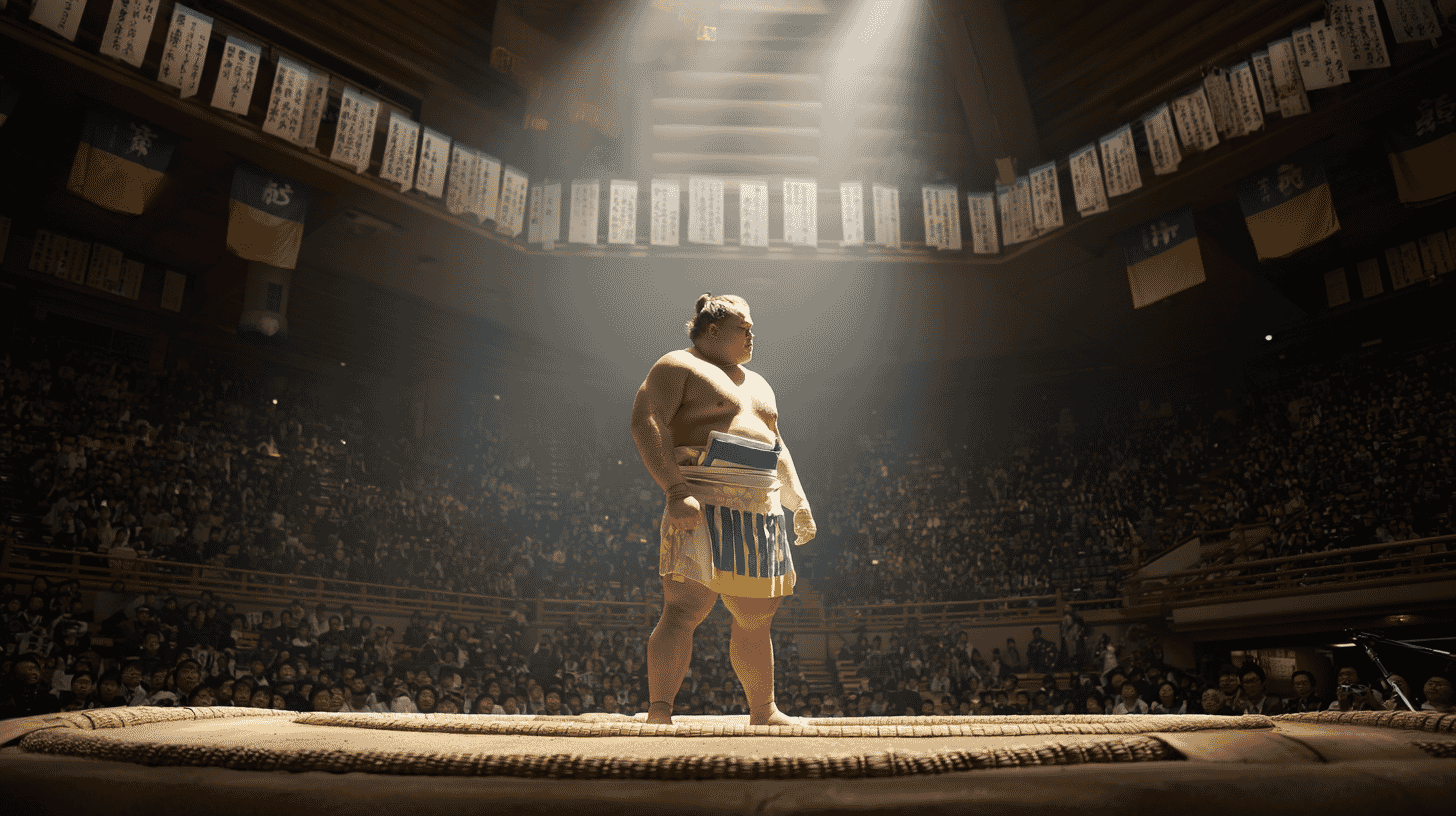
A 21-year-old who fled war has just rewritten history at the pinnacle of Japanese traditional culture. Ukrainian sumo wrestler Aonishiki has won back-to-back championships in Japan's Grand Sumo. Winning as a sekiwake (third-highest rank), earning promotion to ōzeki (second-highest rank), and then taking the title again in his very first tournament as an ōzeki is a feat not seen in 89 years, since the legendary yokozuna Futabayama in 1937. How did a refugee who arrived in Japan with just a suitcase etch his name into sumo history?
What Makes This 89-Year Record So Special?
On the final day of the January 2026 tournament at Tokyo's Ryōgoku Kokugikan, newly promoted ōzeki Aonishiki faced Atamifuji in a championship playoff. Despite being pushed to the edge of the ring by an opponent approximately 55 kilograms heavier, Aonishiki held his ground with a low stance and executed a dramatic comeback throw using his left arm. This victory gave him his second consecutive championship, following his triumph at the Kyushu tournament the previous November.
What made this record extraordinary was the sequence: "Win as sekiwake → Promotion to ōzeki → Win again in first tournament as ōzeki." This hadn't been achieved since Futabayama in January 1937. Futabayama, known as the "Sumo Saint of the Shōwa Era," holds the longest winning streak in sumo history at 69 consecutive victories. To be mentioned alongside his records represents the highest honor in the sumo world.
Who Is Aonishiki?
Aonishiki's real name is Danylo Yabgushyshin. He was born in 2004 in Vinnytsia, a city in central Ukraine.
Young Danylo began practicing sumo at age seven while also pursuing wrestling in his hometown. He grew up watching sumo videos and was particularly moved by footage of a 2002 bout between Asashōryū and Takanohana, which sparked his dream to one day compete on a Japanese sumo ring.
By 2019, he had achieved international recognition with a top finish at the World Junior Sumo Championship. But in February 2022, Russia's military invasion changed everything. As his 18th birthday approached, making him eligible for military conscription, Danylo, unable to abandon his sumo dreams, fled to Germany with his mother. However, there was no opportunity to continue sumo there.
His turning point came through reconnecting with a Japanese acquaintance from the 2019 international tournament. He contacted Arata Yamanaka, then captain of Kansai University's sumo team, expressing his desperate wish to continue sumo in Japan. Yamanaka agreed, and in April 2022, Danylo arrived in Japan alone. He lived with Yamanaka's family while training with Kansai University's sumo team.
The Meaning Behind "Aonishiki"
Subsequently, he joined Ajigawa stable, led by former sekiwake Aminishiki. His professional debut came at the September 2023 tournament.
His ring name "Aonishiki Arata" carries profound significance:
- "A" (安): From his stable master, Ajigawa Oyakata
- "Ao" (青): Representing the blue of the Ukrainian flag
- "Nishiki" (錦): From his master's active-era ring name "Aminishiki"
- "Arata" (新大): The exact name of his benefactor, Arata Yamanaka
His ring name encapsulates his love for his homeland, gratitude toward his master, and respect for the person who made his journey to Japan possible.
A Meteoric Rise Through the Ranks
Aonishiki's promotion speed has been extraordinary:
- Reached sekiwake in just 13 tournaments from debut (fastest ever)
- First championship in 14 tournaments from debut (second-fastest in the modern era)
- First championship at 21 years and 8 months (fourth-youngest in the six-tournament-per-year era)
His championship victory in just three and a half years from his debut shocked the sumo world. Experts attribute his strength to his wrestling-honed low attacking style and powerful lower body. While many foreign wrestlers rely on their size for power sumo, Aonishiki is notable for pursuing traditional Japanese-style forward-moving sumo.
Response from Ukraine
Aonishiki's victory brought tremendous hope to war-torn Ukraine.
Vazha Diauri, who coached Aonishiki from childhood in Vinnytsia, said with emotion in his voice, "This is a historic day; the first Ukrainian champion has been born." Olek Reva of the Ukrainian Sumo Federation commented, "This has become a source of hope for Ukrainian children living through wartime. It's the first bright news in a long time."
Ukrainians living in Japan also expressed joy. A staff member at "Kraiany," a Ukrainian restaurant in Tokyo's Musashino City that Aonishiki visited before the tournament, said with shining eyes, "I'm so happy that a wrestler from my home country is succeeding. I believe he can become yokozuna, and I'll keep supporting him."
Foreign Wrestlers in Sumo History and Aonishiki's Place
The history of foreign wrestlers in professional sumo is long. Starting with Takamiyama from Hawaii in the 1960s, followed by Hawaiian greats like Konishiki, Akebono, and Musashimaru, and then the Mongolian dominance of the 2000s with Asashōryū, Hakuhō, Harumafuji, and Kakuryū.
Among European wrestlers, Bulgaria's Kotoōshū, Estonia's Baruto, and Georgia's Tochinoshin have reached ōzeki rank, but none has yet achieved yokozuna.
Aonishiki is the first Ukrainian-born wrestler to win a top-division championship and to achieve ōzeki rank. Depending on future results, becoming "the first European-born yokozuna" is within reach. If he performs well at the March Osaka Spring tournament, promotion to yokozuna could become a serious discussion.
Update: The yokozuna bid did not come off, and Aonishiki later dropped from ozeki to sekiwake. In the July 2026 Nagoya tournament, however, he went 12-3 as a sekiwake and won a playoff against Kirishima and Atamifuji for his third title, securing an immediate return to ozeki. (Added September 2026)
Aonishiki and Japanese Society
Aonishiki's success raises questions that extend beyond sports for Japanese society.
Since 2022, the Japanese government has actively welcomed Ukrainian refugees. Aonishiki is one of them, and his success in Japanese traditional culture represents one form of cross-cultural coexistence.
Japanese fans frequently express sentiments like "He's a wrestler I want to support regardless of nationality." The fact that a young war refugee has been accepted and achieved the highest honors in sumo, a world sometimes considered insular, could be seen as a symbol of Japan's welcoming spirit.
In Japan, there are both positive and cautious opinions about foreigners succeeding in traditional culture. Debates often arise about balancing an approach that evaluates people on ability regardless of nationality with preserving traditional heritage. How are foreign athletes or performers who succeed in your country's traditional sports or culture received where you live? Are they welcomed, or are there complicated feelings?
References
- https://news.yahoo.co.jp/articles/20c0206441cf1fa7f2b2dd272c3a3045556f7cec
- https://www.nikkei.com/article/DGXZQOUD231W00T21C25A1000000/
- https://www.nikkei.com/article/DGXZQOCB232050T21C25A1000000/
- https://jbpress.ismedia.jp/articles/-/91864
- https://www.tokyo-np.co.jp/article/451793
- https://www.jiji.com/jc/article?k=2025112300427&g=spo
- https://www.cnn.co.jp/showbiz/35240823.html



Global Discussion
14 comments